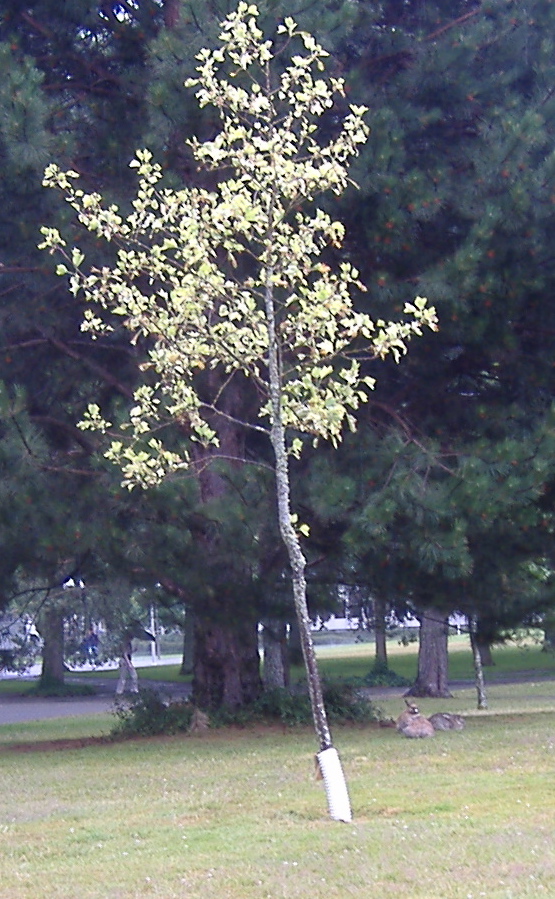
Liriodendron, Genus, tulipifera, Species, 'Aureomarginatum', Cultivar,
- Genus & species
- Cultivar
variegated tulip tree
E North America (species: S Ontario/New England to Florida, west to Louisiana; moist rich bottomlands, cove forests); 'Aureomarginatum' cultivar selection
Overview
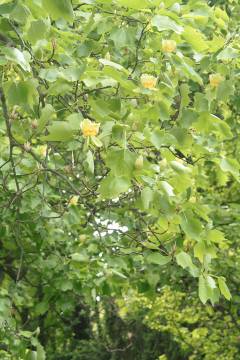
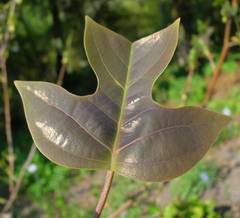
Liriodendron tulipifera 'Aureomarginatum' is a large deciduous tree reaching 50–70 feet (15–21 m) tall with a spread of 30–40 feet (9–12 m) and a broadly pyramidal crown. The cultivar carries variegated foliage as its defining ornamental character: the four-lobed tulip-shaped leaves 4–8 inches (10–20 cm) across carry a broad yellow to creamy-gold margin surrounding a green center, and the leaf shape itself—with a flat truncated apex—is found only in the genus Liriodendron and has no equivalent among other temperate trees. Variegation runs most vivid on new growth through spring and early summer; hot-climate late-summer conditions can fade the yellow margin contrast. In autumn, leaves turn golden-yellow before drop. Tulip-shaped flowers 2–2.5 inches (5–6 cm) across open in May–June, greenish-yellow with an orange band at the base of the inner petals, and the flowers are borne high in the canopy on trees generally 10 years or older from planting. Pale variegated leaf margins can scorch in hot dry wind conditions, which limits the cultivar's suitability for exposed inland positions. Growth rate is moderate—slower than the straight species. Hardy to zone 5.
Native Range
Liriodendron tulipifera is native to eastern North America, with a range extending from southern Ontario and New England south to Florida and west to Louisiana, growing in moist rich bottomlands and cove forests. The species is one of the tallest eastern North American hardwoods and reaches 150 feet or more in optimal wild habitat. 'Aureomarginatum' is a variegated cultivar selection that originated in European horticulture in the early 20th century and has since been propagated through nursery grafting onto straight-species rootstock.Suggested Uses
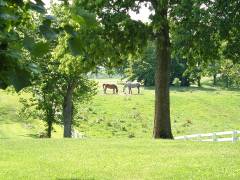
Planted as a specimen or shade tree in large gardens, parks, and estate plantings at 30–40 foot (9–12 m) spacing in zone-5-and-warmer gardens. Variegated foliage carries seasonal color to a large-canopy shade tree and supplies a broader garden use for variegation than the smaller-shrub category where most variegated selections sit. Slower growth rate than the straight species extends the establishment timeline, though the cultivar still reaches full 50–70 foot mature size within 15–20 years. Pale leaf margins can scorch in hot dry winds, which limits the cultivar's use in exposed inland positions. Aphid honeydew drip coats patios and parked cars beneath the summer canopy. Brittle wood breaks in ice and wind storms and creates falling-branch risk over structures or paths. Small gardens, compacted urban soils, alkaline soils, and sites with overhead clearance limits are poor fits for the cultivar.How to Identify
Appearance
Size & Dimensions
Height50' - 70'
Width/Spread30' - 40'
Bloom Information
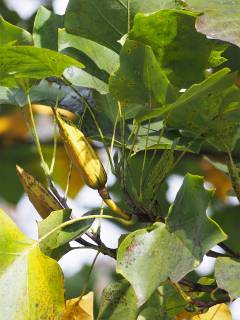
Tulip-shaped flowers 2–2.5 inches (5–6 cm) across open in May through June, greenish-yellow with an orange band at the inner petal bases. Flowers are borne high in the canopy on trees typically 10–15 years old from planting, which means young garden specimens carry no visible bloom for the first decade after planting. Active bloom duration is 3–4 weeks. Cone-like aggregate fruit structures mature in autumn and persist on the bare branches through winter.
Detailed Descriptions
Flower Description
Greenish-yellow with orange band at inner petal base; tulip-shaped 2-2.5 inches; high in canopyFoliage Description
Green center with broad yellow-to-gold margin; four-lobed tulip-shaped 4-8 inches; vivid spring variegation fading in late summer heatGrowing Conditions
Sun Requirements
Requires 6-10 hours of direct sunlight daily
• Full Sun: 6+ hours of direct sunlight
• Partial Shade: 3-6 hours of direct sunlight
• Full Shade: Less than 3 hours of direct sunlight
Care & Maintenance
Care Guide
Full sun in moist deep well-drained slightly acidic soil (pH 5.5–6.5) matches the cultivar's cultivation needs. Hardy to zone 5 (−20°F / −29°C). Deep soil is required—the fleshy root system does not tolerate soil compaction or poor drainage, and urban planting positions with compacted backfill typically fail within a few years. Pale variegated leaf margins scorch in hot dry windy conditions; sheltered positions with morning sun and afternoon shade in hot-climate gardens preserve the margin color through summer. Growth runs slower than the straight species because the reduced chlorophyll in the margined leaves limits photosynthetic output. Aphid honeydew drip beneath the canopy coats surfaces below the tree during summer. Brittle wood is susceptible to breakage in ice storms and high wind events.Pruning
Central leader maintenance runs through the first 5–10 years from planting—competing leaders are removed while young to develop the single-trunked form. Pruning is done in late winter while the tree is dormant. Established trees need minimal pruning beyond removal of dead, crossing, or storm-damaged branches. Topping or heading cuts on this species do not regenerate into acceptable form and produce weak secondary leaders; the natural pyramidal crown is retained through selective branch removal rather than size-reduction topping.Pruning Schedule
Prune: February–March
winter