Liquidambar, Genus, styraciflua, Species, 'Worplesdon', Cultivar,
- Genus & species
- Cultivar
Worplesdon sweet gum
E North America (Connecticut to Florida, west to Texas; extending to Guatemala/Honduras/Nicaragua; moist bottomlands, mixed hardwood forests)
Overview
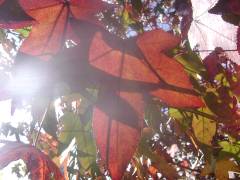
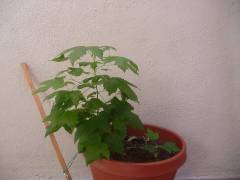
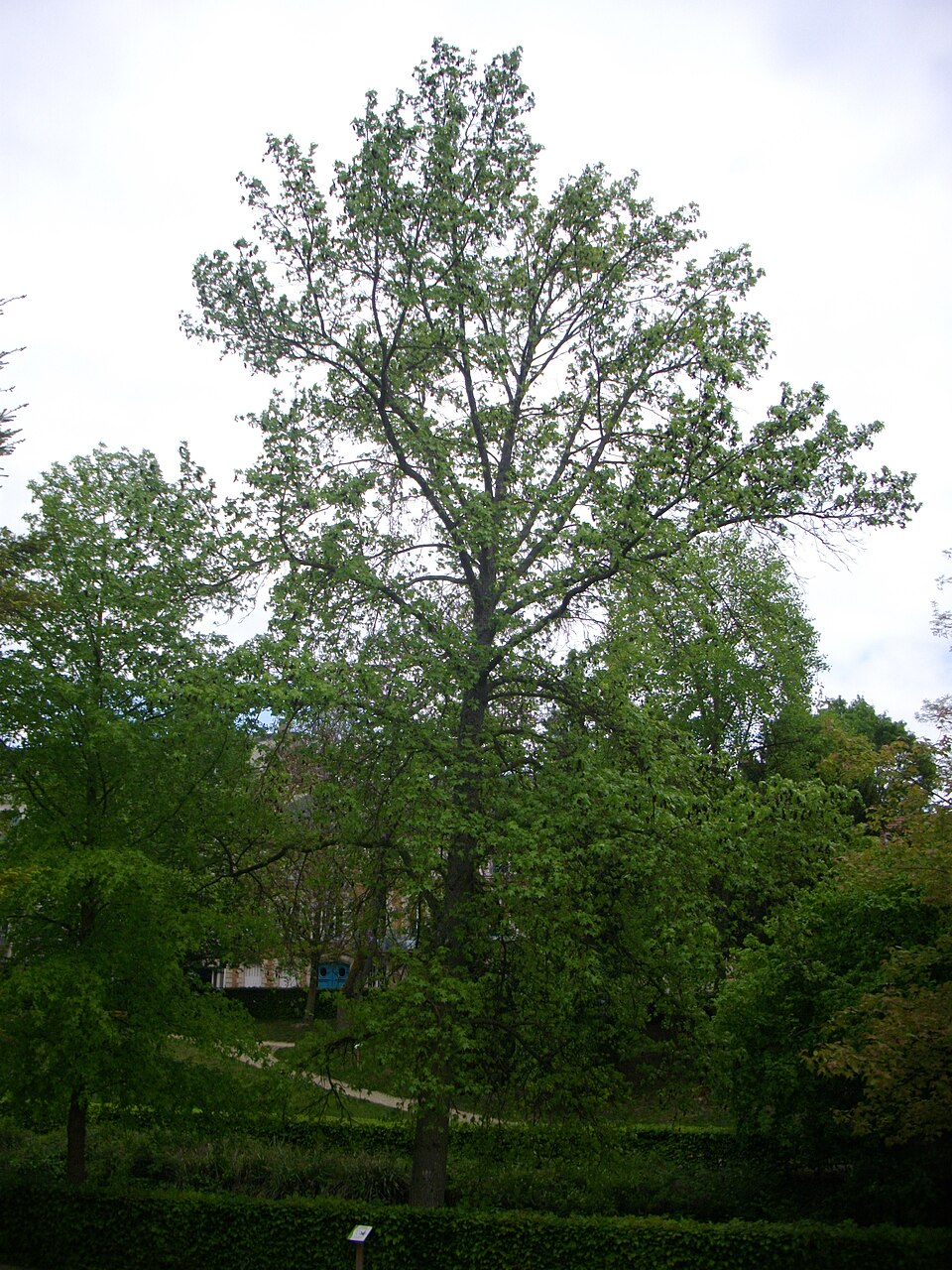
Liquidambar styraciflua 'Worplesdon' is a large, deciduous tree reaching 40–60 feet (12–18 m) tall with a spread of 25–35 feet (7.5–10.5 m) and a narrowly pyramidal crown that becomes more open with age. This cultivar was selected at Worplesdon, Surrey, England for its reliable autumn color and graceful form. The star-shaped, palmate leaves have 5–7 narrow, deeply cut lobes—more deeply incised than the species type, giving a more refined, lacy appearance. The leaves are 4–7 inches (10–18 cm) across, glossy dark green in summer. In autumn, the foliage transitions through orange, apricot-yellow, and crimson-purple, with individual leaves often showing multiple colors. The trunk bark develops corky ridges with age. Produces fewer spiny gumballs than the species type, though not fruitless. Growth rate is moderate to fast. Hardy to zone 5.
Native Range
Liquidambar styraciflua is native to eastern North America, from Connecticut south to Florida and west to Texas, and extends through Mexico into Central America (Guatemala, Honduras, Nicaragua), in moist bottomlands, stream margins, and mixed hardwood forests.Suggested Uses
Planted as a specimen, shade, or street tree in parks, large gardens, and commercial landscapes at 25–30 foot (7.5–9 m) spacing. The deeply incised leaf lobes give a more refined texture than the species or 'Clydesform'. The autumn color progresses through orange, apricot, and crimson-purple. The aggressive shallow root system can damage pavement—requires 15+ feet (4.5+ m) setback. Spiny gumballs (though fewer) are a hazard on walkways. Not suitable for alkaline soils, small gardens, or sites near pavement.How to Identify
Appearance
Size & Dimensions
Height40' - 60'
Width/Spread25' - 35'
Bloom Information
Inconspicuous greenish-yellow flowers in small, rounded, pendulous clusters in April–May. Monoecious. The spiny, spherical seed capsules (gumballs) 1–1.5 inches (2.5–4 cm) in diameter ripen in autumn and persist through winter. Reduced gumball production compared to the species.
Detailed Descriptions
Foliage Description
Glossy dark green, star-shaped 5-7 narrow deeply incised lobes 4-7 inches; lacy refined texture; multicolor autumnGrowing Conditions
Sun Requirements
Requires 6-10 hours of direct sunlight daily
• Full Sun: 6+ hours of direct sunlight
• Partial Shade: 3-6 hours of direct sunlight
• Full Shade: Less than 3 hours of direct sunlight
Care & Maintenance
Care Guide
Plant in full sun in moist, acidic to neutral, fertile, well-drained soil (pH 5.5–7.0). Hardy to zone 5. Tolerates occasional wet soils. The autumn color is most vivid in full sun and acidic soils. The shallow, aggressive root system can heave sidewalks and pavement—site at least 15 feet (4.5 m) from hardscape. Chlorosis may develop in alkaline soils.Pruning
Prune to maintain a central leader in the first 5–10 years. Remove competing leaders while young. Prune in late winter while dormant. Established trees need minimal pruning—remove dead or crossing branches.Pruning Schedule
Prune: February–March
winter