Linum, Genus, marginale, Species,
- Genus & species
Australian flax
Temperate Australia (all mainland states and Tasmania)
Overview
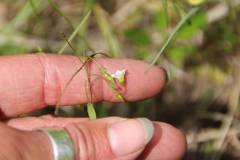
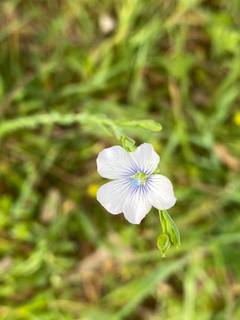
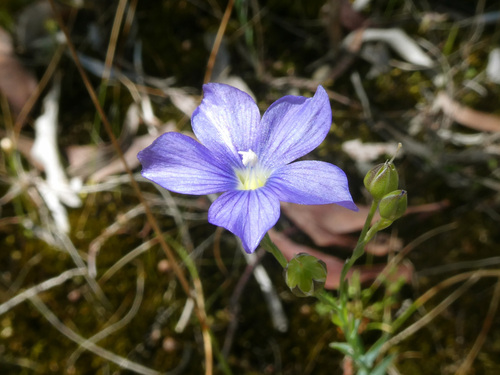
Linum marginale is a slender perennial herb growing 12-28 inches (30-70 cm) tall from a woody rootstock, with wiry erect to spreading stems. The leaves are narrow and linear, 0.4-1 inch (1-2.5 cm) long, alternate, blue-green, and held close to the stems. Pale blue to violet flowers 0.6-1 inch (1.5-2.5 cm) across have five petals and open in the morning, with the petals dropping by afternoon. New flowers open in succession through spring and summer. Flowering is followed by rounded seed capsules about 0.2 inch (5 mm) wide containing flattened brown seeds. The stems carry strong fibres that were used for cord and netting, and the seeds were ground for food by Aboriginal peoples. Growth is moderate, and clumps build slowly from the perennial rootstock. The wiry stems give an open texture, and plants can look sparse outside the flowering period.
Native Range
Native to much of temperate Australia, including all mainland states and Tasmania. Grows in grassland, open woodland, and grassy slopes in well-drained soils from the lowlands to subalpine elevations.Suggested Uses
Grown in native grassland plantings, meadow gardens, and revegetation, spaced 12-18 inches (30-45 cm) apart. Combined with native grasses and other forbs for a grassland planting. The open wiry habit suits naturalistic settings more than formal borders.How to Identify
Appearance
Size & Dimensions
Height1' - 2'4"
Width/Spread8" - 1'4"
Bloom Information
Detailed Descriptions
Flower Description
pale blue to violetFoliage Description
blue-greenGrowing Conditions
Sun Requirements
Requires 6-8 hours of direct sunlight daily
• Full Sun: 6+ hours of direct sunlight
• Partial Shade: 3-6 hours of direct sunlight
• Full Shade: Less than 3 hours of direct sunlight
Care & Maintenance
Care Guide
Grows in full sun to light shade on well-drained sandy or loamy soils; flowering thins in shade. Water occasionally through the first season to establish, after which the perennial rootstock tolerates seasonal dryness. Plants tolerate frost and die back to the rootstock in cold winters, reshooting in spring. Self-sown seedlings appear in open ground near established plants. Crown rot can develop in soils that stay wet through winter. Foliage and stems contain cyanogenic compounds that can poison livestock grazed in quantity.Pruning
Cut spent stems back to the base in late autumn or winter after seeding to tidy the clump. Plants reshoot from the rootstock in spring. No other pruning is needed.Pruning Schedule
Prune: November–December
fallwinter
Container Growing
Suitable for container growing
Minimum container size: 3 gallons