Linum, Genus, bienne, Species,
- Genus & species
pale flax
Mediterranean, western Europe, North Africa, western Asia
Overview
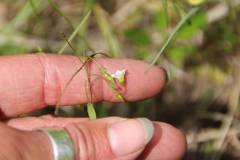
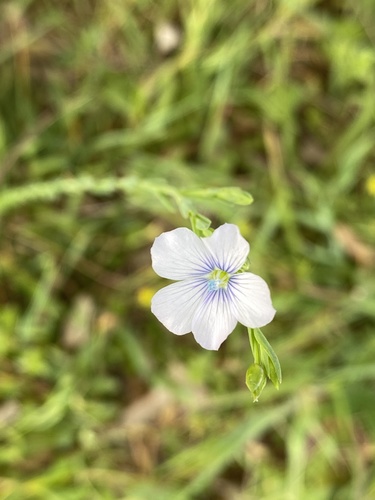
Linum bienne is a slender annual, biennial, or short-lived perennial growing 1-2 feet (30-60 cm) tall on wiry, branching stems that rise from a basal tuft. It is the wild ancestor of cultivated flax (Linum usitatissimum) and shares its narrow, blue-green, linear leaves, each 0.4-1 inch (1-2.5 cm) long and arranged alternately up the stem. From late spring into late summer it bears pale lilac-blue five-petaled flowers 0.3-0.6 inch (8-16 mm) across, opening a few at a time at the branch tips, often for only a single morning before the petals fall. Spherical seed capsules follow, splitting to release small flat brown seeds. The plant is light in build, with thread-like stems that sway in wind and may lean among supporting vegetation. It grows on dry grassland, banks, and rocky slopes, favoring light soils and open sun, and is short-lived, relying on seed to renew itself. Its narrow upright form takes little ground but produces a long, if sparse, succession of flowers. Pale flax tolerates poor, dry soils but fades quickly in shade or heavy wet ground.
Native Range
Linum bienne is native to western and southern Europe, North Africa, and western Asia, around the Mediterranean and along the Atlantic coast north to Britain. It grows on dry grassland, sunny banks, cliff tops, and rocky slopes on light soils.Suggested Uses
Grown in wildflower meadows, gravel gardens, and sunny borders for its long succession of pale blue flowers. It suits naturalistic and pollinator plantings on dry soils. Left to seed, it weaves through other low, sun-loving plants.How to Identify
Appearance
Size & Dimensions
Height1' - 2'
Width/Spread8" - 1'
Bloom Information
Flowering runs from May to September, with pale blue flowers opening a few at a time at the stem tips. Each flower lasts only part of a day, often shedding its petals by noon, but new buds open in succession over months. The flowers are pollinated by bees and hoverflies, and round seed capsules ripen through summer.
Detailed Descriptions
Foliage Description
Blue-greenGrowing Conditions
Sun Requirements
Requires 6-10 hours of direct sunlight daily
• Full Sun: 6+ hours of direct sunlight
• Partial Shade: 3-6 hours of direct sunlight
• Full Shade: Less than 3 hours of direct sunlight
Care & Maintenance
Care Guide
Grows in full sun in light, free-draining sandy, loamy, or chalky soil of low to moderate fertility. It tolerates drought and poor ground but declines in shade, rich feeding, or wet winter soils that rot the roots. As a short-lived plant it is renewed from self-sown seed, scattering freely where the ground stays open. It needs no staking despite its slender stems, which lean on neighboring plants for support. Few pests or diseases trouble it, and cold, wet conditions are the main cause of loss.Pruning
No formal pruning is needed. Spent stems are cut back after flowering to tidy the plant or left to self-seed. In perennial form the old growth is cleared in late winter before new shoots appear.Container Growing
Suitable for container growing
Minimum container size: 2 gallons