Leucopogon, Genus, verticillatus, Species,
- Genus & species
tassel flower
Overview
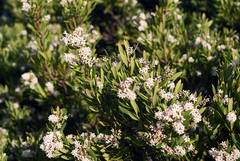
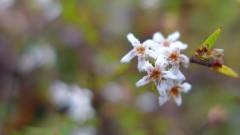
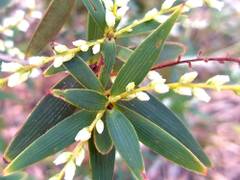
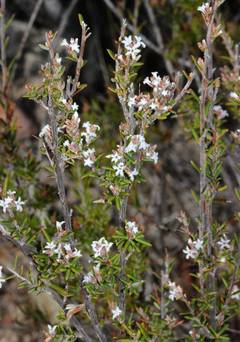
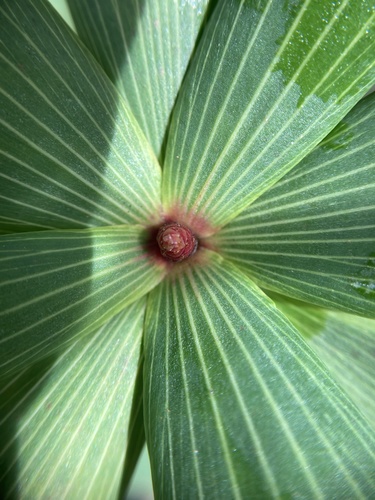
Leucopogon verticillatus is an erect evergreen shrub 3-13 feet (1-4 m) tall with stiff leaves arranged in whorls along the stems, the feature that gives the species its name. The lance-shaped leaves are 1-3 inches (2.5-7.5 cm) long, leathery, with several parallel veins and a pointed tip. In spring the plant carries dense spikes of small white tubular flowers, each about 0.2 inch (4-6 mm) long, with bearded, hairy lobes inside the throat that are typical of Leucopogon. The flowers are followed by small fleshy drupes that ripen and are eaten by birds. It is native to the high-rainfall forests of southwestern Western Australia, where it grows in the understorey of jarrah and karri forest on sandy and loamy soils. It needs a sheltered, partly shaded position with steady moisture and good drainage, and is slow to establish, which keeps it uncommon in cultivation.
Native Range
Leucopogon verticillatus is native to southwestern Western Australia, where it grows in the understorey of tall jarrah and karri forest in higher-rainfall areas on sandy and loamy soils.Suggested Uses
Grown in shaded native and woodland gardens, in forest-understorey and habitat plantings, and in cooler, moist positions where many dry-country shrubs will not grow. Its fruit and flowers support birds and insects in bushland and naturalistic plantings.How to Identify
Appearance
Size & Dimensions
Height3' - 13'
Width/Spread3' - 6'
Bloom Information
Flowering occurs in spring, mainly August to November in its native range. The small white bearded flowers open in dense spikes along the upper stems over several weeks. Small fleshy fruits follow and ripen through summer.
Detailed Descriptions
Foliage Description
greenGrowing Conditions
Sun Requirements
Requires 2-6 hours of direct sunlight daily
• Full Sun: 6+ hours of direct sunlight
• Partial Shade: 3-6 hours of direct sunlight
• Full Shade: Less than 3 hours of direct sunlight
Care & Maintenance
Care Guide
Leucopogon verticillatus grows in part shade to dappled light in moist, well-drained sandy or loamy soil rich in organic matter. It comes from high-rainfall forest and needs steady moisture, especially while establishing, but does not tolerate waterlogged ground. The roots associate with soil fungi, which makes the plant slow to establish and uncommon in gardens. It accepts light frost in a sheltered position. Propagation is mainly from seed, which is slow and erratic to germinate, or from semi-hardwood cuttings that strike slowly.Pruning
Little pruning is needed beyond light tip pruning after flowering to shape the shrub and keep it bushy. The plant is slow-growing and resprouts slowly, so cutting into bare old wood is avoided. Spent flower spikes can be left to set fruit for birds.Container Growing
Suitable for container growing
Minimum container size: 5 gallons