Leucopogon, Genus, affinis, Species,
- Genus & species
lance beard-heath
Overview
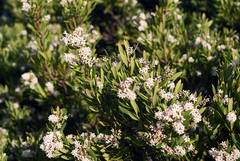
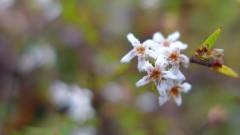
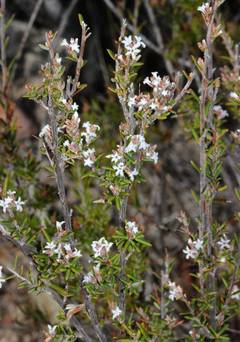
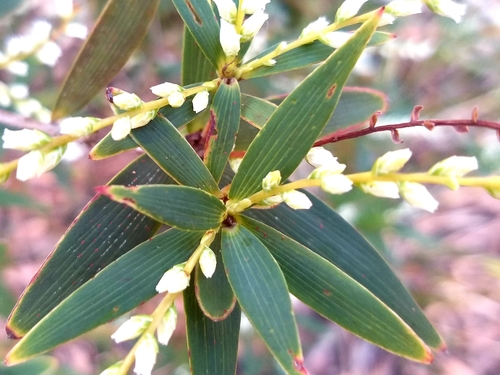
Leucopogon affinis is an erect evergreen shrub reaching 3-10 feet (1-3 m) tall, with a main stem branching into a spreading to upright crown. Leaves are lance-shaped, 0.4-1.2 inches (10-30 mm) long and 0.1-0.3 inches (3-8 mm) wide, stiff and leathery, with a pointed tip and several parallel veins running from base to apex on the undersurface. Small tubular white flowers, 0.1-0.2 inches (3-5 mm) long, hang in short spikes along the branches, and each of the five petal lobes is lined inside with dense white hairs. Flowering occurs in late winter and spring, followed by rounded drupes 0.1-0.2 inches (3-5 mm) across that ripen red to orange. Growth is slow, with plants taking several years to reach full height. The root system associates with soil fungi, which makes transplanting of established specimens difficult and slows recovery after disturbance. Foliage is mid-green to dark green and persists year-round. In cultivation the species is uncommon, and seed germination is irregular, often extending over many months.
Native Range
Native to eastern Australia, occurring in New South Wales, Victoria, Queensland, and Tasmania. Grows in dry sclerophyll forest, woodland, and heath, typically on sandy or stony well-drained soils from coastal lowlands to montane slopes.Suggested Uses
Planted in native and heath gardens, low windbreaks, and habitat plantings, spaced 3-5 feet (0.9-1.5 m) apart. The drupes are eaten by birds, supporting wildlife plantings. Container growing is possible in a free-draining, low-phosphorus mix of at least 5 gallons (19 L), though growth is slow.How to Identify
Appearance
Size & Dimensions
Height3' - 10'
Width/Spread3' - 6'
Bloom Information
Detailed Descriptions
Foliage Description
mid-green to dark greenGrowing Conditions
Sun Requirements
Requires 4-8 hours of direct sunlight daily
• Full Sun: 6+ hours of direct sunlight
• Partial Shade: 3-6 hours of direct sunlight
• Full Shade: Less than 3 hours of direct sunlight
Care & Maintenance
Care Guide
Grows in full sun to part shade in sandy or gravelly soils with sharp drainage. Water moderately during establishment in the first one to two years, then reduce watering, as established plants tolerate seasonal dry periods of several weeks. Soils should be low in phosphorus, since high-phosphorus fertilisers can damage the roots, a trait shared across the Ericaceae of Australian heathlands. Root disturbance is poorly tolerated because of the plant reliance on soil fungal associations. Few pests affect it, though root rot develops in waterlogged or poorly drained soils. Plants are slow to establish and may take three to four years to reach flowering size.Pruning
Light tip pruning after flowering keeps growth compact and encourages branching. Older specimens respond poorly to hard pruning into bare wood, which often fails to reshoot. Removal of spent flower spikes is not required for plant health.Pruning Schedule
Prune: November–December
late springsummer
Container Growing
Suitable for container growing
Minimum container size: 5 gallons