Leucobryum, Genus, spp., Multiple species,
- Genus
- Multiple species
leucobryum mosses
worldwide, especially temperate and tropical forests
SunFull Shade – Part Shade
WaterMedium
Overview
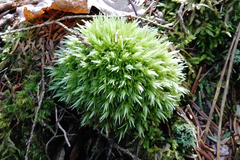
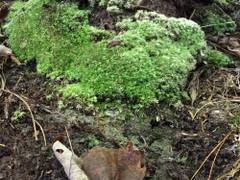
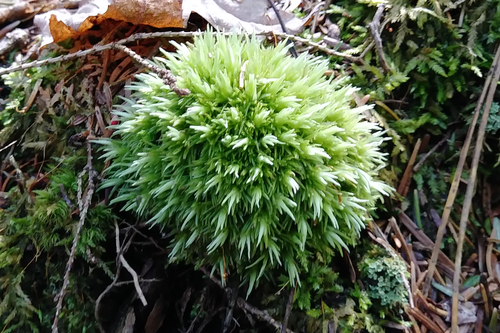
Leucobryum is a genus of about 100 species of cushion-forming mosses in the family Leucobryaceae, found in moist woodlands and on humus, rotting wood, and acidic soil across temperate and tropical regions worldwide. Plants form dense, rounded mounds or cushions 1 to 4 inches (2.5 to 10 cm) tall that spread 4 to 12 inches (10 to 30 cm) or more across as colonies merge. The narrow leaves are thick for a moss, built of several layers of cells, which gives the cushions a pale whitish-green to blue-green color when moist and a gray-white look when dry. As a moss, Leucobryum has no flowers, true roots, or internal vascular tissue; it absorbs water and minerals directly through its surface and anchors itself with threadlike rhizoids. Reproduction is by spores released from capsules on slender stalks, though capsules are produced infrequently, and the cushions also spread when detached fragments root and grow. Plants grow in shade and steady humidity and tolerate short dry spells by becoming dormant and pale, reviving when moisture returns. The cushions are slow-growing and sensitive to compaction, foot traffic, and prolonged drying.
Native Range
Leucobryum is distributed nearly worldwide, with species concentrated in the moist temperate and tropical forests of the Northern and Southern Hemispheres. L. glaucum is widespread in the woodlands of eastern North America and Europe, forming pale cushions on acidic forest floors.Suggested Uses
Leucobryum is used in shaded moss gardens, woodland floors, terrariums, and container plantings, where its pale cushions form low, rounded mounds. It is also used between stepping stones and on shaded banks in moist, acidic sites. The need for shade, humidity, and acidic ground limits its use in sunny, dry, or alkaline gardens.How to Identify
Appearance
Size & Dimensions
Height1" - 4"
Width/Spread4" - 1'
Bloom Information
Leucobryum does not flower. It reproduces by spores released from small capsules raised on slender stalks, produced irregularly and often sparsely. Colonies spread mainly by fragmentation, as broken pieces of cushion take root and continue growing.
Detailed Descriptions
Foliage Description
whitish-green to blue-green, gray-white when dryGrowing Conditions
Sun Requirements
Tolerates up to 4 hours of direct sunlight daily
• Full Sun: 6+ hours of direct sunlight
• Partial Shade: 3-6 hours of direct sunlight
• Full Shade: Less than 3 hours of direct sunlight
Care & Maintenance
Care Guide
Leucobryum grows in shade to part shade in steady humidity on acidic, low-nutrient substrates such as humus, peat, sand, and rotting wood. The cushions need consistent moisture and high humidity and are kept damp with rain or misting rather than heavy watering. Alkaline soils, fertilizer, and direct sun damage or kill the plants. The moss tolerates short dry periods by going dormant and pale, then greening again when moisture returns. Cushions are established by pressing pieces firmly onto bare, moist, acidic ground and keeping them damp until they anchor. Growth is slow, and colonies are easily harmed by compaction and foot traffic.Pruning
Leucobryum needs no pruning. Loose debris and fallen leaves are lifted off the cushions to keep light reaching the surface. Detached or overgrown pieces can be lifted and pressed onto new ground to start further colonies.Container Growing
Suitable for container growing