Lagenophora, Genus, sublyrata, Species,
- Genus & species
slender bottle-daisy
Overview
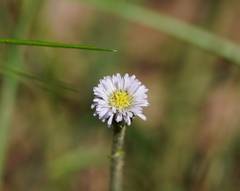
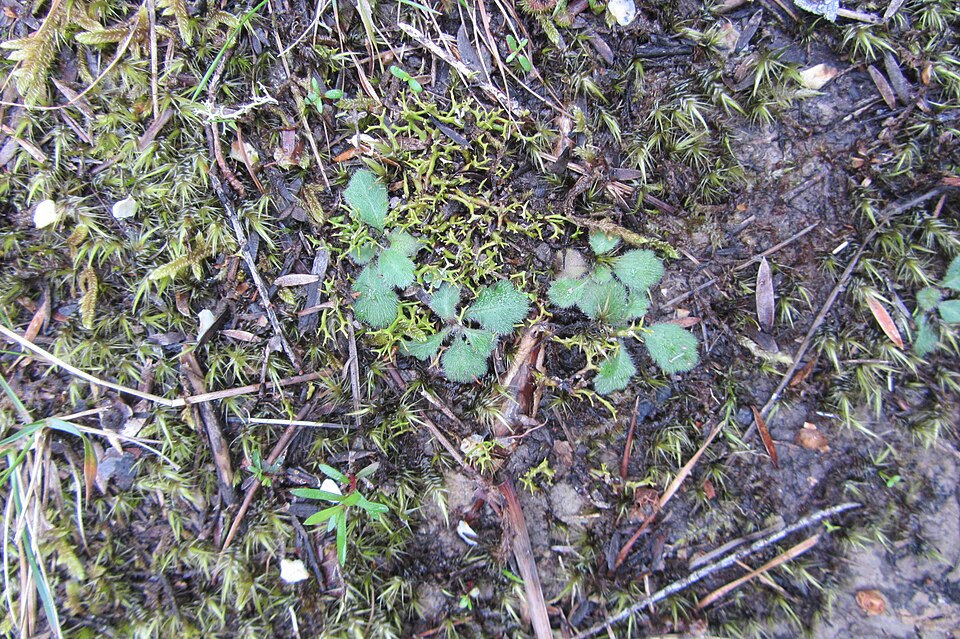
Lagenophora sublyrata is a small perennial herb forming a flat basal rosette of leaves with slender flowering stems 2-8 inches (5-20 cm) tall. The leaves are 0.4-2 inches (10-50 mm) long, narrow and spoon-shaped, with shallowly lobed or toothed margins and a thin covering of hairs. Each wiry, leafless stalk carries a single daisy flower head 0.2-0.4 inch (5-10 mm) across, with white to pale mauve ray florets around a yellow centre. Flowering occurs mainly in spring and summer. After flowering the head forms a small bottle-shaped cluster of seeds tipped with sticky glands that attach to passing animals. Plants are low and easily hidden among grasses. The rosette persists through the year in mild areas and dies back in dry or cold spells, reshooting from the rootstock. The species grows in grassland, grassy woodland, and moist forest on a range of soils.
Native Range
Native to eastern Australia, from Queensland to Tasmania, and also found in New Zealand. Grows in native grassland, grassy woodland, damp forest, and clearings on loam and sandy soils.Suggested Uses
Used in native grassland plantings, lawns managed for biodiversity, and the front of informal beds, spaced 6-10 inches (15-25 cm) apart. Suits naturalistic plantings where it seeds among grasses. Its small size limits its effect in formal borders.How to Identify
Appearance
Size & Dimensions
Height2" - 8"
Width/Spread2" - 6"
Bloom Information
Detailed Descriptions
Flower Description
white to pale mauve with yellow centreFoliage Description
greenGrowing Conditions
Sun Requirements
Requires 4-10 hours of direct sunlight daily
• Full Sun: 6+ hours of direct sunlight
• Partial Shade: 3-6 hours of direct sunlight
• Full Shade: Less than 3 hours of direct sunlight
Care & Maintenance
Care Guide
Grows in full sun to part shade on moist, free-draining loam or sandy soils. Established plants tolerate short dry spells, dying back to the rootstock and reshooting when rain returns. Occasional watering keeps the rosette green through dry summers. It tolerates light frost and mowing, persisting in grassy areas. Self-sown seedlings appear nearby, spread by the sticky seeds. Few pests affect it.Pruning
No pruning is needed. Spent flower stalks can be removed to tidy the plant and limit self-seeding. Old outer leaves wither and can be cleared from the rosette.Container Growing
Suitable for container growing
Minimum container size: 1 gallons