Laburnum, Genus, ×, Hybrid, watereri, Species,
- Genus & species
- Hybrid
goldenchain tree
Hybrid of garden origin — a cross between {Laburnum anagyroides} (common laburnum, native to central and southern European mountains) and {Laburnum alpinum} (Scotch laburnum or Alpine laburnum, native to the Alps and Apennines at higher elevations than common laburnum)
Overview
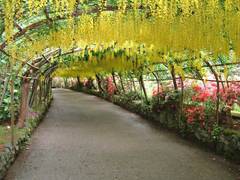
Laburnum × watereri is the goldenchain tree (Waterer laburnum), a small upright deciduous flowering tree in the pea family Fabaceae growing 15-25 feet (4.5-7.5 m) tall and 15-20 feet (4.5-6 m) wide in cultivation across a 5-10 year growth to mature stature. The species is a hybrid of garden origin crossing Laburnum anagyroides (common laburnum, native to the central and southern European mountains and the source of the shorter pendant racemes and the heat tolerance) with Laburnum alpinum (Scotch laburnum or Alpine laburnum, native to the higher Alps and Apennines and the source of the cold hardiness and the extended raceme length), and the cross combines the parental character strengths — the resulting hybrid carries pendant racemes 6-24 inches (15-60 cm) long (extending beyond common laburnum and falling short of the extreme raceme-extended cultivar selections of alpine laburnum), hardiness through USDA zone 5, and moderate tolerance of summer heat. The cultivar 'Vossii' is the selection most frequently planted in contemporary European and North American gardens — 'Vossii' produces the full 24-inch raceme length and sets fewer viable seeds than the standard hybrid type, reducing both the post-bloom maintenance and the cytisine-alkaloid seed exposure risk near pathways where children play. The trifoliate leaves composed of three oval leaflets arranged on a single petiole are a family-level character of Fabaceae and separate the genus Laburnum from unrelated pendant-flowered trees. The hybrid is the signature tree of the laburnum walk, a European formal garden tradition in which goldenchain trees are trained over metal pergola frameworks on each side of a pathway so that the pendant yellow racemes hang down through the framework at eye level during the bloom period — Bodnant Garden in Conwy, Wales, carries the most photographed example in the British horticultural tradition (a 180-foot laburnum arch planted in 1880). Limitation: all parts of the plant — leaves, bark, wood, pods, and seeds — contain cytisine, a pyridine alkaloid that is structurally similar to nicotine and acts on the same nicotinic acetylcholine receptors to produce nausea, vomiting, convulsions, and cardiac effects at moderate doses and death at higher doses. The seeds are the most concentrated source of the alkaloid, with 15-20 seeds recorded as a lethal dose in children, and the bright yellow pods are appealing to small children who may mistake the seeds for peas because of the family's legume pod structure. Developing seed pods are removed after the flowering period finishes in gardens where children, pets, or grazing livestock may access the fallen pods. The hybrid is short-lived at 20-30 years typical cultivated lifespan, and declines in the heat and humidity of zones 8 and warmer where bacterial canker pressure accelerates the decline. Deer-resistant (because of the toxicity).
Native Range
Hybrid of garden origin — a cross between Laburnum anagyroides (common laburnum, native to the central and southern European mountains including the Alps, Apennines, Pyrenees, and Balkans at 1,000-5,000 feet elevation) and Laburnum alpinum (Scotch laburnum or Alpine laburnum, native to the Alps and Apennines at higher elevations of 3,000-6,500 feet where L. anagyroides thins out). The hybrid was raised in the British nursery trade in the 19th century. The cultivar 'Vossii' is the most frequently planted selection in contemporary gardens and produces the full 24-inch raceme length with reduced seed set.Suggested Uses
Used as a small flowering specimen tree in formal gardens and residential landscapes at 20-25 foot (6-7.6 m) spacing between trees, as the signature tree of the European laburnum walk (a formal-garden tradition in which goldenchain trees are trained over metal pergola frameworks on each side of a pathway so that the pendant yellow racemes hang down through the framework at eye level during the bloom period, with the 180-foot laburnum arch at Bodnant Garden in Conwy, Wales, as the most photographed British horticultural example), and in cottage gardens, woodland-edge transitions, and parking-strip plantings in protected cool-summer positions in USDA zones 5 through 7. The dense pendant canary-yellow pea-shaped flower racemes 6-24 inches long in late spring, the trifoliate Fabaceae-family leaf pattern, the compact small-tree stature that fits residential lots, and the laburnum-walk cultural tradition combine to make Laburnum × watereri a foundation small flowering tree for cool-summer formal and cottage garden design. Hot-summer positions in zones 8 and warmer are unsuitable because of heat-accelerated bacterial canker decline. Sites accessible to young children, grazing livestock, or unsupervised pets carry the cytisine-alkaloid poisoning hazard and call for seed-pod removal after bloom or for siting away from play areas.How to Identify
Appearance
Size & Dimensions
Height15' - 25'
Width/Spread15' - 20'
Bloom Information
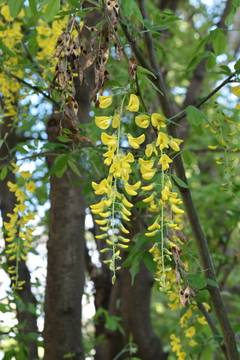
Late spring to early summer (May through June) across a 1-2 week concentrated bloom period. Dense pendant canary-yellow pea-shaped flowers in racemes 6-24 inches (15-60 cm) long hanging below the branches. The bloom is brief but the floral display is the hybrid's primary ornamental feature and is the basis for the laburnum walk formal-garden tradition. The cultivar 'Vossii' carries racemes to 24 inches (60 cm), reaching the upper end of the hybrid's 6-24 inch raceme range. Honeybees, bumblebees, and other small bees work the flowers for nectar and pollen across the bloom period — the nectar and pollen both contain the cytisine alkaloid, and honey from laburnum-dominant foraging has produced mild human toxicity in historical records (though severe cases are rare because bees do not forage laburnum in preference to less-toxic alternatives).
Detailed Descriptions
Flower Description
bright canary-yellow pea-shaped flowers with the characteristic Fabaceae five-petal papilionaceous arrangement (a standard upper petal, two wing petals, and a fused keel), each flower 0.5-1 inch (13-25 mm), carried in dense pendant racemes 6-24 inches (15-60 cm) long that hang below the branches in late spring to early summer (May through June) across a 1-2 week bloom period; the pendant yellow racemes are the hybrid's signature ornamental character and the source of both the common name goldenchain tree and the traditional European nursery name golden-rain tree (distinct from the unrelated Koelreuteria paniculata)Foliage Description
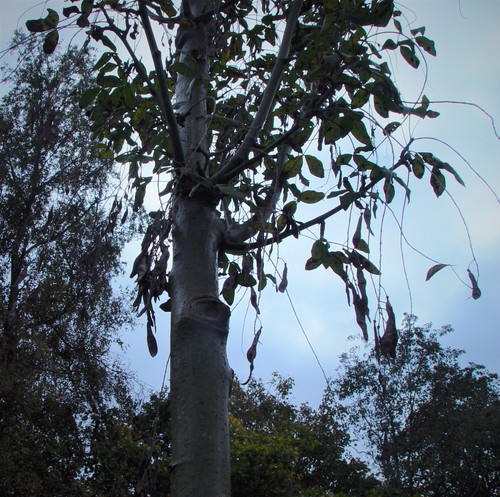
medium green with trifoliate leaves composed of three oval leaflets each 1.5-3 inches (4-7 cm) long arranged alternately along the stem in the typical legume-family leaf structure; the trifoliate leaf pattern (three leaflets from a single petiole) is a family-level character of Fabaceae and separates Laburnum from unrelated pendant-flowered trees; foliage turns pale yellow in fall before dropping; deciduousGrowing Conditions
Sun Requirements
Requires 5-8 hours of direct sunlight daily
• Full Sun: 6+ hours of direct sunlight
• Partial Shade: 3-6 hours of direct sunlight
• Full Shade: Less than 3 hours of direct sunlight
Care & Maintenance
Care Guide
Site in full sun to partial shade with 5-8 hours of direct sun per day in well-drained loam soil with a pH of 5.5-7.5. Water weekly during the first two growing seasons to establish the root system; established trees tolerate moderate drought. The hybrid is intolerant of hot humid summers and declines under the continuous heat pressure of USDA zones 8 and warmer where bacterial canker and summer dieback accelerate the decline to below the 20-30 year typical lifespan. Summer pruning (July, after the bloom period) is the recommended timing because pruning cuts made during dormancy allow bacterial canker pathogens to enter the wood through the unhealed cuts. Developing seed pods are removed after the flowering period finishes in gardens where children, pets, or grazing livestock may access the fallen pods — all parts of the plant contain cytisine, a pyridine alkaloid structurally similar to nicotine, with the seeds as the most concentrated source (15-20 seeds recorded as a lethal dose in children). Deer-resistant because of the cytisine toxicity. Hardy in USDA zones 5-7.Pruning
Summer pruning in July, immediately after the flowering period, is the recommended timing because pruning cuts made during winter dormancy allow bacterial canker pathogens (Pseudomonas syringae and related species) to enter the wood through the unhealed cuts. Developing seed pods are removed at the same time to reduce the cytisine-alkaloid exposure hazard in gardens accessed by children, pets, or grazing livestock — the seeds are the most concentrated source of the alkaloid in the plant. Dead and crossing branches are removed as found. The tree trains readily over metal pergola frameworks for laburnum walk plantings, and the pergola training is done by tying the young flexible stems to the framework during the first 3-5 growing seasons until the wood stiffens into the desired arched shape. The hybrid regenerates poorly from heavy renovation pruning into old wood and is better renovated by whole-tree replacement when the specimen declines.Pruning Schedule
Prune: July
summer