Laburnum, Genus, spp., Multiple species,
- Genus
- Multiple species
laburnums
Overview
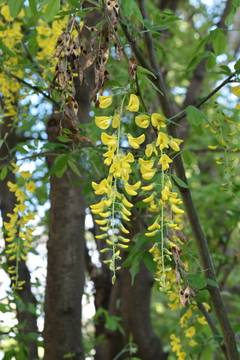
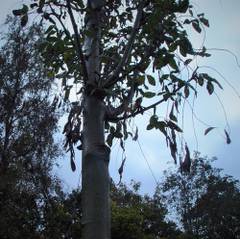
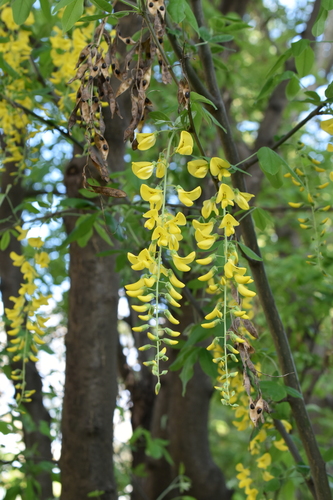
Laburnum is a small genus of two deciduous trees in the pea family, Fabaceae, native to the mountains of central and southern Europe. Plants grow 15–25 ft (4.5–7.5 m) tall with a rounded, spreading crown and smooth green-brown bark. The leaves are trifoliate, each leaflet 1–3 inches (2.5–8 cm) long, grey-green above and softly hairy beneath. In late spring the branches carry pendant racemes of yellow pea flowers 4–10 inches (10–25 cm) long, the source of the common name golden chain tree. L. anagyroides flowers slightly earlier and has shorter chains than L. alpinum, and the garden hybrid L. × watereri 'Vossii' combines longer racemes with sparse seed set. Flat seed pods follow, ripening brown and persisting into winter. All parts contain the alkaloid cytisine and are poisonous if eaten, with the seeds holding the greatest concentration. The genus tolerates a wide range of soils but is short-lived, often declining after 20–30 years, and is prone to canker and aphids.
Native Range
Laburnum is native to the mountains of central and southern Europe, from France and the Alps through to the Balkans. It grows on rocky slopes and woodland margins, often over limestone, and has naturalized in parts of Britain and northern Europe.Suggested Uses
Laburnum is grown as a spring-flowering specimen tree, trained over pergolas and laburnum tunnels, and used in cool-climate lawns and borders. Trees are spaced 12–20 ft (3.5–6 m) apart, or closer when trained on a frame. Its toxicity makes it less suited to gardens used by young children or grazing animals.How to Identify
Appearance
Size & Dimensions
Height15' - 25'
Width/Spread12' - 20'
Colors
Bloom Information
Laburnum flowers in late spring, generally May to early June, with the pendant yellow racemes opening over two to three weeks. L. anagyroides starts a little earlier than L. alpinum, and the hybrid L. × watereri stretches the display where both parents grow nearby. Flowering lasts longer in cool seasons and is brief in hot springs.
Detailed Descriptions
Foliage Description
grey-greenGrowing Conditions
Sun Requirements
Requires 5-10 hours of direct sunlight daily
• Full Sun: 6+ hours of direct sunlight
• Partial Shade: 3-6 hours of direct sunlight
• Full Shade: Less than 3 hours of direct sunlight
Care & Maintenance
Care Guide
Laburnum grows in full sun to light shade and any moderately fertile, well-drained soil, including chalky and clay ground, at a pH of 6.0–8.0. Once established it tolerates short dry spells, though even summer moisture supports steadier growth. The genus is hardy to about −20°F (−29°C) and suits cool temperate climates more than hot, humid ones. It is short-lived, often declining after 20–30 years, and can suffer twig blight, canker, and aphids. Plants are usually grown from grafted stock or seed, with the hybrid L. × watereri raised from cuttings. Roots resent disturbance, so young plants are set straight into their final position.Pruning
Laburnum needs little pruning and forms its rounded crown with minimal training. Any shaping is done in late summer to early autumn, as the wood bleeds sap when cut in late winter or spring. Removing the brown seed pods reduces self-seeding and limits the spread of poisonous seed where children or livestock are nearby.Pruning Schedule
Prune: August–September
summerfall