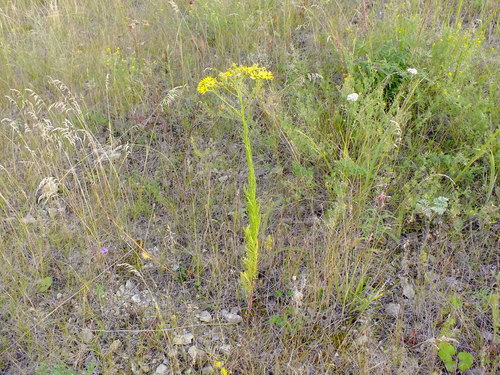
Jacobaea, Genus, erucifolia, Species,
- Genus & species
hoary ragwort
Overview
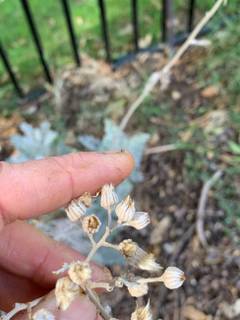
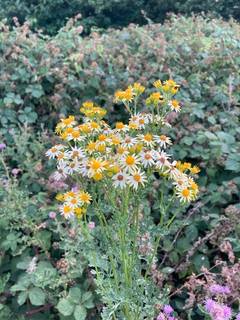
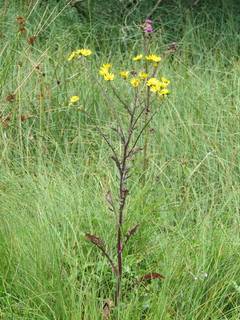
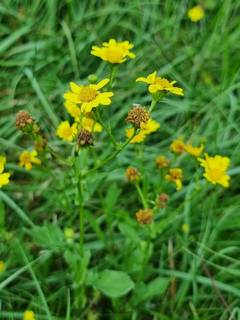
Jacobaea erucifolia is an upright herbaceous perennial in the daisy family, reaching 30-120 cm (12-47 in) on stiff, often reddish stems. The pinnately lobed leaves are 5-20 cm (2-8 in) long with narrow segments and soft grey hairs on the undersides, giving the foliage a hoary cast. From mid-summer it bears flat-topped clusters of yellow flower heads, each 1.5-2.5 cm (0.6-1 in) across with about 13 ray florets surrounding a yellow disc. It spreads by short rhizomes and by wind-borne seed tipped with a pappus of white hairs, forming patches in grassland. The plant grows on dry to moist calcareous soils along roadsides, field margins, and rough pasture. All parts contain pyrrolizidine alkaloids that damage the liver of grazing animals and humans, and the species is treated as an injurious weed of pasture across parts of its range. It resembles Jacobaea vulgaris but flowers later, has more deeply cut leaves, and carries grey-hairy rather than nearly hairless foliage.
Native Range
Jacobaea erucifolia is native to Europe and western Asia, from Britain and the Iberian Peninsula east to the Caucasus and Siberia. It grows in lowland grassland on calcareous soils and along disturbed roadsides. It has been introduced locally beyond this range.Suggested Uses
Jacobaea erucifolia occurs in wildflower meadows and naturalistic grassland plantings on calcareous soil, where its late yellow heads extend the season for pollinators. Its toxicity to livestock limits its use in or near grazed pasture. It is most often a component of conservation grassland rather than border planting.How to Identify
Appearance
Size & Dimensions
Height1' - 3'11"
Width/Spread1' - 2'
Bloom Information
Detailed Descriptions
Foliage Description
grey-greenGrowing Conditions
Sun Requirements
Requires 6-12 hours of direct sunlight daily
• Full Sun: 6+ hours of direct sunlight
• Partial Shade: 3-6 hours of direct sunlight
• Full Shade: Less than 3 hours of direct sunlight