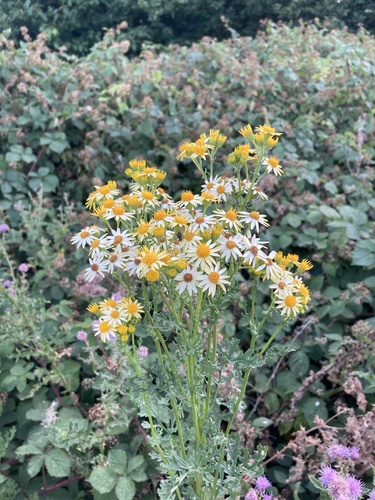
Jacobaea, Genus, spp., Multiple species,
- Genus
- Multiple species
ragworts
Europe, temperate Asia, and North Africa
Overview
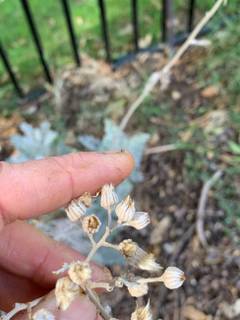
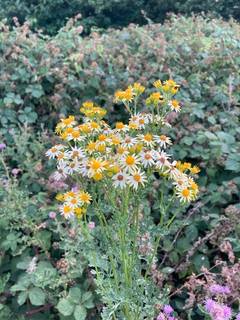
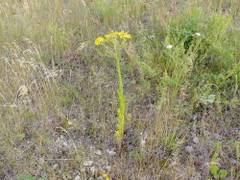
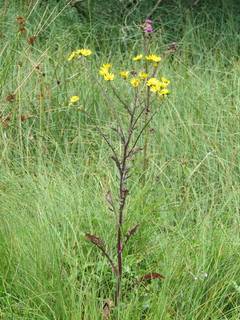
Jacobaea is a genus of about 35 biennial and perennial herbs in the daisy family, Asteraceae, known as ragworts and recently separated from Senecio. Plants form rosettes that send up branched, leafy stems 1-4 feet (30-120 cm) tall, with deeply lobed leaves. The flower heads are small yellow daisies 0.4-1 inch (1-2.5 cm) across, gathered in dense flat-topped clusters at the stem tips. The genus is native to Europe, temperate Asia, and North Africa, growing in grassland, dunes, roadsides, and waste ground, and several species have naturalized in North America, Australia, and New Zealand. J. vulgaris, common ragwort, contains pyrrolizidine alkaloids that are poisonous to horses, cattle, and people, causing cumulative liver damage if eaten. J. maritima, silver ragwort, is grown for its white-felted silvery foliage rather than its flowers. Most species are short-lived but self-sow heavily, producing thousands of wind-borne seeds per plant, which lets ragworts spread quickly and become weedy. The plants feed many insects, including the larvae of the cinnabar moth, which strip the foliage.
Native Range
Jacobaea is native to Europe, temperate Asia, and North Africa. Several species, especially J. vulgaris, have naturalized widely in North and South America, Australia, and New Zealand, where they are treated as agricultural weeds because of their toxicity to grazing animals.Suggested Uses
J. maritima is grown for silver foliage in bedding schemes, borders, and containers. Most other species are wild plants of grassland and dunes rather than garden subjects. The flowers are a nectar and larval source for a range of insects.How to Identify
Appearance
Size & Dimensions
Height1' - 4'
Width/Spread1' - 2'
Bloom Information
Flowering occurs through summer and into autumn, generally June to October, with long-lasting clusters of yellow flower heads. Each plant blooms for many weeks and sets large amounts of seed. In mild climates some plants flower in their first year.
Detailed Descriptions
Foliage Description
green to silver-greyGrowing Conditions
Sun Requirements
Requires 6-10 hours of direct sunlight daily
• Full Sun: 6+ hours of direct sunlight
• Partial Shade: 3-6 hours of direct sunlight
• Full Shade: Less than 3 hours of direct sunlight
Care & Maintenance
Care Guide
Jacobaea species grow in full sun on a wide range of well-drained soils, from sandy and coastal ground to ordinary garden loam, with a pH near 6.0-7.5. The genus tolerates drought, salt, and poor soil and needs little care once established. J. maritima is grown as an annual or short-lived perennial for its silver foliage and is trimmed to stay compact. Most species self-sow freely, and seedlings appear readily in open ground. Clearing plants before seed sets limits their spread. J. vulgaris is classed as a noxious weed in some regions because of its toxicity to livestock.Pruning
J. maritima is trimmed in spring or after flowering to keep the silvery foliage dense. Clearing flower heads before seed ripens reduces self-sowing in all species. Spent stems are cut down at the end of the season.Container Growing
Suitable for container growing
Minimum container size: 1 gallons