Isopogon, Genus, anemonifolius, Species,
- Genus & species
broad-leaved drumsticks
Overview
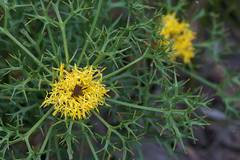
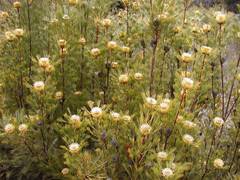
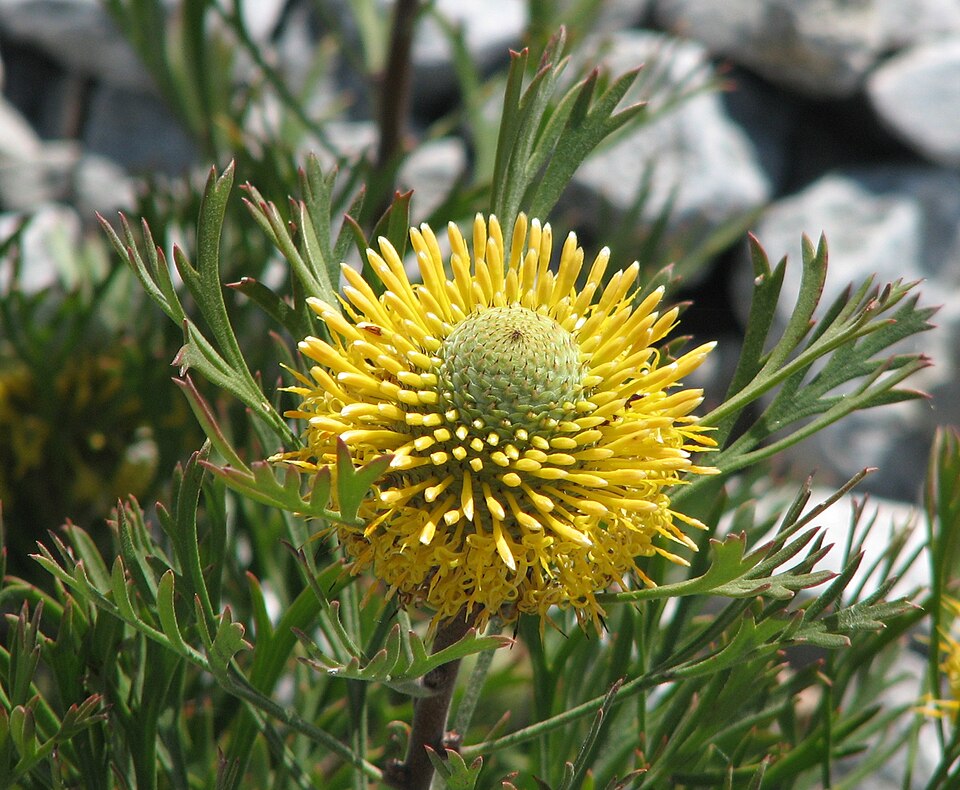
Isopogon anemonifolius is a small evergreen shrub of the protea family, native to the sandstone country of southeastern Australia. It grows 1.5-5 feet (0.5-1.5 m) tall and wide, with a rounded, somewhat open habit and a woody base. The stiff, flat leaves are divided into narrow forking segments and are broader than those of related drumstick species, turning bronze to reddish in cold weather. From late spring into summer it bears rounded, globe-shaped flower heads about 1-1.6 inches (2.5-4 cm) across in soft yellow at the branch tips. After flowering, the heads harden into grey, cone-like balls that hold the seed and stay on the plant, the source of the drumstick name. It grows in heath and dry open woodland on sandy, sharply drained soils low in nutrients, and resprouts from a woody base after fire. It tolerates drought, wind, and frost once established but is sensitive to rich soils and high-phosphorus fertilisers, which can kill it. Slow, steady growth makes it long-lasting in the right conditions.
Native Range
Native to southeastern Australia, mainly the sandstone areas of New South Wales and into Victoria. It grows in heath, dry sclerophyll woodland, and exposed ridges on sandy, well-drained soils.Suggested Uses
Isopogon anemonifolius is used in native, heath, and low-water gardens, on dry banks, and in coastal and exposed sites where its drought tolerance suits lean, sunny positions. The flower heads and dried seed cones are cut for fresh and dried arrangements. It supports nectar-feeding insects and birds.How to Identify
Appearance
Size & Dimensions
Height1'6" - 5'
Width/Spread1'6" - 5'
Bloom Information
Detailed Descriptions
Foliage Description
Green, bronze to red in winterGrowing Conditions
Sun Requirements
Requires 6-10 hours of direct sunlight daily
• Full Sun: 6+ hours of direct sunlight
• Partial Shade: 3-6 hours of direct sunlight
• Full Shade: Less than 3 hours of direct sunlight
Care & Maintenance
Care Guide
Isopogon anemonifolius grows in full sun to light shade in sandy or gravelly, sharply drained soils low in nutrients. Once established it needs little water and tolerates drought, frost, and exposure. Heavy, wet, or rich soils and high-phosphorus fertilisers are the main causes of decline and can kill the plant. A light tip prune after flowering keeps it compact, and it also resprouts from its woody base if cut back harder. It can be raised from seed released from the old cones, though germination is slow. A mulch of coarse gravel or leaf litter suits the surface roots.Pruning
A light tip prune after flowering keeps the shrub bushy and can include picking the flower heads or cones for indoor use. It resprouts from a woody lignotuber, so harder pruning into older wood is usually tolerated. Spent cones can be left in place or removed.Container Growing
Suitable for container growing
Minimum container size: 5 gallons