Isopogon, Genus, spp., Multiple species,
- Genus
- Multiple species
Australia (southwest Western Australia and eastern Australia)
Overview
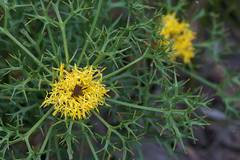
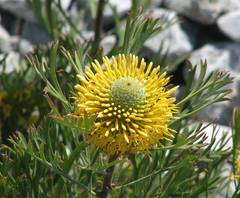
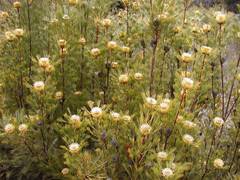
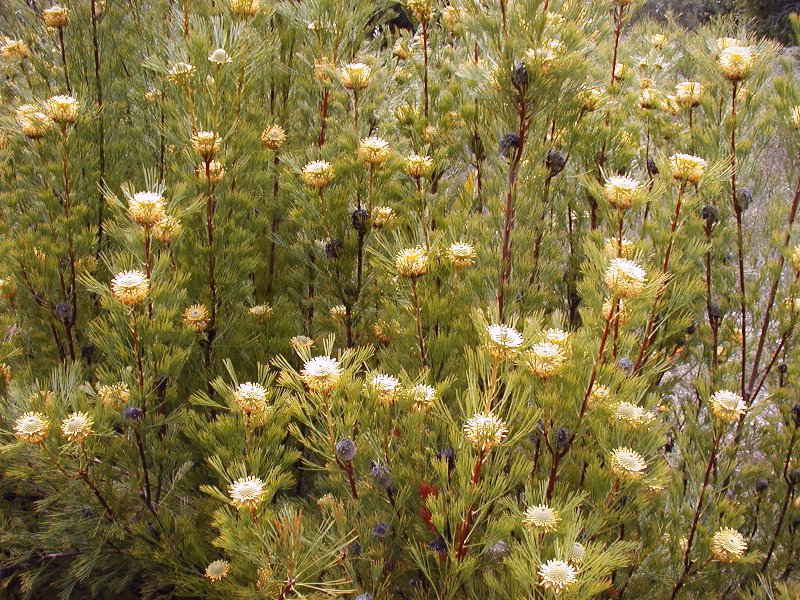
Isopogon is a genus of about forty species of evergreen shrubs in the protea family, Proteaceae, endemic to Australia and known as drumsticks or cone-bushes. Plants form small to medium shrubs mostly 1.5 to 10 feet (0.5 to 3 m) tall, with stiff leaves that vary across the genus from narrow and needle-like to flat and divided. The flowers are packed into rounded, globe-shaped heads at the branch tips in yellow, pink, or purple, and after flowering the head develops into a persistent woody cone of tightly packed bracts that gives the plants their common name. The seeds are released from these cones, often after fire. The genus is concentrated in southwestern Western Australia, with further species in eastern Australia, where the shrubs grow in heath, woodland, and rocky ground on nutrient-poor, sharply drained soils. Like other Proteaceae, Isopogon is sensitive to phosphorus and to root-rot fungi in wet soils, which can make it short-lived in gardens outside its natural range. The woody seed cones persist on the plant long after the flowers fade.
Native Range
Isopogon is endemic to Australia, with most species in the southwest of Western Australia and others in eastern Australia. The shrubs grow in heath, open woodland, and rocky ground on nutrient-poor soils.Suggested Uses
Isopogon is used in native, water-wise, and rockery gardens in dry mild climates, and the flowers and woody cones are used fresh and dried in arrangements. The compact species suit containers of free-draining mix. The shrubs combine with other Proteaceae and heath plants on sandy soils.How to Identify
Appearance
Size & Dimensions
Height1'6" - 10'
Width/Spread2' - 8'
Bloom Information
Flowering occurs mainly in winter and spring, roughly July to November in the native range, with peak bloom varying between species. The globe-shaped heads are yellow, pink, or purple. Nectar-feeding birds and insects visit the flowers, and the spent heads harden into woody cones.
Detailed Descriptions
Flower Description
yellow, pink, or purpleFoliage Description
green to grey-greenGrowing Conditions
Sun Requirements
Requires 6-10 hours of direct sunlight daily
• Full Sun: 6+ hours of direct sunlight
• Partial Shade: 3-6 hours of direct sunlight
• Full Shade: Less than 3 hours of direct sunlight
Care & Maintenance
Care Guide
Isopogon grows in full sun in sandy, gravelly, sharply drained soils that are low in nutrients. The genus is highly sensitive to phosphorus, so standard fertilisers can kill the roots, and it is also intolerant of wet, heavy soils where root-rot fungi take hold. Most species are frost-tender to marginally hardy, suited to roughly USDA zones 9 to 10 and dry Mediterranean-type climates. Plants are drought-tolerant once established and need good air movement and free drainage to stay healthy. Propagation is by seed released from the woody cones, often after heat or smoke treatment, or by semi-hardwood cuttings.Pruning
A light tip prune after flowering keeps the shrubs bushy and compact. Cutting into old bare wood is left undone, as plants are slow to reshoot from leafless stems. Removing some spent woody cones can tidy the shrub but is not required.Container Growing
Suitable for container growing
Minimum container size: 5 gallons