Iberis, Genus, spathulata, Species,
- Genus & species
Pyrenean candytuft
High Pyrenees of Spain, France, and Andorra at 6,500-9,800 ft (2,000-3,000 m)
Overview
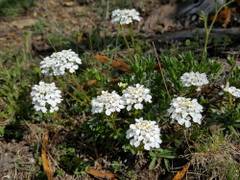
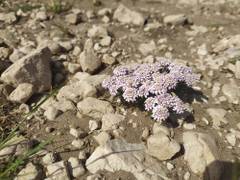
Iberis spathulata is a miniature alpine candytuft from the high Pyrenees, growing as a tight evergreen cushion just 2–4 inches (5–10 cm) tall and 8–12 inches (20–30 cm) wide. The species epithet 'spathulata' translates as 'spatula-shaped' and refers to the small spoon-shaped leaves 0.25–0.5 inch (6–13 mm) long that compose the cushion. White to pale-pink flat-topped flower clusters 0.5–0.75 inch (1–2 cm) across appear in May and June for about 3 weeks, scaled in proportion to the miniature plant. The native habitat is high-altitude scree and rock-crevice sites at 6,500–9,800 ft (2,000–3,000 m), and the cultural needs reflect that origin: sharply drained gritty soil, full sun, cool summer temperatures, and free air movement around the cushion. The cushion opens at the center and rots in wet, rich, humid, or shaded sites, and the species declines below USDA zone 7 in regions with hot, humid summers regardless of winter cold. Maximum spread is roughly one-quarter the size of the larger garden species Iberis sempervirens, which reaches 18–24 inches (45–60 cm) wide. Deer rarely browse the foliage. Crown rot is the main failure mode in unsuitable sites.
Native Range
Iberis spathulata is native to the high Pyrenees of Spain, France, and Andorra, growing on calcareous scree slopes and in rock crevices at elevations of 6,500–9,800 ft (2,000–3,000 m).Suggested Uses
Used in alpine troughs, crevice gardens, scree beds, raised alpine berms, and shallow rock-garden pockets where the miniature scale shows at close range. Pairs with other miniature alpines such as Draba aizoides, Saxifraga paniculata, and small Sempervivum cultivars in trough plantings. Less suited to general garden borders where the small scale is lost and conditions are typically too rich and moist.How to Identify
Appearance
Size & Dimensions
Height2" - 4"
Width/Spread8" - 1'
Colors
Bloom Information
Detailed Descriptions
Flower Description
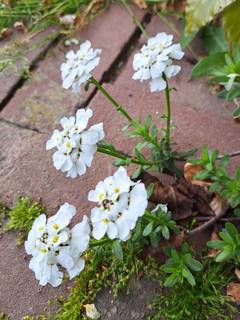
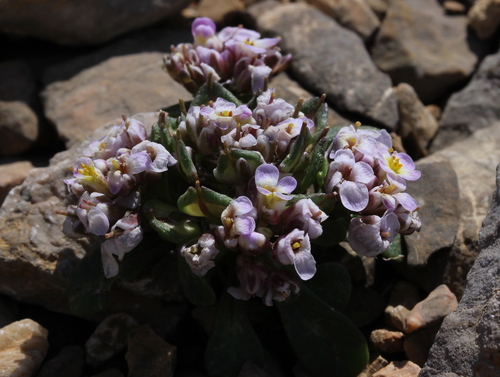
White to pale pink in flat-topped clusters 0.5-0.75 inch (1-2 cm) acrossFoliage Description
Dark green spoon-shaped leaves 0.25-0.5 inch (6-13 mm) long forming a tight evergreen cushionGrowing Conditions
Sun Requirements
Requires 6-10 hours of direct sunlight daily
• Full Sun: 6+ hours of direct sunlight
• Partial Shade: 3-6 hours of direct sunlight
• Full Shade: Less than 3 hours of direct sunlight
Care & Maintenance
Care Guide
Plant in a site receiving 6 or more hours of direct sun daily with free air movement around the cushion. Soil must be sharply drained — coarse gritty mixes with limestone chips or pumice work, while standard garden soil holds too much moisture. Soil pH should be neutral to alkaline (pH 6.5–8.0). Water during the first month of establishment, then irrigate sparingly only during prolonged drought. The cushion declines in shade, in soils that hold winter moisture, and in regions with hot, humid summers. Cool summer microclimates such as alpine troughs, north-facing rock walls, and crevice gardens at higher elevations suit the species; warm humid lowland borders do not.Pruning
No regular pruning is required. The cushion self-maintains at its mature size. If a portion of the cushion dies out from rot or drought, lift the plant and replant a healthy segment into fresh gritty soil.Container Growing
Suitable for container growing
Minimum container size: 1 gallons