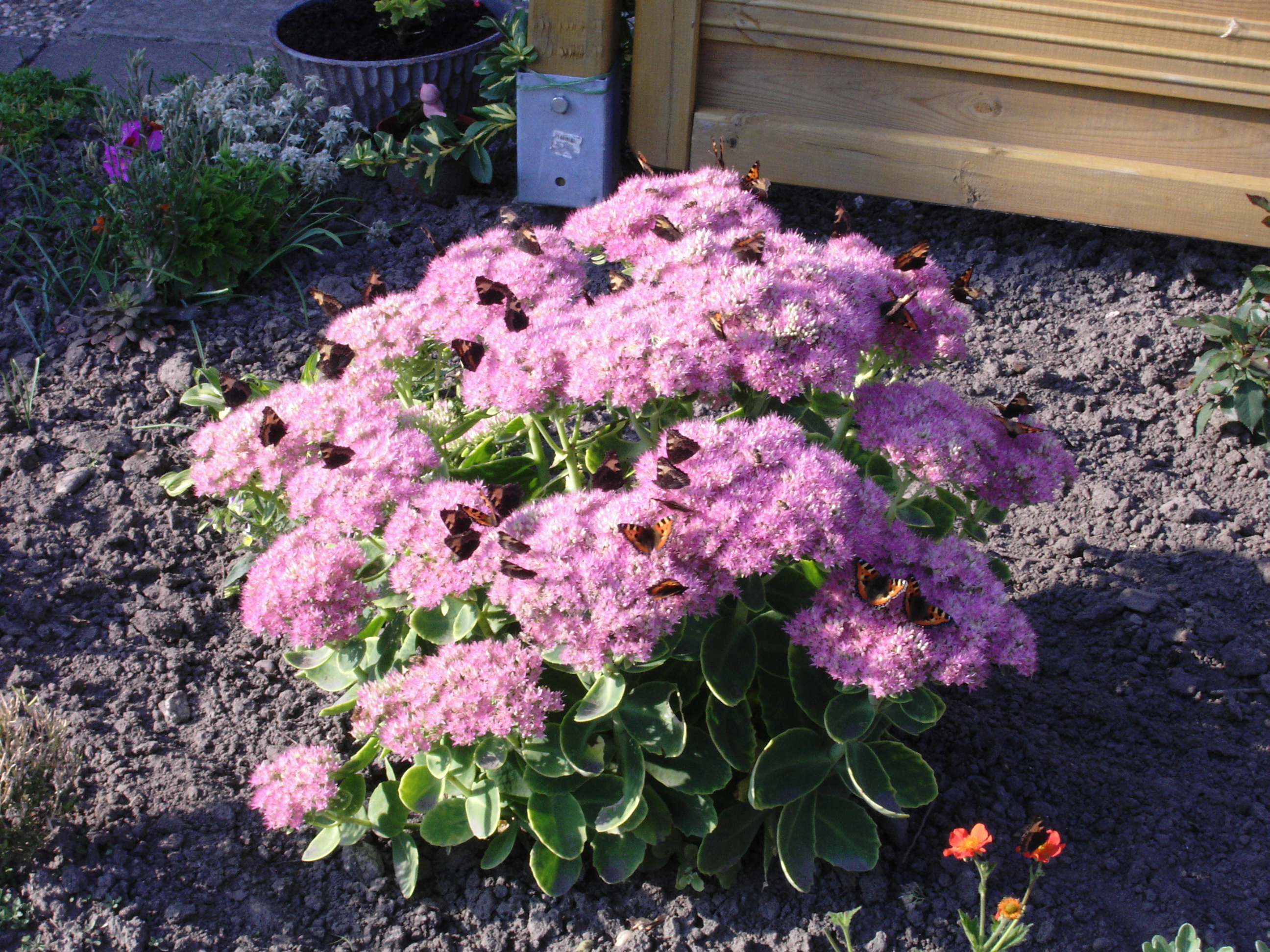
Hylotelephium, Genus, spectabile, Species,
- Genus & species
Ice plant
Northern China and the Korean Peninsula
Overview
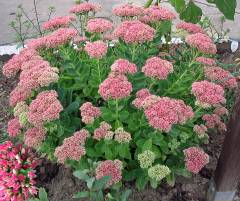
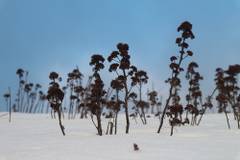
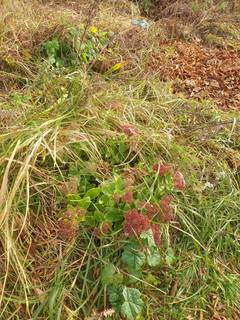
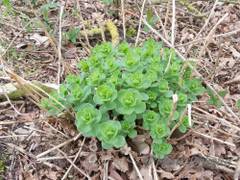
Hylotelephium spectabile is a herbaceous perennial with succulent tissue, forming an upright clump 18-24 inches (45-60 cm) tall and wide from a woody rootstock. Stems are unbranched and carry fleshy gray-green leaves 2-3 inches (5-8 cm) long, ovate with shallow-toothed margins, set opposite or in whorls of three. Each stem is topped by a flat cyme 4-6 inches (10-15 cm) across holding 100-300 star-shaped flowers 0.3 inch (8 mm) wide, with stamens extending 0.1-0.2 inch (3-5 mm) beyond the pink petals to give the head a bristled outline. Buds show pale green from mid-July, open pink in late August, and darken to bronze-red by early October. Seed heads hold their shape, turn rust-brown, and stand through winter until cut in spring. Growth starts as gray-green rosettes at ground level in March and reaches full height by late July. Stems splay outward from the center and lie flat under their own weight in soil rich in nitrogen, in shade beyond 4 hours per day, or after heavy rain at flowering. Crowns rot where soil stays wet through winter.
Native Range
Native to northern China, including Hebei, Jilin, and Liaoning, and to the Korean Peninsula, growing on rocky slopes, dry grassland, and scrub margins at 300-5,900 feet (90-1,800 m). Grown widely outside its range and naturalized in scattered locations across Europe and North America.Suggested Uses
Planted at 18-24 inch (45-60 cm) spacing at the front and middle of borders, in gravel and dry gardens, and among grasses where winter seed heads stand above low growth. Grows in containers of 3 gallons (11 L) or larger in a gritty mix. Flower heads are worked by bees and butterflies from late August, carrying 10-30 insects each at peak in warm weather.How to Identify
Appearance
Size & Dimensions
Height1'6" - 2'
Width/Spread1'6" - 2'
Colors
Foliage Colors
Bloom Information
Buds form from mid-July and open from late August through September in zones 4-8, with heads holding color into October. Total bloom runs 6-8 weeks, reaching 10 weeks in cool autumns. Flowering starts 2-3 weeks earlier in zones 8-9 and 2 weeks later in zones 3-4. Plants cut back by half in late May flower 7-10 days later than uncut plants, on stems 6 inches (15 cm) shorter.
Detailed Descriptions
Flower Description
Pink, aging bronze-redFoliage Description
Gray-greenGrowing Conditions
Sun Requirements
Requires 6-10 hours of direct sunlight daily
• Full Sun: 6+ hours of direct sunlight
• Partial Shade: 3-6 hours of direct sunlight
• Full Shade: Less than 3 hours of direct sunlight
Care & Maintenance
Care Guide
Established plants take no supplemental water except in droughts longer than 5-6 weeks, when lower leaves shrivel and drop. Lean soil holds stems upright, while nitrogen-rich soil and fertilizer produce soft growth that splays open at flowering. Sharp drainage through winter is required, since crowns held in cold wet soil rot at the base. Cutting stems back by half in late May, or removing every third stem at the base, produces shorter self-supporting growth. Clumps are lifted and divided every 3-4 years in early spring as the center weakens. Vine weevil larvae feed on the roots of container-grown plants and cause sudden collapse in spring, and slugs graze emerging rosettes in March and April.Pruning
Old stems and seed heads are cut to 2 inches (5 cm) above ground in late winter or early spring, before new rosettes expand. Stems shortened by half in late May, once growth reaches 8-10 inches (20-25 cm), regrow to 14-18 inches (35-45 cm) instead of 18-24 inches (45-60 cm) and stand without staking. Seed heads left through winter shelter the crown and catch snow, while autumn removal leaves the plant with no above-ground structure until March.Pruning Schedule
Prune: March & May
early springlate spring
Container Growing
Suitable for container growing
Minimum container size: 3 gallons