Heracleum, Genus, spp., Multiple species,
- Genus
- Multiple species
hogweeds
Temperate Northern Hemisphere - North America, Europe, and Asia, including the Caucasus and central Asia
Overview
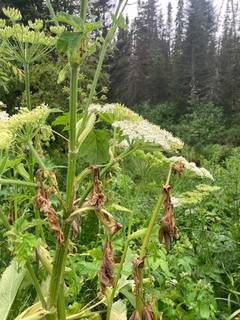
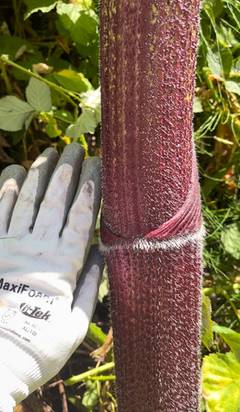
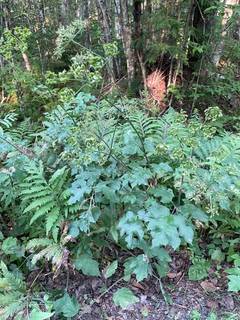
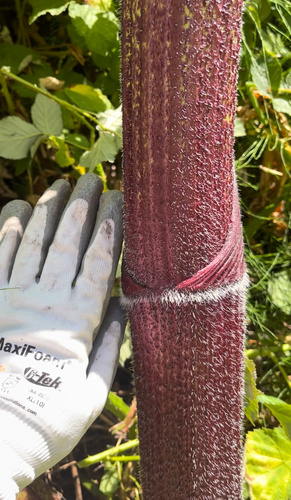
Heracleum is a genus of roughly 60 to 100 biennial and perennial herbs in the carrot family (Apiaceae), known as hogweeds and cow parsnips. Plants form a basal rosette in the first year and send up a hollow, ridged, often bristly flowering stem in later years, reaching 3-18 ft (0.9-5.5 m) tall depending on species. Leaves are large and compound, pinnately divided into broad toothed or lobed segments, with the biggest leaves of H. mantegazzianum spanning 3-5 ft (0.9-1.5 m). Tiny white to greenish-white flowers crowd into broad flat-topped compound umbels 4-32 in (10-80 cm) across, the outer flowers often enlarged. Flat winged seeds follow and scatter near the parent. Sap of several species, above all giant hogweed H. mantegazzianum, contains furanocoumarins that cause phytophotodermatitis, producing burns and blisters on skin exposed to sunlight after contact. The genus is native across the temperate Northern Hemisphere. Some species are regulated as noxious or invasive, while native cow parsnip H. maximum is a normal part of North American meadows and streamsides.
Native Range
Heracleum is native across the temperate Northern Hemisphere, with species in North America such as H. maximum, in Europe and western Asia such as H. sphondylium, and in the Caucasus and central Asia, where H. mantegazzianum originates. Plants grow in moist meadows, woodland edges, streambanks, and roadside ground. Several species, including giant hogweed, are regulated as noxious weeds in parts of North America and Europe.Suggested Uses
Native species such as cow parsnip H. maximum are planted in moist meadows, rain gardens, naturalized streambanks, and pollinator plantings. The broad umbels feed a wide range of insects. Giant hogweed has no garden use and is targeted for removal where it occurs.How to Identify
Appearance
Size & Dimensions
Height3' - 18'
Width/Spread2' - 6'
Bloom Information
Heracleum flowers in late spring through summer, generally June to August, in the year the plant bolts. The large white umbels open over several weeks and draw many flies, beetles, and bees. After flowering, biennial and monocarpic species set seed and die, while perennial species return from the rootstock.
Detailed Descriptions
Flower Description
White to greenish-whiteFoliage Description
GreenGrowing Conditions
Sun Requirements
Requires 4-8 hours of direct sunlight daily
• Full Sun: 6+ hours of direct sunlight
• Partial Shade: 3-6 hours of direct sunlight
• Full Shade: Less than 3 hours of direct sunlight