Hepatica, Genus,
- Genus
hepatica, liverleaf
Europe, Asia, North America (temperate deciduous woodland)
Overview
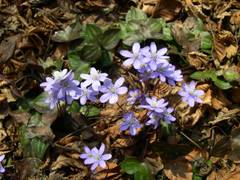
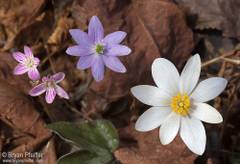
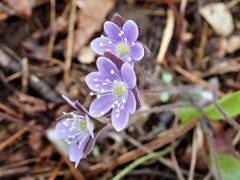
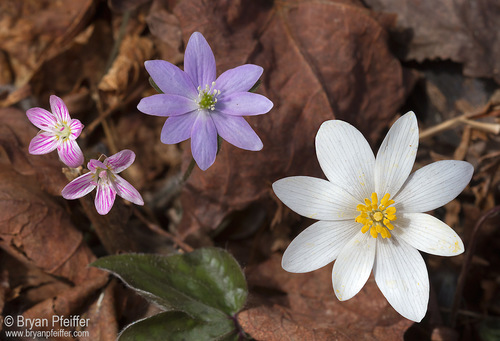
Hepatica is a genus of approximately 10 species of small woodland perennials in the buttercup family (Ranunculaceae), growing 3–6 inches (8–15 cm) tall and 4–8 inches (10–20 cm) wide. Single flowers 0.5–1 inch (12–25 mm) on hairy upright stems in late winter to early spring — among the earliest woodland perennials to bloom. The flowers have no true petals; the colored parts are 5–12 petal-like sepals in white, pink, mauve, lavender, or violet-purple surrounding a central boss of cream stamens. Three green bracts sit below each flower. Leathery 3-lobed basal leaves persist through winter, developing purple and bronze tints in cold weather. The common names 'hepatica' and 'liverleaf' reference the 3-lobed leaf shape resembling a liver — a connection noted in medieval herbalism. Species commonly cultivated: H. nobilis (European, neutral to alkaline soil), H. americana (eastern North American, rounded lobes), H. acutiloba (eastern North American, pointed lobes), H. japonica (Japanese, with hundreds of collector cultivars in varied flower forms). Slow-growing (adding 1–2 leaves per year) and long-lived (decades in undisturbed sites). Deeply resents root disturbance — plant in a permanent position. Skin contact with sap may cause irritation; ingestion causes gastric upset. Partial shade to full shade. Humus-rich well-drained soil. Zones 3–8. This entry represents the genus.
Native Range
H. nobilis is native to Europe from Scandinavia to the Mediterranean. H. americana and H. acutiloba are native to eastern North America. H. japonica is native to Japan. All grow in humus-rich soil in deciduous woodland shade.Suggested Uses
Grown in woodland gardens and shaded rock gardens in zones 3–8, planted in groups of 3–5 at border edges where the low early flowers are visible at close range. Companion to Galanthus, Erythronium, and Hepatica species in late-winter plantings. The overwintering foliage with purple-bronze tints is the winter feature. Skin irritant; gastric upset if ingested.How to Identify
Appearance
Size & Dimensions
Height3" - 6"
Width/Spread4" - 8"
Bloom Information
Late winter to early spring (February–April), lasting 3–5 weeks across a mass planting as individual flowers open successively. Flowers emerge before or alongside new leaves, from the rosette of overwintering foliage. Individual flowers last 2–3 weeks. Cool springs prolong the display.
Detailed Descriptions
Flower Description
White, pink, mauve, lavender, or violet-purple; petal-like sepals surrounding cream stamensFoliage Description
Leathery, 3-lobed, mid-green, developing purple and bronze tints in winterGrowing Conditions
Sun Requirements
Tolerates up to 4 hours of direct sunlight daily
• Full Sun: 6+ hours of direct sunlight
• Partial Shade: 3-6 hours of direct sunlight
• Full Shade: Less than 3 hours of direct sunlight
Care & Maintenance
Care Guide
Partial shade to full shade. Humus-rich well-drained soil. European species (H. nobilis): neutral to slightly alkaline pH (6.5–7.5). North American species: slightly more acidic (5.5–7.0). Consistent moisture during the growing season. Top-dress with leaf mould annually. Slow-growing and deeply resents disturbance — plant permanently. Skin irritant; gastric upset if ingested. Zones 3–8.Pruning
Remove previous year's leaves in late winter just before flowers emerge, cutting at the base. Leave seed capsules to ripen if seed propagation is desired — seed is short-lived and must be sown immediately after collection (June–July). Division only on very old congested clumps.Pruning Schedule
Prune: February–March
early spring
Container Growing
Suitable for container growing
Minimum container size: 2 gallons