Heliopsis, Genus, helianthoides, Species,
- Genus & species
False sunflower
Overview
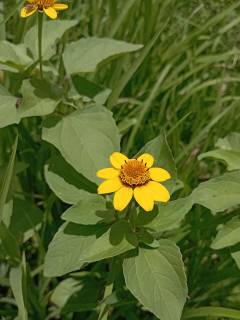
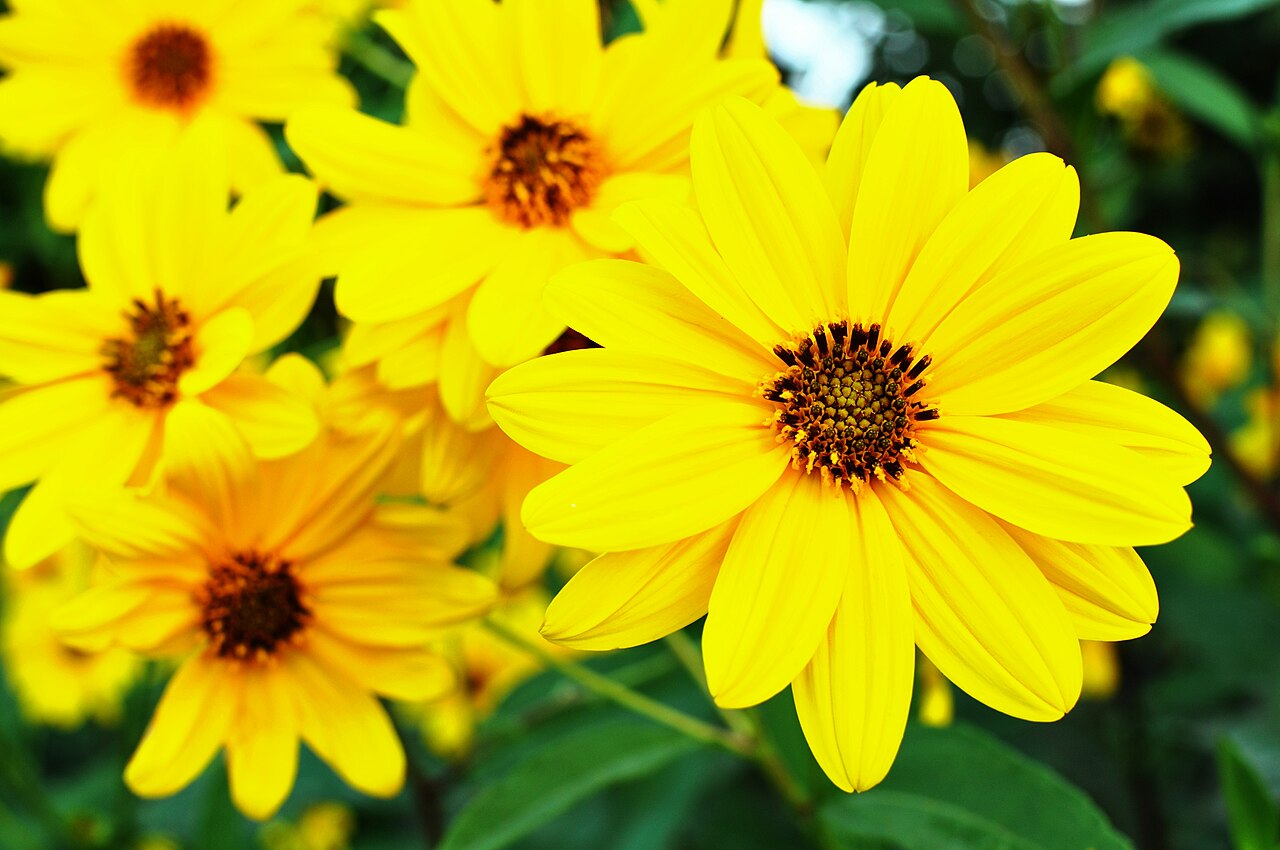
Heliopsis helianthoides is an upright herbaceous perennial forming clumps 3-5 feet (90-150 cm) tall and 2-4 feet (60-120 cm) wide from a woody crown. Stems are stiff, smooth, often flushed red-purple, and branch in the upper third. Leaves are opposite, ovate to lanceolate, 3-6 inches (8-15 cm) long, coarsely toothed, rough to the touch on both surfaces, and carried on petioles 0.5-1 inch (13-25 mm) long. Daisy-form heads 2-3 inches (5-8 cm) across open from June to September, each with 10-18 golden-yellow ray florets around a domed yellow-brown to orange-brown disc. The ray florets are fertile and stay attached to the head as seed ripens rather than dropping. Plants set seed heavily and self-sow into open ground. In rich soil, or where the clump is shaded for part of the day, stems reach the upper end of the height range and splay outward from the centre after heavy rain. Dark red aphids colonise the upper stems and flower buds in early summer, and powdery mildew coats the lower leaves in humid weather with still air. Hardy in USDA zones 3-9.
Native Range
Heliopsis helianthoides is native across eastern and central North America, from Ontario and Quebec south to Florida and west to Saskatchewan, Wyoming, and New Mexico. It grows in tallgrass prairie, open oak woodland, thicket margins, streambanks, and roadside ground, on soils ranging from sand to heavy clay. Occurrences in the Pacific states come from introduced populations.Suggested Uses
Used in prairie and meadow plantings, the middle to back of sunny mixed borders, and along fence lines, spaced 24-30 inches (60-75 cm) apart. Stems 24-36 inches (60-90 cm) long, cut as the disc florets begin to open, hold 7-10 days in water. The species is grown in pollinator plantings and on rain garden margins where soil drains within a day of heavy rain.How to Identify
Appearance
Size & Dimensions
Height3' - 5'
Width/Spread2' - 4'
Bloom Information
Flowering starts in mid-June in zones 5-6 and in late June to early July farther north, running 10-14 weeks to early or mid-September. Heads open in sequence up the branched stems, so a clump carries buds, open flowers, and ripening seed heads at the same time. Stems cut back by one-third in late May push the start back about two weeks. Bumblebees, sweat bees, and small butterflies work the discs, and goldfinches strip the seed heads from September onward.
Detailed Descriptions
Flower Description
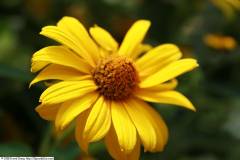
Golden-yellow rays around a yellow-brown to orange-brown discFoliage Description
Medium to dark green, rough-textured on both surfacesGrowing Conditions
Sun Requirements
Requires 6-10 hours of direct sunlight daily
• Full Sun: 6+ hours of direct sunlight
• Partial Shade: 3-6 hours of direct sunlight
• Full Shade: Less than 3 hours of direct sunlight
Care & Maintenance
Care Guide
Six or more hours of direct sun produces the stiffest stems; at four to six hours the clump stretches and leans. The species grows in average soil of pH 5.5-7.5 from sand through clay, where drainage counts for more than fertility. Established plants carry through three to four weeks without rain, though flowering thins in prolonged drought, and roughly 1 inch (2.5 cm) of water per week holds bloom through midsummer. Nitrogen-rich feeding produces soft growth that lodges after storms, so a single spring topdressing of compost covers the season on most soils. Clumps are lifted and divided every three to four years in early spring once the centre opens out. Spacing at 24-30 inches (60-75 cm) keeps air moving between plants and limits powdery mildew.Pruning
Stems cut back by one-third to one-half in late May or early June produce shorter, branched growth that stands without support, at the cost of a two-week delay in flowering. Spent heads cut at the first leaf pair below the flower prompt secondary buds and cut down on self-sowing. Stems are taken to 2-3 inches (5-8 cm) above ground after frost, or left standing through winter where the seed heads are wanted for birds.Pruning Schedule
Prune: March & May–September
late springsummerearly spring