Gunnera, Genus, tinctoria, Species,
- Genus & species
giant rhubarb
Southern Chile and adjacent Argentina (moist ravines, streambanks, bog margins, forest clearings from sea level to 3,000 feet / 900 m); classified as invasive in Ireland, the Azores, and parts of the UK where it has naturalized in coastal wetlands
Overview
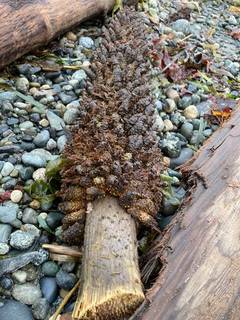
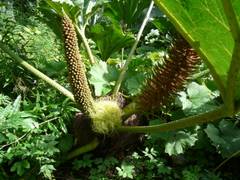
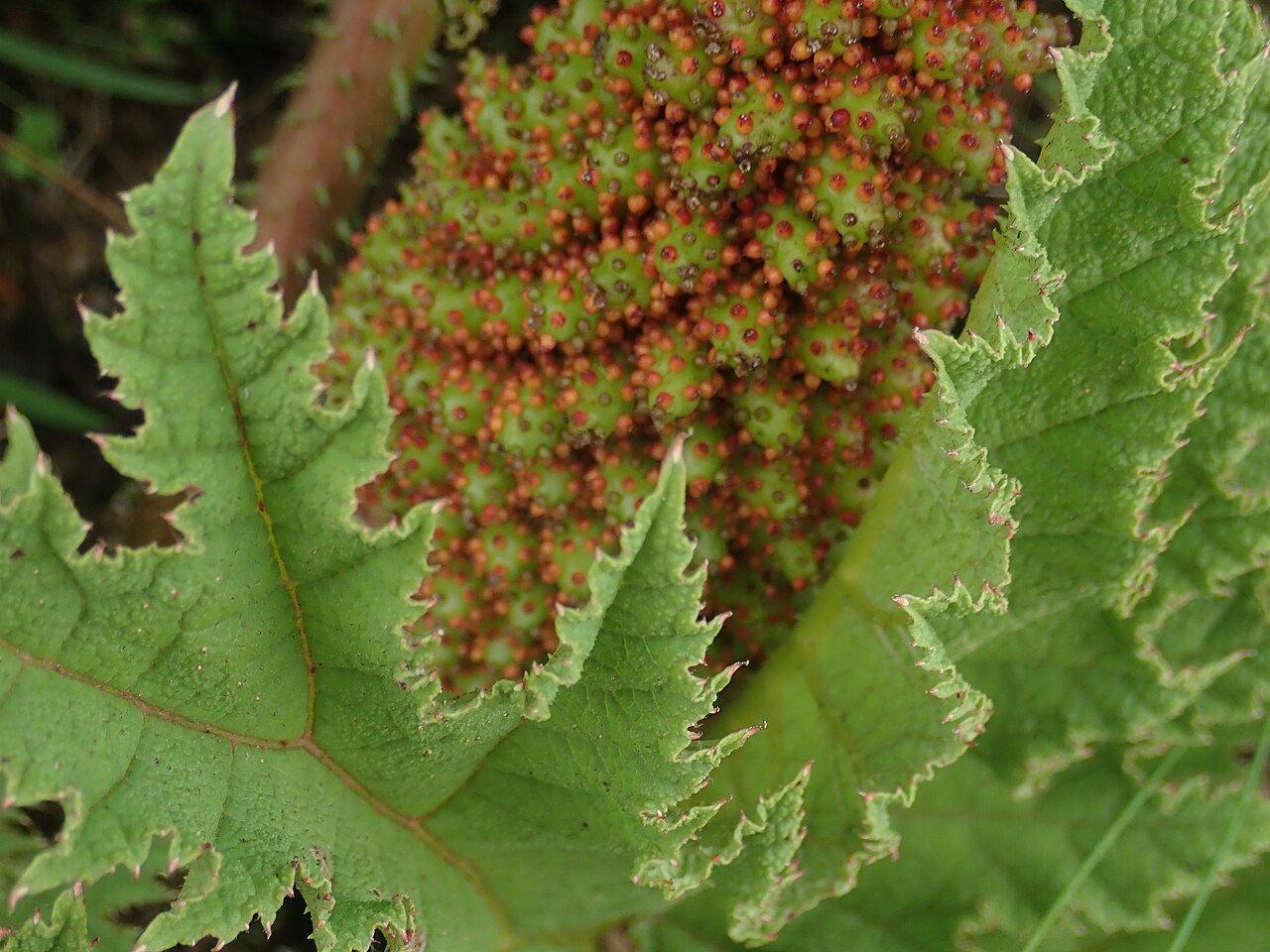
Gunnera tinctoria (also known by the synonym Gunnera chilensis) is a massive clumping herbaceous perennial in its own family (Gunneraceae) reaching 5–8 feet (1.5–2.4 m) tall with a spread of 6–10 feet (1.8–3 m). This Chilean species produces some of the largest individual leaves of any herbaceous plant grown in temperate gardens — individual leaves run 3–6 feet (0.9–1.8 m) across on thick bristly spiny petioles that stand 3–5 feet (0.9–1.5 m) long. Leaves are palmately lobed, deeply veined, coarse-textured, and rough on both surfaces. Flower spikes are erect conical structures 12–24 inches (30–60 cm) tall, dense greenish-red and resembling corn cobs in overall form, appearing in June–July at the base of the leaf canopy and followed by small orange-red fruit through the fall. The plant dies back to a massive crown through winter dormancy and regenerates the full leaf canopy from the crown each spring. Growth rate runs fast in favorable conditions. The species requires consistently moist to wet soil — it carries no drought tolerance and fails under dry conditions. Hardy to zone 7 with winter crown protection.
Native Range
Gunnera tinctoria is native to southern Chile and adjacent Argentina, where it grows in moist ravines, streambanks, bog margins, and forest clearings from sea level to 3,000 feet (900 m). The species is classified as invasive in parts of western Europe — specifically in Ireland, the Azores, and parts of the United Kingdom — where it has naturalized along coastal streams and wetlands and displaced native vegetation across affected regions.Suggested Uses
Grown at pond margins, streambanks, and in bog gardens at 6–10 foot (1.8–3 m) spacing. The massive mature leaf size requires large-scale landscape contexts where a single plant can occupy 50–80 square feet (4.6–7.4 sq m) of garden floor without crowding adjacent plantings. The species is not a working choice for small gardens given the scale alone, and permanently moist to wet soil is a non-negotiable cultural requirement. The visual scale serves as the primary ornamental feature of the species — no other herbaceous perennial in temperate cultivation matches the leaf size or canopy presence. In regions where G. tinctoria is classified as invasive (Ireland, the Azores, parts of the UK), native alternatives such as large-leaved Rheum palmatum or Darmera peltata can be substituted for similar visual scale without the regulatory and ecological issues. Dry sites, exposed windy positions, and small gardens are all unsuitable given the cultural profile and scale.How to Identify
Appearance
Size & Dimensions
Height5' - 8'
Width/Spread6' - 10'
Bloom Information
Dense erect conical flower spikes 12–24 inches (30–60 cm) tall, greenish-red in color, emerge at the base of the leaf canopy in June–July. Small orange-red fruit follow the flowers across the fall months. The massive leaves remain the primary ornamental feature — the flower spikes run secondary to the foliage scale.
Detailed Descriptions
Flower Description
Greenish-red; dense conical spikes 12-24 inches tall; followed by orange-red fruitFoliage Description
Dark green coarse-textured palmately lobed rough on both surfaces; spiny petioles; individual leaves 3-6 feet acrossGrowing Conditions
Sun Requirements
Requires 4-8 hours of direct sunlight daily
• Full Sun: 6+ hours of direct sunlight
• Partial Shade: 3-6 hours of direct sunlight
• Full Shade: Less than 3 hours of direct sunlight
Care & Maintenance
Care Guide
Grows in full sun to partial shade in consistently moist to wet humus-rich soil at pH 5.5–7.0, tolerating loam, clay, and peat-based substrates. The species requires constant moisture across the growing season and performs in boggy margins, pond edges, and wet meadows where most herbaceous perennials would drown. Hardy to zone 7 — in borderline hardiness zones, folding the collapsed old leaves over the crown in fall and mulching heavily with straw or leaves protects the crown through the winter. Shelter from strong winds is a cultural requirement given the large leaf area, which catches wind and tears under exposure. The species is classified as invasive in parts of western Europe (Ireland, the Azores, parts of the UK), and gardeners in those jurisdictions face legal restrictions on planting, sale, and transport of the plant; consulting current regional plant-health authority guidance before acquisition is the working approach where regulation applies.Pruning
Old leaves are allowed to collapse over the crown in fall — the collapsed leaf mass gives winter insulation to the crown through the dormant period. Dead leaf material is removed in spring as new growth emerges from the crown. No other pruning is needed across the growing season.Pruning Schedule
Prune: March–April
early spring