Gomphocarpus, Genus, physocarpus, Species,
- Genus & species
balloonplant
Overview
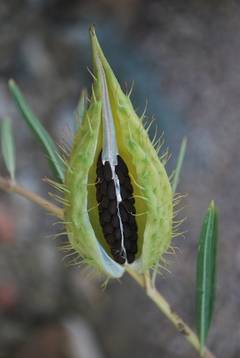
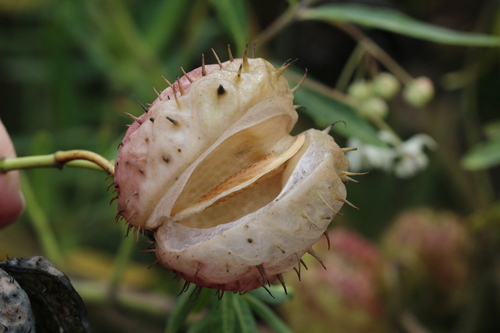
An erect, soft-wooded evergreen shrub reaching 3-6 feet (1-2 m) tall and 2-4 feet (0.6-1.2 m) wide, with milky sap throughout. Leaves narrow and lance-shaped, 2-4 inches (5-10 cm) long and 0.2-0.4 inch (5-10 mm) wide, light green, arranged in opposite pairs. Flowers cream to white, 0.4-0.6 inch (10-15 mm) across, waxy, nodding in rounded clusters. Flowering occurs spring through autumn. Fruit an inflated, pale green bladder-like pod 2-3 inches (5-7.5 cm) wide, covered with soft bristles, splitting to release seeds with silky white floss. Growth is fast and the stems are weakly woody. All parts contain toxic cardiac glycosides and the milky sap irritates skin and eyes. Plants are short-lived, often lasting 2-3 years.
Native Range
Native to southern and tropical Africa. Widely naturalized in warm regions including eastern Australia, where it grows along roadsides, in pastures, and on disturbed ground on a range of soils. It is recorded as an environmental weed in parts of Australia.Suggested Uses
Planted in butterfly gardens as a larval food plant for wanderer and monarch butterflies, spaced 24-36 inches (60-90 cm) apart. The inflated pods are used in fresh and dried arrangements. Self-seeding and toxicity limit its use near pasture and bushland where it can escape.How to Identify
Appearance
Size & Dimensions
Height3' - 6'
Width/Spread2' - 4'
Bloom Information
Flowers spring through autumn in warm climates, with peak bloom in summer. Cream flowers hang in rounded clusters and are followed by the inflated pods. Flowering and fruiting often occur together on the same plant. The flowers draw butterflies and other nectar-feeding insects.
Detailed Descriptions
Flower Description
Cream to whiteFoliage Description
Light greenGrowing Conditions
Sun Requirements
Requires 5-9 hours of direct sunlight daily
• Full Sun: 6+ hours of direct sunlight
• Partial Shade: 3-6 hours of direct sunlight
• Full Shade: Less than 3 hours of direct sunlight
Care & Maintenance
Care Guide
Water occasionally; established plants tolerate drought and grow in most soils with reasonable drainage. Grows in full sun to part shade. Self-seeds freely from the floss-borne seeds and can spread into surrounding ground. All parts contain cardiac glycosides toxic to people and livestock, and the milky sap irritates skin and eyes. The plant is a larval host for wanderer and monarch butterflies, whose caterpillars strip the foliage. Plants are short-lived and often replaced every few years.Pruning
Cut back stems in late winter to encourage bushier regrowth. Remove seed pods before they split to limit self-seeding. The milky sap flows from cut stems and irritates skin. Plants tolerate hard pruning to near ground level.Pruning Schedule
Prune: July–August
winter
Container Growing
Suitable for container growing
Minimum container size: 5 gallons