Gomphocarpus, Genus, fruticosus, Species,
- Genus & species
narrow-leaf cotton bush
Overview
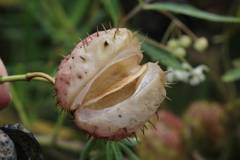
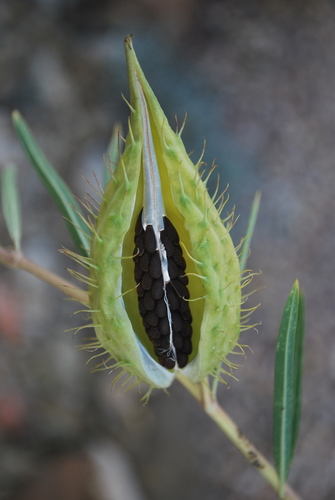
Gomphocarpus fruticosus is an evergreen shrub growing 3-6 feet (1-2 m) tall and 2-4 feet (0.6-1.2 m) wide, with erect, lightly branched stems that exude milky sap when cut. The leaves are narrow and willow-like, 2-5 inches (5-12 cm) long and under 0.4 inch (1 cm) wide, mid green and arranged in opposite pairs. From late spring through autumn it bears nodding clusters of small cream to white star-shaped flowers, each about 0.4 inch (1 cm) across. These are followed by the inflated, balloon-like seed pods 2-3 inches (5-7 cm) long, pale green and covered in soft bristles, which split to release seeds carried on silky white floss. Native to southern Africa, Gomphocarpus fruticosus has naturalised across Australia, New Zealand, and other warm regions, where it is treated as an environmental and pasture weed. All parts contain milky latex with cardiac glycosides that are toxic to livestock, pets, and people if eaten. The plant tolerates drought and poor soils but is killed by hard frost, and it serves as a larval food plant for monarch butterflies.
Native Range
Gomphocarpus fruticosus is native to southern Africa, where it grows on disturbed ground, roadsides, and watercourses. It has naturalised widely in Australia, New Zealand, and other warm-temperate and subtropical regions and is regarded as a weed of pastures and bushland.Suggested Uses
G. fruticosus is grown in butterfly gardens within its hardiness range as a larval host for monarchs, and the seed pods are cut for dried arrangements. Its toxic sap and weedy seeding restrict wider planting, and it is listed as an invasive weed in several regions. The milky latex makes it unsuited to gardens used by grazing animals.How to Identify
Appearance
Size & Dimensions
Height3' - 6'
Width/Spread2' - 4'
Bloom Information
Cream to white star-shaped flowers open from late spring through autumn, mainly November to April, in nodding clusters at the stem tips. Bees, wasps, and butterflies visit the nectar-rich flowers. Inflated seed pods follow and ripen over several weeks before splitting.
Detailed Descriptions
Flower Description
Cream to whiteFoliage Description
Mid greenGrowing Conditions
Sun Requirements
Requires 6-10 hours of direct sunlight daily
• Full Sun: 6+ hours of direct sunlight
• Partial Shade: 3-6 hours of direct sunlight
• Full Shade: Less than 3 hours of direct sunlight
Care & Maintenance
Care Guide
Grow G. fruticosus in full sun on free-draining sandy or loamy soil; it tolerates drought and low fertility once established. The species grows quickly, is short-lived, and is killed by hard frost, behaving as an annual in colder zones. It suits USDA zones 9-11 and survives light frost to about 27F (-3C). Water through the first summer, then rely largely on rainfall. All parts contain toxic cardiac glycosides in a milky latex, and the plant self-seeds heavily and is invasive, so pods can be removed before they split to limit spread.Pruning
Prune G. fruticosus in late winter to remove frost-damaged or leggy stems and keep the shrub compact. Cutting spent flower stems before pods ripen limits the windborne spread of seed. The plant reshoots from cut stems and from the base.Pruning Schedule
Prune: July–August
winter
Container Growing
Suitable for container growing
Minimum container size: 5 gallons