Goeppertia, Genus, kegeljanii, Species,
- Genus & species
Calathea musaica
Atlantic Forest of northeastern Brazil (Bahia)
Overview
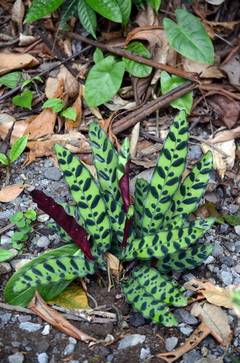
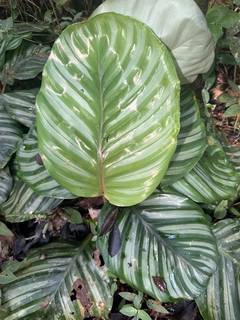
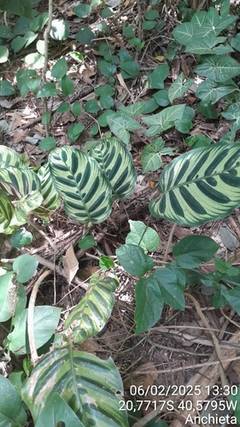
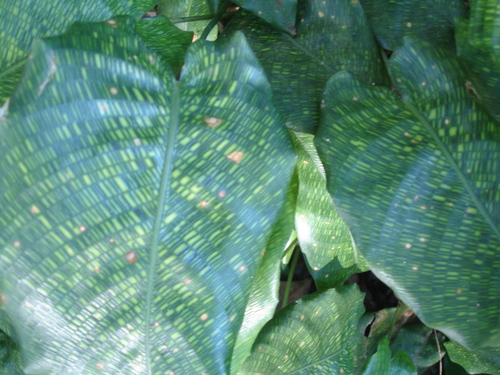
Goeppertia kegeljanii (formerly Calathea musaica) is an evergreen tropical perennial in the Marantaceae family grown indoors for its glossy mid-green leaves marked with an intricate pale-green network resembling a tiled mosaic. Mature plants reach 12–24 inches (30–60 cm) tall and 12–18 inches (30–45 cm) wide, forming an upright clumping rosette of leaves on long petioles emerging from a thick rhizome. Leaves are oblong-ovate, 4–8 inches (10–20 cm) long and 2–3 inches (5–8 cm) wide, with a light pale-green network of small rectangular cells covering the upper surface, paler green undersides, and the species' characteristic prayer plant nyctinasty (leaves fold upward at night and lower during the day). The mosaic pattern is more developed on mature leaves and is the source of the older common name 'Network Calathea.' Inflorescences are short conical clusters of small cream to pale-yellow flowers held among the leaves on 4–6 inch (10–15 cm) peduncles, opening through summer on mature outdoor or greenhouse plants but rarely on indoor specimens. The species is non-toxic to pets and humans. Plants in dry indoor air below 50% humidity show leaf-tip browning and curl, and crispy edges develop in plants exposed to chlorinated tap water; rainwater or filtered water and humidity above 60% produce undamaged leaves with the strongest mosaic contrast.
Native Range
Goeppertia kegeljanii is native to Bahia state in northeastern Brazil, growing as an understory perennial in moist Atlantic Forest at 100–700 m (330–2,300 ft) elevation. The species is restricted to the Mata Atlântica biome and was reclassified from Calathea musaica to Goeppertia kegeljanii in a 2012 revision of the Marantaceae; both names are still encountered in horticultural sources.Suggested Uses
Used as a tabletop or shelf-edge specimen indoors, in shaded covered patios in zones 10–12, and in tropical container collections with humidity above 60%. Pairs in collections with other Goeppertia and Calathea species, Maranta, Stromanthe, and Ctenanthe that share humidity needs. Spaced one plant per 6–8 inch (15–20 cm) pot, the species reaches mature size within 12–18 months from a divided rhizome and is divided every 3–4 years.How to Identify
Appearance
Size & Dimensions
Height1' - 2'
Width/Spread1' - 1'6"
Colors
Bloom Information
Indoor 'Calathea Musaica' specimens almost never flower; outdoor or heated greenhouse plants in zones 10–11 may produce short conical inflorescences of small cream to pale-yellow flowers on 4–6 inch (10–15 cm) peduncles in summer (June–August). Each inflorescence lasts 2–3 weeks, and most growers retain the inflorescences for the contrast against the patterned leaves. Flowering is uncommon and is not part of the typical houseplant cultivation cycle.
Detailed Descriptions
Flower Description
cream to pale yellowFoliage Description
glossy mid-green with pale-green mosaic networkGrowing Conditions
Sun Requirements
Tolerates up to 4 hours of direct sunlight daily
• Full Sun: 6+ hours of direct sunlight
• Partial Shade: 3-6 hours of direct sunlight
• Full Shade: Less than 3 hours of direct sunlight
Care & Maintenance
Care Guide
Bright indirect light of 6,000–15,000 lux suits this species; under 4,000 lux the mosaic pattern fades and contrast reduces, while direct sun above 20,000 lux bleaches the dark green ground and induces leaf curl. Temperatures of 65–80°F (18–27°C) and humidity above 60% are required, with leaf damage starting at 55°F (13°C). A well-drained mix (2 parts peat-based potting soil to 1 part perlite to 1 part orchid bark) with a pH of 6.0–6.5 is required, with watering only when the top 1 inch (2.5 cm) of mix dries. The species is sensitive to chlorinated and fluoridated water and develops crispy leaf-tip browning unless rainwater, distilled water, or filtered water is used. Balanced liquid fertilizer at quarter strength every 4 weeks during active growth (April–September) supports new leaf production; fertilizer is paused during winter. Spider mites are the main pest indoors, particularly under low humidity, and are controlled with weekly leaf rinsing and insecticidal soap.Pruning
Old or crispy-edged leaves are cut at the base of the petiole using a clean blade. Damaged leaf edges can be trimmed at any time without harming the plant, but full leaves removed unnecessarily reduce overall vigor. The rhizome is divided every 3–4 years when the clump becomes crowded; cut sections include at least one growth point and are repotted into the same humus-rich mix.Pruning Schedule
Prune: March–April
early spring
Container Growing
Suitable for container growing
Minimum container size: 1 gallons