Goeppertia, Genus, insignis, Species,
- Genus & species
rattlesnake plant
Brazil (the species' native range is the tropical rainforest understory of the Atlantic forest in southeastern Brazil and parts of the Amazon basin); humid tropical-rainforest understory positions beneath broadleaf canopy trees with low-to-moderate filtered light, very high atmospheric humidity (typically 80%+ relative humidity), consistent year-round warm temperatures, and consistent rainfall from tropical-monsoon climate cycles.
Overview
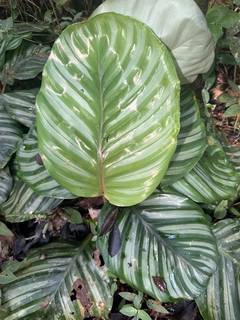
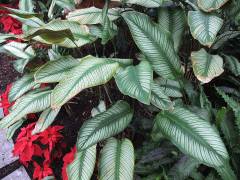
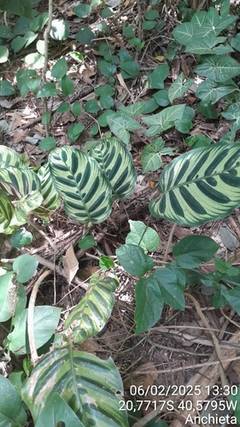
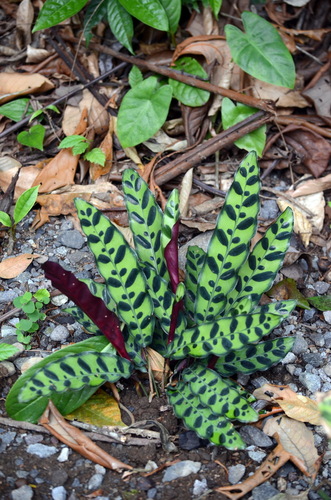
Goeppertia insignis is the rattlesnake plant (also called rattlesnake calathea), an evergreen tropical perennial in the prayer-plant family (Marantaceae) growing 18-30 inches (45-75 cm) tall and 18-24 inches (45-60 cm) wide as an indoor houseplant. The species was formerly classified as Calathea lancifolia and is still widely sold under the older Calathea binomial in commercial houseplant channels; the reclassification to the genus Goeppertia resulted from molecular phylogenetic research published in 2012 (Borchsenius, Suárez, and Prince) that demonstrated the historically-recognized genus Calathea was paraphyletic and that the majority of species traditionally placed in Calathea (including C. lancifolia along with most of the commercial 'Calathea' houseplant cultivars) more properly belonged to the previously-described genus Goeppertia. The reclassification is now the standard taxonomic treatment but the older Calathea binomial persists in commercial nursery channels because of the strong gardener brand recognition of the 'Calathea' name. The species' principal physical character is the patterned foliage: light green narrow lance-shaped leaves carry dark green alternating large and small spots arranged regularly along the central midrib, and the regular alternating spot pattern visually resembles the alternating spot pattern of rattlesnake skin and supplies the species' common name. The leaf margins are wavy or undulating rather than smooth — the wavy margin is itself a recognizable foliage character that distinguishes the species from other Goeppertia and Calathea species with smooth or only-slightly-wavy margins. The leaf undersides are deep purple-burgundy and become visible during the species' daily nyctinastic prayer movement: the leaves lie flat or slightly drooping during daytime hours and fold upward toward the central stem at night, exposing the purple undersides as the leaves move into the upright nighttime position. The daily prayer movement is the source of the family common name 'prayer plants' — the entire Marantaceae family performs nyctinastic leaf movements driven by changes in turgor pressure within specialized pulvinus tissue at the leaf base, and the daily up-and-down leaf motion is a recognizable cultivation feature that distinguishes the broader family from most other indoor foliage species. The species' cultivation profile is somewhat demanding by indoor houseplant standards because the broader Marantaceae family evolved in the consistently-humid tropical-rainforest understory native habitat and the species accordingly is sensitive to the dry-air, mineral-laden tap water, and irregular watering that most temperate-zone indoor environments provide. Cultivation requires consistently moist (but not waterlogged) substrate, moderate-to-high ambient humidity (50%+ relative humidity), filtered or distilled water rather than untreated tap water (the species is sensitive to chlorine, fluoride, and dissolved minerals in municipal tap water that produces brown leaf-edge necrosis), and low-to-moderate indirect light — direct sun produces foliage scorch and bleaching of the spot pattern, while extremely low light reduces the contrast of the spot pattern. Among the broader Goeppertia (formerly Calathea) houseplant genus, G. insignis is among the more cultivation-tolerant species — the species is more forgiving of imperfect cultivation conditions than the notoriously-finicky G. orbifolia (round-leaf calathea) and the highly-demanding G. 'White Fusion' (variegated calathea) — and the species accordingly serves as a working introductory species for new gardeners interested in the Marantaceae family. The species is non-toxic to humans and pets and is suitable for households with cats, dogs, or small children where ornamental-plant toxicity is a concern. Hardy outdoors only in tropical zones 10-12; in cold-climate zones the species is grown exclusively as an indoor houseplant in 3-gallon (11-liter) or larger pots.
Native Range
Goeppertia insignis is native to Brazil with a continuous native range across the tropical rainforest understory of the southeastern Brazilian Atlantic forest (Mata Atlântica) and parts of the Amazon basin. The species occurs in humid tropical-rainforest understory positions beneath broadleaf canopy trees with low-to-moderate filtered light reaching the forest floor through the canopy, very high atmospheric humidity (typically 80%+ relative humidity from oceanic moisture sources and from rainforest evapotranspiration), consistent year-round warm temperatures (typically 70-85°F / 21-29°C), and consistent rainfall from tropical-monsoon climate cycles. The species' tropical-rainforest understory native habitat produces the species' physiological requirements for indoor cultivation: consistent moisture, moderate-to-high humidity, filtered or distilled water free of mineral and chemical contaminants, and low-to-moderate indirect light without direct sun exposure. The species has been introduced into commercial houseplant cultivation broadly across temperate and tropical regions worldwide and is grown indoors as a patterned-foliage houseplant in cold-climate zones across the temperate Northern Hemisphere and outdoors in tropical zone-10-12 gardens.Suggested Uses
Used as a patterned-foliage houseplant in residential and commercial indoor settings, in low-light indoor positions where the spot-patterned foliage and the daily prayer-movement display supply the design contribution, and in bathroom indoor positions where the elevated humidity supports better species performance than the dry-air heated indoor environments most homes provide. The species is among the more cultivation-tolerant members of the broader Goeppertia (formerly Calathea) genus and serves as a working introductory species for new gardeners interested in the broader Marantaceae prayer-plant family, where more demanding species including G. orbifolia and G. 'White Fusion' are notoriously challenging in temperate-zone indoor cultivation. The species is non-toxic to humans and pets and is suitable for households with cats, dogs, or small children where ornamental-plant toxicity is a concern. The species pairs with companion low-light tropical Marantaceae and broader prayer-plant species including Maranta leuconeura cultivars (red-veined and lemon-lime prayer plants), Stromanthe sanguinea 'Triostar', other Goeppertia species, and Ctenanthe cultivars for a multi-species prayer-plant indoor planting where the G. insignis rattlesnake-spot foliage contributes a recognizable patterned signature against the companion prayer-plant foliage variations. The species also pairs with companion humidity-tolerant houseplants including Asplenium nidus (bird's nest fern), Aglaonema cultivars (Chinese evergreens), and Spathiphyllum (peace lily) for a multi-species low-light high-humidity indoor planting composition.How to Identify
Appearance
Size & Dimensions
Height1'6" - 2'6"
Width/Spread1'6" - 2'
Colors
Bloom Information
The species rarely flowers in indoor cultivation. When flowers appear (typically only on outdoor-grown specimens in the species' native range or in tropical zone-10-12 outdoor cultivation), the inflorescences are small yellow flower clusters carried on short stalks among the foliage. The flowers are individually small and unobtrusive, and the species' principal ornamental contribution is the year-round patterned foliage rather than seasonal flowering display. Pollination in the wild native range is by tropical-rainforest pollinators including bees and small flies attracted to the inflorescences.
Detailed Descriptions
Flower Description
Yellow small inflorescences carried on short stalks among the foliage (the species rarely flowers in indoor cultivation; the species' principal ornamental contribution is the patterned foliage rather than seasonal flowering display)Foliage Description
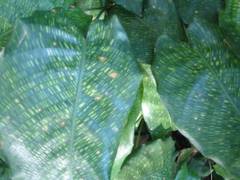
Light green upper surface with dark green alternating large and small spots arranged regularly along the central midrib (rachis) — the alternating spot pattern visually resembles the alternating spot pattern of rattlesnake skin and supplies the species' common name; the leaf margins are wavy or undulating rather than smooth, and the leaf undersides are deep purple-burgundy and become visible as the leaves fold upward at night during the species' nyctinastic prayer movementGrowing Conditions
Sun Requirements
Requires 2-4 hours of direct sunlight daily
• Full Sun: 6+ hours of direct sunlight
• Partial Shade: 3-6 hours of direct sunlight
• Full Shade: Less than 3 hours of direct sunlight
Care & Maintenance
Care Guide
Place in low to moderate indirect light — the species tolerates lower indoor light conditions than many other commonly cultivated houseplants and performs reliably in north-facing rooms, interior offices, and other low-light positions where filtered or shaded light reaches the foliage. Direct afternoon sun in indoor settings produces foliage scorch and bleaching of the spot pattern, and the species is sited away from intense direct-sun positions. Water by maintaining consistently moist (but not waterlogged) substrate across the active growing season — the species tolerates brief dry periods between waterings but performs better with consistent moisture, and prolonged drought produces leaf-edge browning and tip necrosis. The species is sensitive to chlorine, fluoride, and dissolved minerals in untreated municipal tap water — chronic tap-water use produces brown leaf-edge necrosis and reduced foliage quality over time, and the species accordingly is watered with filtered, distilled, or rainwater for optimal long-term performance. Maintain moderate-to-high ambient humidity (50%+ relative humidity) — a humidifier, pebble tray, or grouped-houseplant arrangement helps maintain adequate humidity in heated indoor environments where dry air is the principal cultivation challenge. Substrate is well-draining slightly-acidic potting mix at pH 5.5-6.5 with added organic matter (sphagnum peat or coco coir) to retain moisture between waterings. Fertilization is at quarter to half-strength every 2-3 months during the active growing season (spring through summer) using a balanced liquid fertilizer; over-fertilization produces leaf burn and is therefore avoided. Hardy outdoors only in tropical zones 10-12; in cold-climate zones the species is grown exclusively as an indoor houseplant in 3-gallon (11-liter) or larger pots. The species is non-toxic to humans and pets.Pruning
Remove brown or crispy leaves at the base of the leaf rosette by cutting near the soil line. Brown leaf edges generally indicate either insufficient ambient humidity or chronic tap-water mineral and chemical exposure rather than a fundamental cultivation problem; addressing the underlying cause through humidity supplementation or filtered-water use is generally more useful than ongoing pruning of damaged leaves. The species does not benefit from active pruning for shape or growth control because the natural clumping rosette form supplies the species' principal ornamental character without pruning intervention.Container Growing
Suitable for container growing
Minimum container size: 3 gallons