Goeppertia, Genus, spp., Multiple species,
- Genus
- Multiple species
calatheas
Overview
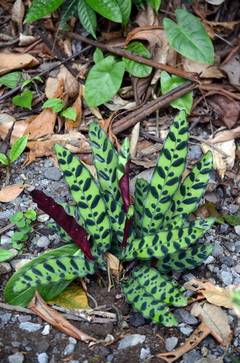
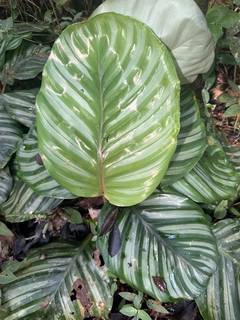
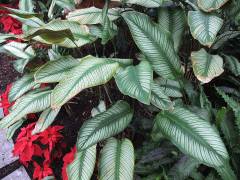
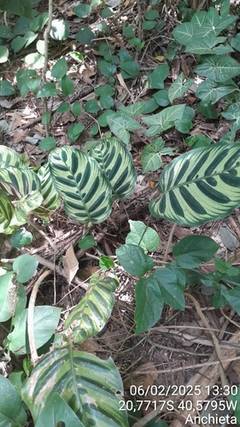
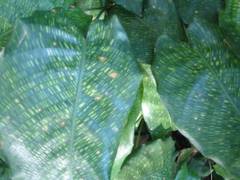
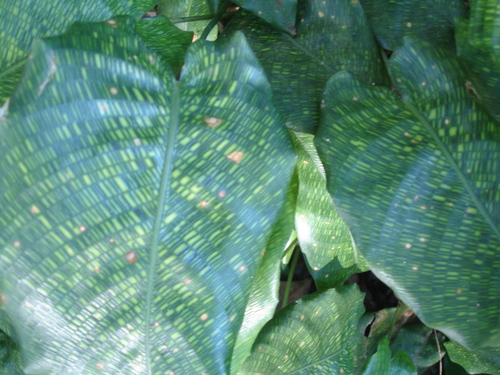
Goeppertia is a genus of about 250 evergreen, clump-forming perennials in the arrowroot family (Marantaceae), native to the tropical forests of Central and South America. Most of the plants grown as houseplants under the name calathea now belong here. They form clumps 0.3-1.5 m (1-5 ft) tall of large, long-stalked oval to lance-shaped leaves that are boldly patterned in shades of green, silver, and cream above and often flushed deep purple beneath. Like their relatives the prayer plants, the leaves rise and fold upward in the evening and open again by day, moved by a swollen joint at the top of each leaf stalk. Small flowers are carried in dense spikes or cone-like heads in white, yellow, orange, or purple, though many species rarely flower indoors. The plants grow on shaded, humid forest floors and are frost-tender, needing warmth, steady moisture, and high humidity. They are widely grown indoors and, in frost-free climates, as shade groundcover. Cold, dry air and direct sun scorch and curl the leaves.
Native Range
Goeppertia is native to the lowland and montane rainforests of tropical Central and South America, with the greatest diversity in the Amazon basin and the forests of Brazil, Colombia, and Ecuador. Plants grow in the warm, humid, shaded understorey.Suggested Uses
Goeppertia species are grown chiefly as foliage houseplants for their patterned leaves, and in warm, frost-free gardens as shade groundcover and understorey planting. They suit shaded patios, terrariums, and humid bathrooms indoors, and pair with ferns and other shade plants outside. The plants are non-toxic, which makes them suited to homes with pets.How to Identify
Appearance
Size & Dimensions
Height1' - 5'
Width/Spread1' - 3'
Colors
Bloom Information
Flowering is irregular in cultivation and most likely in the warm months, when short spikes of small flowers push up among the leaves. A few species, such as the saffron-flowered G. crocata, bloom in stronger orange and are grown partly for the flowers. Indoors many plants seldom flower at all.
Detailed Descriptions
Flower Description
white, yellow, orange, or purpleFoliage Description
patterned green, silver, and cream above, often purple beneathGrowing Conditions
Sun Requirements
Needs bright indirect light. Keep it out of direct sun, which can scorch the leaves.
• Bright indirect light: a bright spot near a window, with no direct sun on the leaves
Care & Maintenance
Care Guide
Plants grow in part to full shade, or bright indirect light indoors, on moist, peaty, well-drained soil at a pH of 5.5-7.0. They need warmth above about 16 C (60 F), steady moisture, and high humidity, and react to dry air by browning at the leaf edges. Soft or distilled water suits them, as the leaves can scorch from the salts and fluoride in some tap water. They are frost-tender, hardy only in USDA zones 10 and 11, and are grown as houseplants elsewhere. Cold draughts, soggy soil, and direct sun all cause leaf damage.Pruning
Damaged, yellowing, or brown-edged leaves are cut off at the base to keep plants tidy. No other routine pruning is needed. Crowded clumps are divided in spring as growth restarts, which also serves to propagate them.Container Growing
Suitable for container growing
Minimum container size: 2 gallons