Glandularia, Genus, canadensis, Species,
- Genus & species
rose vervain
Central and southeastern United States
Overview
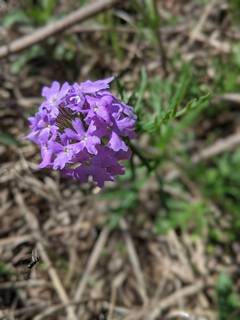
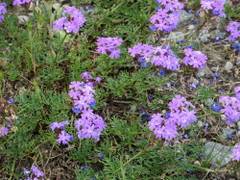
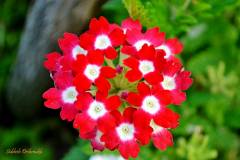
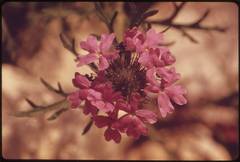
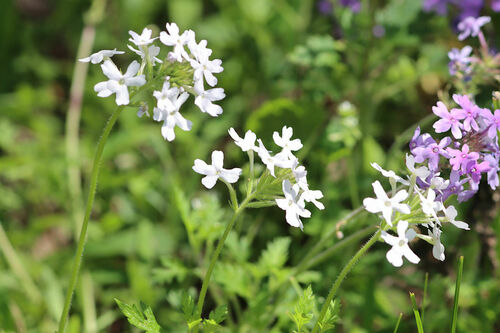
Glandularia canadensis is a low, spreading perennial 6-18 in (15-45 cm) tall that forms mats 12-36 in (30-90 cm) wide. The square stems trail along the ground, rooting at the nodes where they touch soil, then turn upward at the tips. Leaves are opposite, 1.2-3 in (3-8 cm) long, deeply cut into toothed lobes, and dark green with a slightly rough surface. From early spring into fall the plant carries rounded flower clusters 1.5-2.4 in (4-6 cm) across at the stem tips. Each tubular flower is about 0.4-0.6 in (1-1.5 cm) wide with five notched lobes, ranging from rose-pink through lavender to purple. Bloom is heaviest in spring and resumes after summer heat eases. The species is short-lived, often persisting three to four years before declining, though it self-sows and layers to renew a planting. It grows in open woodlands, prairies, glades, and roadsides on well-drained ground. Wet winter soil and crown rot are the main causes of loss in cultivation.
Native Range
Native to the central and southeastern United States, from Virginia and Florida west to Texas, Kansas, and Colorado. It grows in prairies, rocky glades, open woods, and disturbed roadsides, mainly on well-drained limestone or sandy soil.Suggested Uses
Used as a flowering groundcover, edging, or cascading filler in rock gardens and containers, spaced 12-18 in (30-45 cm) apart. Planted in butterfly and pollinator gardens, where the long bloom draws butterflies and native bees.How to Identify
Appearance
Size & Dimensions
Height6" - 1'6"
Width/Spread1' - 3'
Bloom Information
Blooms from March to October across the southern range, with the heaviest flush in spring and a second flush in fall. Flower clusters are rose-pink, lavender, or purple, each cluster 1.5-2.4 in (4-6 cm) across. In hot mid-summer the bloom slows until temperatures fall.
Detailed Descriptions
Flower Description
rose-pink to purpleFoliage Description
dark greenGrowing Conditions
Sun Requirements
Requires 6-12 hours of direct sunlight daily
• Full Sun: 6+ hours of direct sunlight
• Partial Shade: 3-6 hours of direct sunlight
• Full Shade: Less than 3 hours of direct sunlight
Care & Maintenance
Care Guide
Grows in full sun in well-drained sandy or rocky soil with a pH of about 6.0 to 7.5. Established plants tolerate heat and drought, needing water only in extended dry spells. Good air circulation and dry foliage reduce powdery mildew, to which the species is prone. Root-hardy to USDA zone 6, roughly -10 F (-23 C), it behaves as an evergreen groundcover in zones 8 and warmer. Light feeding keeps growth dense, while rich soil produces lax stems and fewer flowers. Sharp winter drainage is the main factor in survival.Pruning
Shearing the planting back by one-third after the spring flush renews growth and prompts rebloom. Trailing stems that have rooted can be lifted and moved to fill gaps. Frost-killed top growth is cut back in early spring in colder zones.Pruning Schedule
Prune: June
summer
Container Growing
Suitable for container growing
Minimum container size: 2 gallons