Geranium, Genus, viscosissimum, Species,
- Genus & species
sticky geranium
Overview
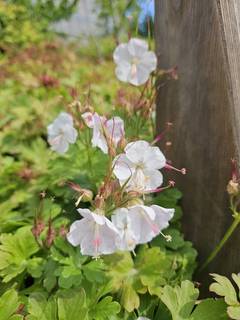
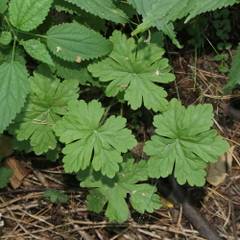
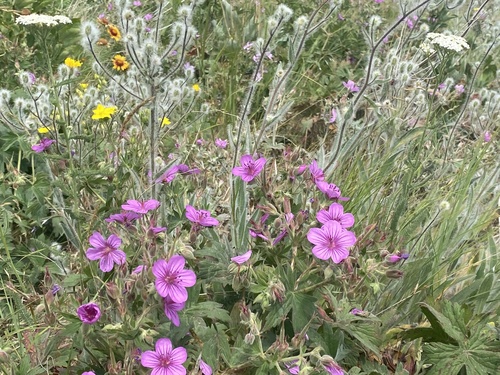
Geranium viscosissimum is a herbaceous perennial in the Geraniaceae reaching 12-36 inches (30-90 cm) tall and 12-24 inches (30-60 cm) wide, growing from a woody rootstock in a clumping mound of upright stems. The stems and foliage are densely covered in glandular hairs that exude a sticky secretion, the trait behind the species epithet. Leaves are palmately divided into 5-7 deeply toothed lobes, 2-4 inches (5-10 cm) across, mid-green, and concentrated at the base with smaller leaves up the stem. Flowers measure about 1 inch (2.5 cm) across, with five rounded petals in shades of pink to rose-purple marked by darker magenta veins, borne in loose clusters from late spring into summer. Seed develops in the elongated beaked capsule typical of the genus, which splits and coils to scatter seed. The sticky foliage traps small insects, and the species is sometimes described as protocarnivorous, though it draws little measurable nutrition from the catch. It grows in foothill grassland, montane meadow, and open coniferous forest. In gardens it spreads slowly and self-sows on bare soil; the glandular foliage collects dust and debris, and plants decline in poorly drained ground.
Native Range
Native to western North America, from British Columbia south through Washington and Oregon into northern California, and east across the northern Rocky Mountains to Montana, Wyoming, and Colorado. It occupies foothill grasslands, montane meadows, sagebrush slopes, and open conifer forests from valley floors to mid elevations.Suggested Uses
Used in native plant gardens, meadow plantings, and pollinator borders across western North America, spaced 12-18 inches (30-45 cm) apart. It suits dry slopes, rock gardens, and the transition between irrigated beds and unwatered ground. The glandular foliage and self-seeding habit make it less suited to formal, tightly maintained borders.How to Identify
Appearance
Size & Dimensions
Height1' - 3'
Width/Spread1' - 2'
Bloom Information
Flowers open from late May through July, peaking in June across most of the range. Individual blooms last a few days, and each plant produces a succession of flowers over 4-6 weeks. Bloom comes earlier at low elevations and extends into August in high montane meadows.
Detailed Descriptions
Flower Description
pink to rose-purple with darker veinsFoliage Description
mid-greenGrowing Conditions
Sun Requirements
Requires 6-10 hours of direct sunlight daily
• Full Sun: 6+ hours of direct sunlight
• Partial Shade: 3-6 hours of direct sunlight
• Full Shade: Less than 3 hours of direct sunlight
Care & Maintenance
Care Guide
Grows in full sun to partial shade in well-drained loam or rocky soil with a near-neutral pH of 6.0-7.5. Established plants tolerate summer drought and need supplemental water only during prolonged dry spells. Excess moisture and heavy clay cause crown rot, so sharp drainage matters more than fertility. Plants form a slowly expanding clump from a woody crown and recover slowly from root disturbance once settled. Propagation is most dependable from fresh seed sown in autumn, since division of the woody crown is difficult. Hardy in USDA zones 4-8.Pruning
Needs minimal pruning. Spent flower stems are cut back after bloom to limit self-seeding and keep the clump compact. Drought-browned foliage can be sheared to the base in late summer, with fresh leaves regrowing after autumn rains. Old growth is removed at ground level in late winter before new shoots emerge.Pruning Schedule
Prune: February–March
wintersummer