Image 1 of 9
1 / 9
Plant Reference
Geranium, Genus, 'Gerwat ROZANNE', Cultivar,
- Genus
- Cultivar
Rozanne geranium
Hybrid of garden origin (United Kingdom, late 1980s); parent species from central and western Asia
Overview
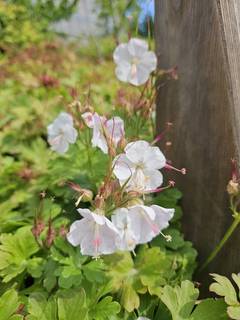
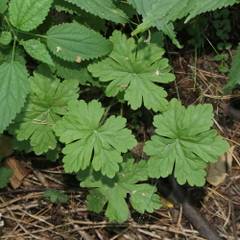
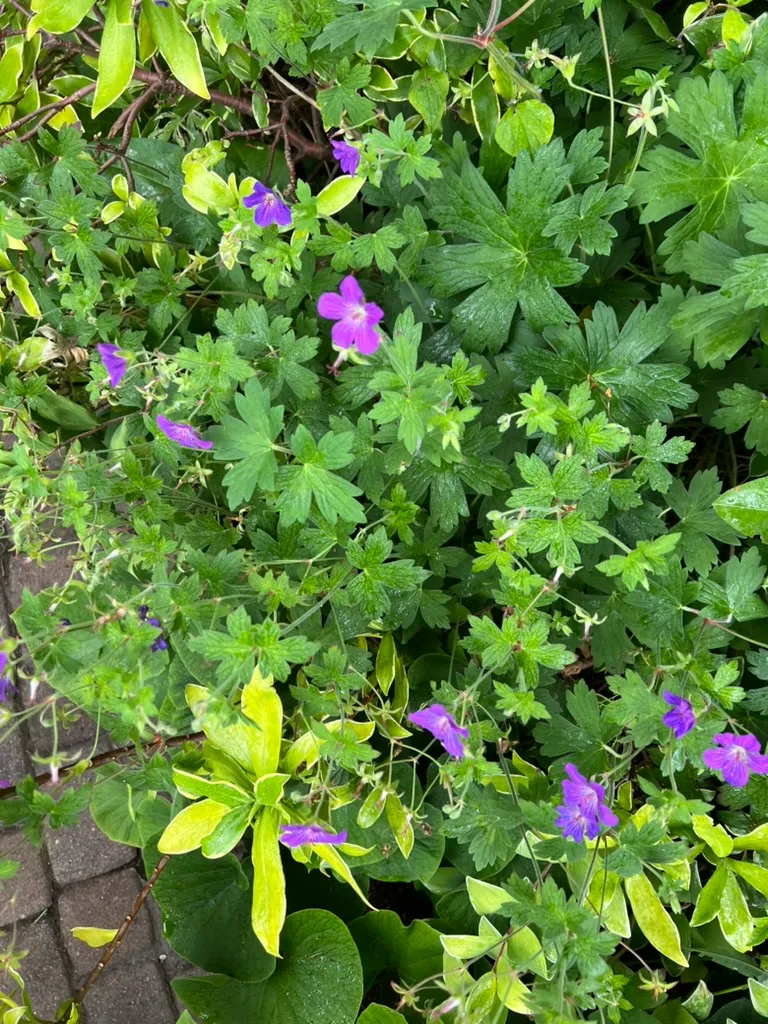
Geranium 'Gerwat ROZANNE' is a mounding to sprawling perennial reaching 18-20 inches (45-50 cm) tall and 24-36 inches (60-90 cm) wide. This sterile hybrid hardy geranium produces saucer-shaped violet-blue flowers 1.5-2 inches (4-5 cm) across, with a white center and dark blue-violet veining radiating outward from the center. Petals are five, slightly notched. Leaves are deeply 5-7 lobed, palmate, 3-5 inches (7.5-13 cm) across, mid-green, and aromatic when bruised; foliage develops reddish-orange tints in fall. Flowering spans late May through October in most plantings, a 22-week window that extends past the typical 4-6 week bloom of many hardy geraniums. Sterility (no viable seed produced) redirects the plant's energy to continuous flower production. Hardy in USDA zones 5-8. Received the RHS Award of Garden Merit and was named Perennial Plant of the Year in 2008. Midsummer heat in zones 7-8 slows bloom for 2-4 weeks before flowering resumes in September; this is the main limitation on uninterrupted display.
Native Range
Geranium 'Gerwat ROZANNE' is a hybrid of garden origin, developed in the United Kingdom in the late 1980s. It has no native range; parent species (G. himalayense and G. wallichianum 'Buxton's Variety') are native to central and western Asia. The genus Geranium is distributed across temperate regions worldwide.Suggested Uses
Used as a long-season ground cover in sunny to partly shaded borders at 24-36 inch (60-90 cm) spacing. Trailing stems fill gaps between shrubs and taller perennials. Containers of 5 gallons (19 L) or larger support the mounding form. Pairs with upright companions such as Salvia, Agastache, and ornamental grasses for a contrast between the sprawling geranium and vertical line. Deep dense shade is outside the use range.How to Identify
Appearance
Size & Dimensions
Height1'6" - 1'8"
Width/Spread2' - 3'
Bloom Information
Saucer-shaped violet-blue flowers 1.5-2 inches (4-5 cm) wide with a white center and dark blue-violet veining, borne continuously from late May through October. Bloom spans approximately 22 weeks in zones 5-7 and approximately 18-20 weeks in zones 8-9 where midsummer heat causes a 2-4 week flowering slowdown before September resumption. Individual flowers last 3-5 days; replacement is constant across the season.
Detailed Descriptions
Flower Description
Violet-blue with white center and dark blue-violet veining; saucer-shaped 1.5-2 inches (4-5 cm); late May through OctoberFoliage Description
Mid-green; deeply 5-7 lobed palmate 3-5 inches (7.5-13 cm) across; aromatic when bruised; reddish-orange fall tints; deciduousGrowing Conditions
Sun Requirements
Requires 4-8 hours of direct sunlight daily
• Full Sun: 6+ hours of direct sunlight
• Partial Shade: 3-6 hours of direct sunlight
• Full Shade: Less than 3 hours of direct sunlight
Care & Maintenance
Care Guide
Grows in full sun to partial shade in average well-drained soil at pH 6.0-7.5. Hardy to USDA zone 5. Full-sun plantings suit zones 5-6; light afternoon shade supports plants in zones 7-8 where hot afternoons accelerate flowering slowdown. A midsummer cutback by one-half (late June to early July) stimulates fresh foliage and a second flush of bloom within 2-3 weeks when stems become leggy. A light compost layer in early spring supports the long flowering run. Division every 3-5 years in early spring is used when plants outgrow their allotted area. Vine weevil larvae can feed on roots in container plantings.Pruning
A midsummer cutback to one-half of height in late June to early July resets stems that have become leggy after the first flush, with new growth and buds emerging within 2-3 weeks. Stems are cut to 3-4 inches (7.5-10 cm) in late fall after frost. Deadheading is not used because the cultivar is sterile and continuous bloom does not depend on flower removal.Pruning Schedule
Prune: July & November
summerfall
Container Growing
Suitable for container growing
Minimum container size: 5 gallons