Geranium, Genus, carolinianum, Species,
- Genus & species
Carolina crane's-bill
SunFull Sun – Part Shade
Overview
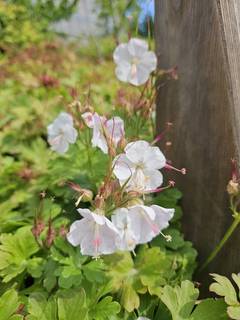
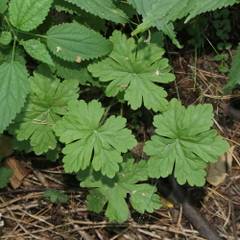
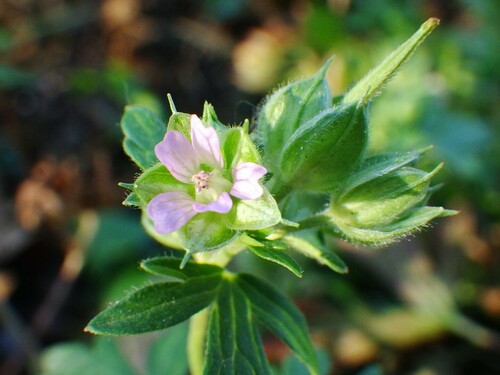
Geranium carolinianum is an annual or winter-annual herb native to North America, growing 6-20 inches (15-50 cm) tall with branching, reddish, hairy stems and a low, bushy form. The leaves are rounded in outline but deeply cut into five to nine palmate lobes, each further toothed, and are softly hairy. From spring into early summer the plant bears clusters of small flowers about 0.4 inch (1 cm) across, with five pale pink to whitish notched petals. After flowering each bloom forms a long, beaked fruit, the source of the crane's-bill name, which splits and flings its seeds when ripe. G. carolinianum germinates in fall or early spring and completes its life cycle by summer, then dies. It grows in fields, lawns, gardens, roadsides, and waste ground on dry, often poor or compacted soil. The plant tolerates drought and disturbance and behaves as a common weed in cultivated and turf areas. It spreads only by seed but produces seed abundantly. The foliage often flushes red as the plant matures and dries. Growth is quick once temperatures warm in spring.
Native Range
Geranium carolinianum is native to North America and found across most of the United States, southern Canada, and into Mexico. It grows in fields, lawns, gardens, roadsides, and other dry, disturbed, sunny ground.Suggested Uses
G. carolinianum is seldom planted and is usually managed as a weed of lawns, gardens, and crops. It occasionally appears in wild or meadow settings as a short-lived annual. Small bees and flies take nectar and pollen from the spring flowers.How to Identify
Appearance
Size & Dimensions
Height6" - 1'8"
Width/Spread6" - 1'2"
Bloom Information
G. carolinianum blooms from spring into early summer, generally April to June. The small pale pink flowers open in tight clusters over several weeks. Beaked seed capsules follow and split forcibly to scatter seed before the plant dies in summer.
Detailed Descriptions
Flower Description
pale pink to whiteFoliage Description
green, flushing red with ageGrowing Conditions
Sun Requirements
Requires 4-12 hours of direct sunlight daily
• Full Sun: 6+ hours of direct sunlight
• Partial Shade: 3-6 hours of direct sunlight
• Full Shade: Less than 3 hours of direct sunlight
Water & Climate
Water Needs
Drought Tolerance
Drought tolerant when established
Care & Maintenance
Care Guide
G. carolinianum grows in full sun to part shade and tolerates dry, poor, compacted, and disturbed soils. It needs little water and completes its life cycle in one season, germinating in fall or early spring and dying by summer. Hardy as a self-seeding annual across USDA zones 5-10, it survives mild winters as a low rosette. The plant requires no feeding and spreads only by seed, often appearing uninvited in lawns and beds. Removing plants before the seed capsules ripen limits reseeding.Pruning
G. carolinianum is not pruned in the usual sense. Pulling or hoeing plants before the beaked capsules ripen prevents seed spread. The shallow taproot lifts easily from loose soil.Toxicity
Non-toxicPlanting Guide
Planting Methods & Timing
Planting Method
direct sow
Direct Sow Timing
fall or early spring
Days to Maturity
90–150 days
Plant Spacing
8 inches