Genista, Genus, spp., Multiple species,
- Genus
- Multiple species
brooms
Europe, Mediterranean, western Asia, North Africa
Overview
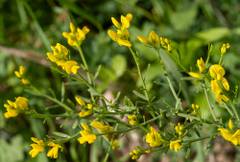
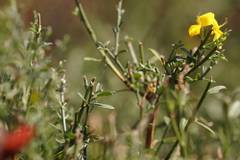
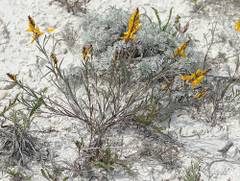
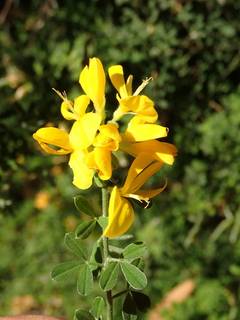
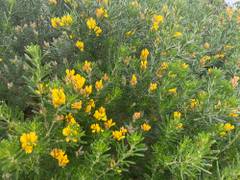
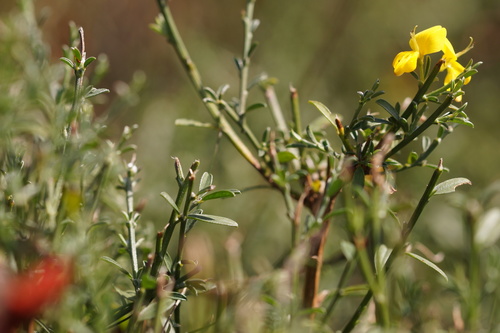
Genista is a genus of about 90 deciduous and evergreen shrubs in the family Fabaceae, the brooms, native to Europe, the Mediterranean, western Asia, and North Africa. Most are wiry, much-branched shrubs from low, ground-hugging mats to upright bushes 1–10 ft (0.3–3 m) tall, with slender green stems that stay photosynthetic and often nearly leafless; the small, simple leaves drop early in many species, and a few are spiny. In late spring and summer the branches are lined with pea-shaped flowers, almost always bright yellow, 0.3–0.8 in (8–20 mm) long, sometimes fragrant, followed by small flattened pods that split and twist to fling out seeds. As nitrogen-fixing legumes, the brooms grow on poor, dry, sandy, and rocky soils in full sun, and the plants tolerate heat, drought, and exposure once established. Genista grows in USDA zones 4–9 depending on species, but declines in wet, heavy, or rich soil and with root disturbance, and is often short-lived. Several species, including G. monspessulana and G. linifolia, have become serious invasive weeds in California, the Pacific Northwest, Australia, and other mild regions, where the abundant long-lived seed makes them hard to control.
Native Range
Genista is native to Europe, the Mediterranean Basin, western Asia, and North Africa, with the greatest concentration of species in the western Mediterranean. The shrubs grow on dry, sunny, nutrient-poor ground — heaths, rocky slopes, garrigue, sandy flats, and open woodland — frequently on acidic or stony soils.Suggested Uses
Genista is grown on sunny banks, rock and gravel gardens, dry slopes, and coastal plantings for its yellow early-summer flowers, and the low, mat-forming species are used as groundcover over walls and in raised beds. Dyer's broom, G. tinctoria, has a long history as a source of yellow dye. Where the genus is invasive, non-spreading species or sterile selections are used in place of the weedy kinds.How to Identify
Appearance
Size & Dimensions
Height1' - 10'
Width/Spread1' - 8'
Bloom Information
Flowering is concentrated in late spring and early summer, roughly May to July, when the green stems are sheathed in yellow pea flowers. Bloom lasts several weeks and draws bees, and some species flower again lightly later in the season. The twisted pods ripen through summer and split audibly to scatter seed.
Detailed Descriptions
Foliage Description
greenGrowing Conditions
Sun Requirements
Requires 6-12 hours of direct sunlight daily
• Full Sun: 6+ hours of direct sunlight
• Partial Shade: 3-6 hours of direct sunlight
• Full Shade: Less than 3 hours of direct sunlight
Water & Climate
Water Needs
Drought Tolerance
Drought tolerant when established
Care & Maintenance
Care Guide
Genista grows in full sun on light, well-drained, dry, and poor soil, including sandy and rocky ground, and tolerates drought and exposure once established. The plants fix their own nitrogen and need no feeding; rich or wet soil shortens their life and causes loose, leggy growth. Most species are intolerant of root disturbance and are set out as small container plants and left in place. Hardiness ranges from about USDA zone 4 to 9 depending on species. Propagation is by seed, which germinates more readily after scarification, or by semi-ripe cuttings. Because several brooms self-seed heavily and invade wild land, spent plants and seedlings are removed where the species are known to spread.Pruning
A light trim after flowering keeps the wiry growth bushy and removes spent blooms before seed sets. Cutting is kept to green, leafy stems, since brooms do not reliably resprout from old bare wood. Hard renewal pruning into thick stems often kills the plant.Pruning Schedule
Prune: July
summer
Container Growing
Suitable for container growing
Minimum container size: 3 gallons