Gaudium, Genus, myrsinoides, Species,
- Genus & species
heath teatree
Overview
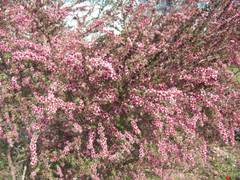
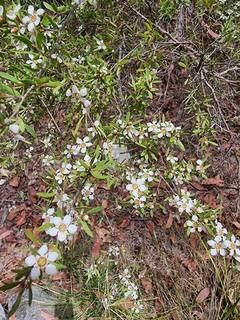
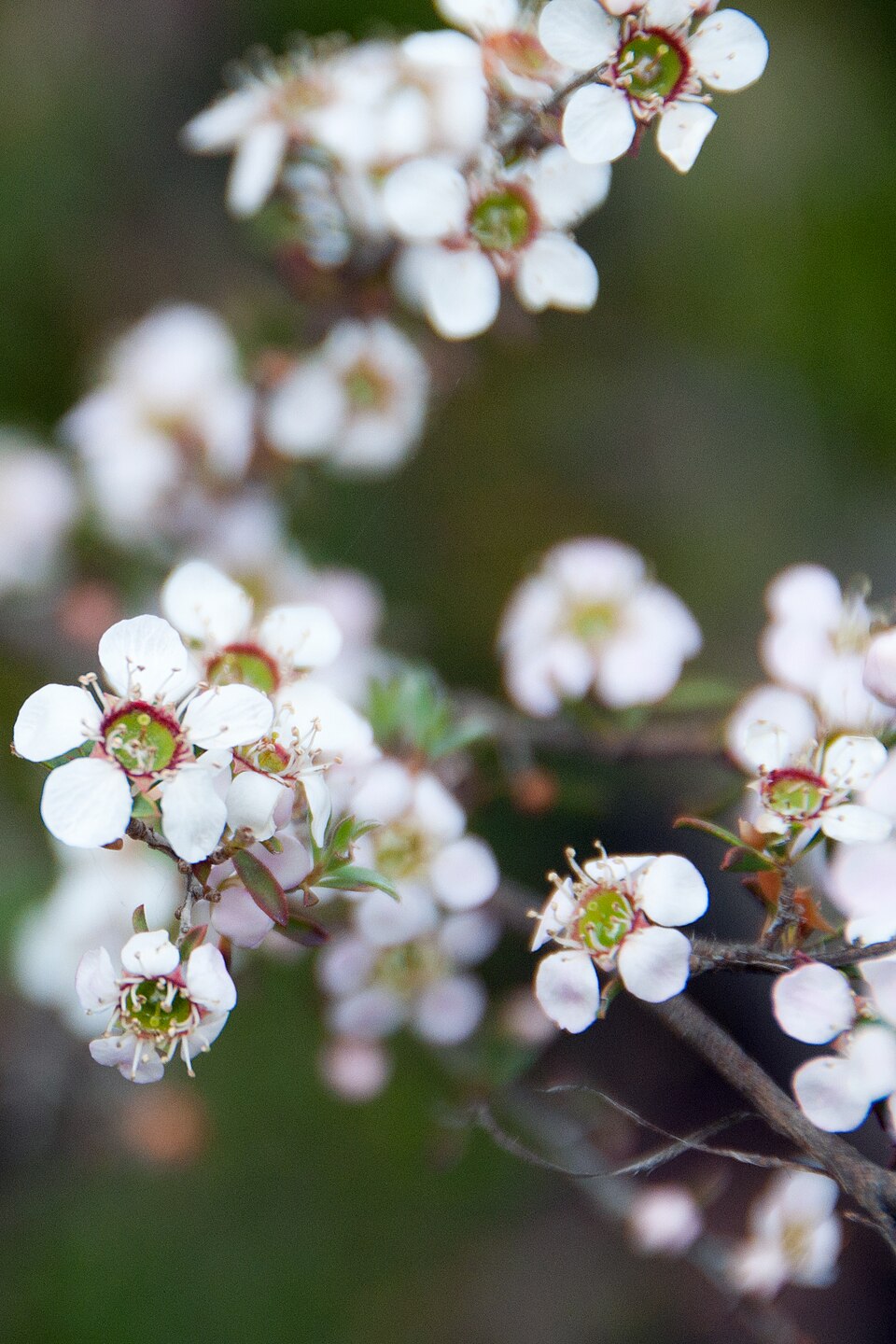
Gaudium myrsinoides, formerly placed in Leptospermum and known as heath teatree, is a small evergreen shrub of the myrtle family reaching 1-5 feet (0.3-1.5 m) tall and spreading 3-6 feet (1-2 m) wide. The wiry stems carry crowded, narrow leaves 0.2-0.4 inch (5-10 mm) long, blunt or notched at the tip and aromatic when crushed. In spring, white to pale pink five-petalled flowers about 0.4-0.6 inch (10-15 mm) across line the branches, each with a ring of short stamens around a green central disc. Small woody capsules follow and shed their seed, then soon drop, rather than persisting on the stems as in many related shrubs. The species grows in heath, scrub, and open forest on sandy, acidic, often seasonally damp soils across south-eastern Australia. It withstands drought once established and resprouts after fire from a woody base in many populations. Dense, low growth makes it slow to recover if cut hard into bare wood, and waterlogged or limey soils limit its use.
Native Range
Gaudium myrsinoides is native to south-eastern Australia, occurring in Victoria, New South Wales, South Australia, and Tasmania. It grows in coastal and inland heath, sandy woodland, and open forest, often on seasonally moist, acidic sands.Suggested Uses
Grown in native and coastal gardens, low informal hedges, and habitat plantings for nectar-feeding insects. Suited to sandy banks and exposed sites where its compact growth holds light soils. Spaced 3-5 feet (0.9-1.5 m) apart in massed plantings.How to Identify
Appearance
Size & Dimensions
Height1' - 5'
Width/Spread3' - 6'
Bloom Information
Flowering peaks in spring, mainly September to November, with the white to pink blossoms set close along the stems. The open flowers attract native bees, butterflies, and other insects. Flowering is heaviest on plants in full sun.
Detailed Descriptions
Flower Description
white to pale pinkFoliage Description
green to grey-greenGrowing Conditions
Sun Requirements
Requires 6-10 hours of direct sunlight daily
• Full Sun: 6+ hours of direct sunlight
• Partial Shade: 3-6 hours of direct sunlight
• Full Shade: Less than 3 hours of direct sunlight
Care & Maintenance
Care Guide
Grows in full sun to light shade on freely draining sandy or peaty soils that are neutral to acidic. Established plants tolerate dry spells and short periods of seasonal wetness, though constantly waterlogged or alkaline ground causes decline. Regular water through the first one to two years settles the roots, after which occasional deep soakings suffice in drought. Low-phosphorus native fertilizer in early spring supports growth, while high-phosphorus feeds harm the roots. The shrub keeps a denser habit in open, airy positions, which also lowers fungal leaf spotting.Pruning
Light trimming immediately after flowering keeps the shrub bushy and removes spent capsules. Cutting back into the current season growth is tolerated, but pruning into bare older wood often fails to reshoot. Trimming is usually done in late spring once the main flush fades.Pruning Schedule
Prune: November–December
late spring
Container Growing
Suitable for container growing
Minimum container size: 5 gallons