Gaudium, Genus, spp., Multiple species,
- Genus
- Multiple species
tea tree
Overview
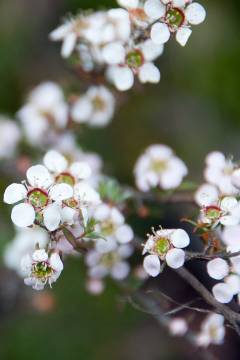
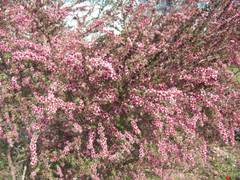
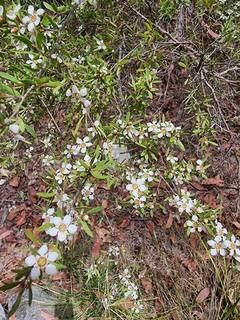
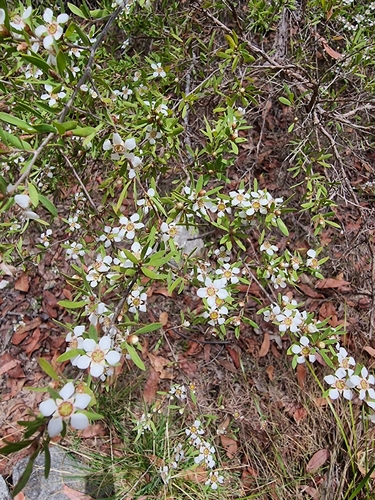
Gaudium is a genus of evergreen shrubs and small trees in the myrtle family, Myrtaceae, segregated in 2023 from Leptospermum and native to Australia. The roughly eighty species carry small, stiff, often aromatic leaves 0.2-0.8 inch (5-20 mm) long on woody, much-branched stems. Plants range from low spreading shrubs to single-stemmed trees 3-20 feet (1-6 m) tall depending on species and site. The flowers are open and saucer-shaped with five rounded petals, 0.3-1 inch (8-25 mm) across, in white, cream, or pink, borne singly or in small clusters along the branches in spring and summer. After flowering, hard woody capsules form and often stay on the stems for years, releasing seed after fire or branch death. Most species grow on nutrient-poor sandy or rocky soils in heath, woodland, and coastal scrub, and many are adapted to periodic fire. The genus closely resembles Leptospermum and Kunzea, and the recent split means many plants are still labelled under their former names. Frost-sensitivity in some species limits cultivation to mild-winter climates.
Native Range
Gaudium is native to Australia, occurring across the continent in heathland, open woodland, and coastal scrub, mostly on sandy and rocky soils. The genus was previously included within Leptospermum, which has a wider range across Australasia and Southeast Asia.Suggested Uses
Grown in low-water and native Australian gardens, coastal plantings, and informal screens and hedges in mild climates. Smaller species are used in containers and rockeries. The persistent woody capsules and wiry stems are sometimes cut for arrangements.How to Identify
Appearance
Size & Dimensions
Height3' - 20'
Width/Spread3' - 12'
Bloom Information
Flowering occurs mainly in spring and summer, with timing varying by species and region. The open white to pink flowers line the stems over several weeks and are followed by woody capsules. In some species scattered flowers appear outside the main season.
Detailed Descriptions
Flower Description
white, cream, pinkFoliage Description
green to grey-greenGrowing Conditions
Sun Requirements
Requires 6-10 hours of direct sunlight daily
• Full Sun: 6+ hours of direct sunlight
• Partial Shade: 3-6 hours of direct sunlight
• Full Shade: Less than 3 hours of direct sunlight
Care & Maintenance
Care Guide
Most species grow in full sun on free-draining sandy or gravelly soils that are low in nutrients and slightly acidic. They tolerate drought once established and resent rich soils and heavy phosphorus, a sensitivity shared with many Australian Myrtaceae. Watering is kept moderate, since waterlogged ground causes root rot. Hardiness varies, with many species damaged by hard frost and suited only to USDA zones 9 to 11. Pruning after flowering keeps plants compact. Myrtle rust is a fungal disease of concern across the family in affected regions.Pruning
Light pruning after flowering maintains a dense habit and removes spent flowering wood. The plants tolerate trimming into the green growth but are slow to reshoot from bare old wood, so cuts are kept within leafy stems. Tip-pruning young plants encourages branching.Container Growing
Suitable for container growing
Minimum container size: 5 gallons