Funastrum, Genus, spp., Multiple species,
- Genus
- Multiple species
Twinevine
Americas: southern US, Mexico, Caribbean, Central and South America
Overview
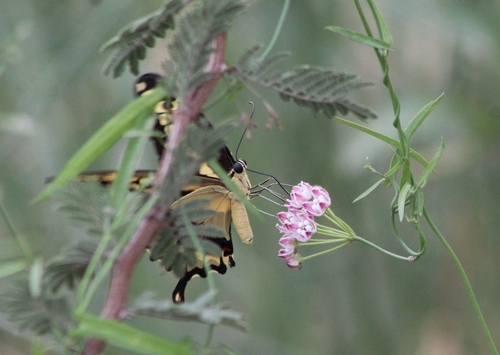
Funastrum is a genus of about a dozen species of twining, milky-sapped vines in the dogbane family (Apocynaceae, subfamily Asclepiadoideae), native to warm parts of the Americas from the southern United States through Mexico and the Caribbean to South America. Plants twine over other vegetation and fences with slender stems to 3-10 feet (0.9-3 m) long, exuding a white latex when cut. The opposite leaves are narrow to heart-shaped depending on the species. Small, star-shaped flowers about 0.3-0.5 inch (8-12 mm) across are clustered in rounded, umbel-like heads and come in white, cream, pink, or pale purple, often sweetly scented. As in milkweeds, fertilized flowers form paired, spindle-shaped seed pods (follicles) that split to release flat seeds with silky tufts carried on the wind. Funastrum grows in deserts, scrub, riverbanks, and disturbed ground, and serves as a larval host for monarch and queen butterflies. The milky sap can irritate skin and is toxic if eaten, and the vines can twine aggressively over nearby plants.
Native Range
Funastrum is native to the Americas, ranging from the southwestern and southern United States through Mexico, Central America, and the Caribbean into South America. Several species are North American natives of deserts, grasslands, and riverbanks.Suggested Uses
Funastrum is grown in native, pollinator, and butterfly gardens as a larval host for monarch and queen butterflies and a nectar source for many insects. It is planted on fences, trellises, and arbors in warm-climate and desert gardens. It also features in habitat restoration of arid and riparian areas within its native range.How to Identify
Appearance
Size & Dimensions
Height3' - 10'
Width/Spread2' - 6'
Bloom Information
Flowering occurs from spring through autumn in warm climates, with a peak in the warmer months. The clustered star-shaped flowers are often sweetly scented and draw bees, wasps, butterflies, and other insects. Spindle-shaped pods develop afterward and release wind-borne seeds.
Detailed Descriptions
Flower Description
white to pale purpleFoliage Description
greenGrowing Conditions
Sun Requirements
Requires 6-12 hours of direct sunlight daily
• Full Sun: 6+ hours of direct sunlight
• Partial Shade: 3-6 hours of direct sunlight
• Full Shade: Less than 3 hours of direct sunlight