Fumaria, Genus, capreolata, Species,
- Genus & species
white ramping-fumitory
Mediterranean region and western Europe
SunFull Sun – Part Shade
Overview
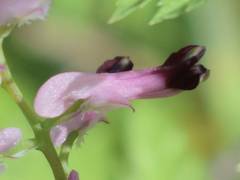
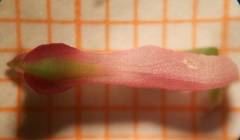
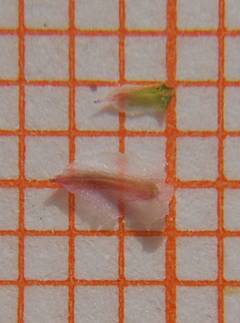
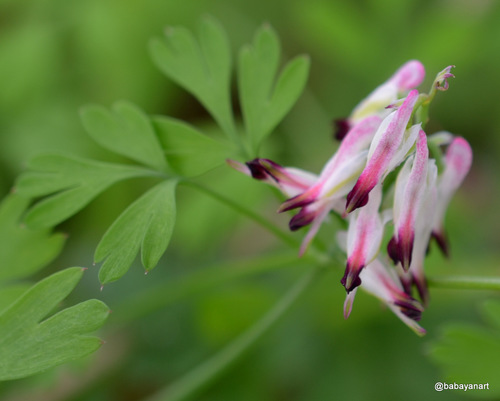
Fumaria capreolata is a scrambling annual in the Papaveraceae, with weak, ribbed stems that climb 12–40 inches (30–100 cm) through other vegetation by means of twining leaf-stalks. The grey-green leaves are two to three times divided into small, flat, wedge-shaped segments, giving a feathery outline. Tubular two-lipped flowers, each 0.4–0.5 inch (10–13 mm) long, are creamy white tipped with dark purple-red and are carried in dense racemes of up to twenty blooms. Flowering runs from spring into summer, after which the flower-stalks curve downward and each flower forms a small, rounded one-seeded nutlet. It grows on cultivated and disturbed ground, hedge banks, and walls across the Mediterranean and western Europe, and is naturalised more widely. As a fast annual it completes its cycle quickly and relies on continual seeding, so it can become weedy on open soil. Plants collapse without support and die off entirely after setting seed.
Native Range
Native to the Mediterranean region and western Europe, on cultivated land, hedge banks, walls, and other disturbed ground. It has naturalised in parts of North America, Australia, and other temperate areas.Suggested Uses
Grown over low supports, banks, and informal fences for its feathery foliage and two-toned flowers. It also self-sows into gravel gardens and naturalistic, disturbed-ground plantings.How to Identify
Appearance
Size & Dimensions
Height1' - 3'4"
Width/Spread1' - 2'
Bloom Information
Detailed Descriptions
Flower Description
creamy white tipped purple-redFoliage Description
grey-greenGrowing Conditions
Sun Requirements
Requires 4-8 hours of direct sunlight daily
• Full Sun: 6+ hours of direct sunlight
• Partial Shade: 3-6 hours of direct sunlight
• Full Shade: Less than 3 hours of direct sunlight
Water & Climate
Water Needs
Drought Tolerance
Drought tolerant when established
Care & Maintenance
Care Guide
Grows in full sun to light shade on free-draining, moderately fertile soils, including disturbed and stony ground. Water needs are low to moderate, and the plant tolerates dry spells once rooted. Seed is sown directly in autumn or early spring, as the plant resents root disturbance from transplanting. It scrambles over low shrubs, fences, or twiggy supports rather than standing alone. Self-sown seedlings appear freely and can be thinned where unwanted. As an annual it needs no winter protection and dies after seeding.Pruning
No formal pruning is needed for this annual. Straggly stems can be trimmed to keep growth within bounds during the season. Whole plants are cleared once they yellow and die after seeding.Container Growing
Suitable for container growing
Minimum container size: 2 gallons
Toxicity Warning
Toxic to pets and humansPlanting Guide
Planting Methods & Timing
Planting Method
direct sow
Direct Sow Timing
autumn or early spring
Plant Spacing
12 inches