Fuchsia, Genus, ×, Hybrid, hybrida, Species,
- Genus & species
- Hybrid
fuchsia
Hybrid of garden origin involving multiple South and Central American {Fuchsia} species; bred extensively in Europe since the early 1800s
Overview
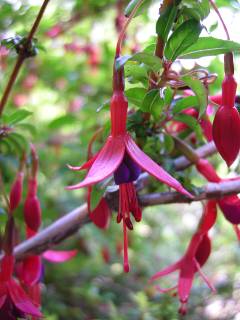
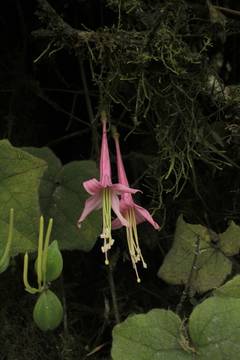
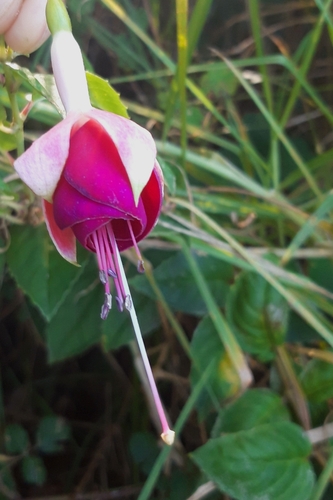
Fuchsia × hybrida is a trailing tender perennial (grown as an annual in cold climates) reaching 6-36 inches (15-90 cm) tall and 12-24 inches (30-60 cm) wide. Pendant tubular to bell-shaped bicolored flowers, 1-3 inches (2.5-7.5 cm), with sepals in white/pink/red/rose and contrasting corolla in white/pink/lavender/purple bloom from June through October (18 weeks of continuous bloom in cool conditions). Mid-green opposite ovate leaves, 1-2.5 inches (2.5-6 cm), with serrated margins. The hybrid complex involves multiple South and Central American species (F. magellanica, F. fulgens, F. triphylla, and others) and has been bred in Europe since the early 1800s. Hardy only in zones 9-11; all other zones treat the plant as an annual or overwinter it in a frost-free location. The pendant bicolored flowers are hummingbird-pollinated. Cool moist Pacific Northwest summers are well-suited to the plant's preference for moderate temperatures — fuchsia wilts and stops flowering when temperatures exceed about 80°F (27°C). Fuchsia gall mite is a serious pest in California and the Pacific Northwest — selecting resistant cultivars reduces the impact. Spent flowers and developing seed pods are pinched off to maintain continuous bloom — if seed pods are left to mature, the plant redirects energy from flowering to fruiting and bloom slows. Toxic to pets in quantity.
Native Range
Hybrid of garden origin — involves multiple South and Central American Fuchsia species (F. magellanica, F. fulgens, F. triphylla, and others). Bred extensively in Europe since the early 1800s.Suggested Uses
Grown in hanging baskets, container plantings, mixed shaded borders, and as hummingbird-attracting accents, in containers of at least 2 gallons (7.5 L), spaced 12-24 inches (30-60 cm) apart. Pendant bicolored flowers bloom for 18 weeks in cool conditions. Hummingbird-pollinated. Tender (annual in most zones). Toxic to pets. Hardy in zones 9-11.How to Identify
Appearance
Size & Dimensions
Height6" - 3'
Width/Spread1' - 2'
Colors
Bloom Information
Detailed Descriptions
Flower Description
pendant tubular to bell-shaped flowers 1-3 inches (2.5-7.5 cm), bicolored — sepals in white, pink, red, or rose with contrasting corolla in white, pink, lavender, or purple; single, semi-double, or fully double forms; June-October — continuous bloom in cool conditions; the pendant bicolored flowers are unmistakableFoliage Description
mid-green, opposite, ovate, 1-2.5 inches (2.5-6 cm), with serrated margins; some cultivars carry bronze or variegated leavesGrowing Conditions
Sun Requirements
Requires 2-4 hours of direct sunlight daily
• Full Sun: 6+ hours of direct sunlight
• Partial Shade: 3-6 hours of direct sunlight
• Full Shade: Less than 3 hours of direct sunlight
Care & Maintenance
Care Guide
Site in part shade to full shade (2-4 hours direct sun) in moist well-drained loam with a pH of 6.0-7.0. High water needs — the plant wilts in heat and stops flowering above approximately 80°F (27°C). Cool conditions are required for continuous bloom. Hardy in zones 9-11; treated as an annual in all other zones. Spent flowers and developing seed pods are pinched off for continuous bloom. Fuchsia gall mite is a serious pest — resistant cultivars are selected where gall mite is present. Toxic to pets in quantity. Hardy in zones 9-11.Pruning
For overwintered plants (zones 9-11 or container-protected): prune back hard in early spring (March-April) to 6-12 inches (15-30 cm) before new growth. Growing tips are pinched during the season to encourage branching and flowering.Pruning Schedule
Prune: March–April
early spring
Container Growing
Suitable for container growing
Minimum container size: 2 gallons
Toxicity Warning
Toxic to petsPlanting Guide
Planting Methods & Timing
Planting Method
transplant
Indoor Start
10 weeks before last frost
Plant Spacing
15 inches