Image 1 of 15
1 / 15
Plant Reference
Fuchsia, Genus, magellanica, Species,
- Genus & species
hardy fuchsia
Southern Chile and Argentina near the Strait of Magellan; humid temperate forests and coastal scrubland; naturalized in western Ireland, coastal UK, New Zealand, and parts of the Pacific Northwest
Overview
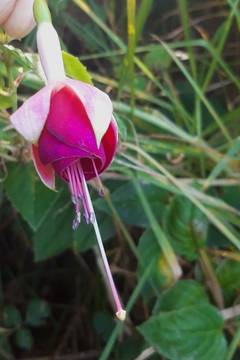
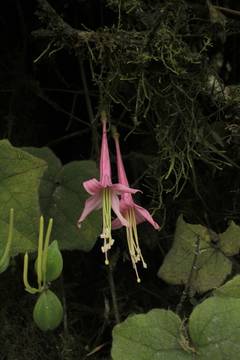
Fuchsia magellanica is an upright deciduous perennial sub-shrub in the family Onagraceae (the evening primrose family) reaching 3–8 feet (0.9–2.4 m) tall and 3–5 feet (0.9–1.5 m) wide. Leaves are ovate, 1–2 inches (2.5–5 cm) long, mid-green, and borne in opposite pairs or whorls of three along the stems. Pendant tubular flowers 1–1.5 inches (2.5–4 cm) long carry four scarlet to red reflexed sepals, four violet-purple petals, and protruding stamens and pistil, and the flowers open continuously from June through November across a 22-week bloom period on current-season wood. In the native Chilean range, hummingbirds pollinate the flowers, and hummingbirds also visit plants in western North American gardens where Anna's hummingbird and rufous hummingbird overlap with the bloom season. Small dark purple edible berries 0.5 inch (1.3 cm) across follow the flowers. In USDA zones 6–7, stems die back to the ground in winter and regrow 3–8 feet (0.9–2.4 m) in a single growing season from the root crown; in zones 8–9, stems survive the winter and the plant becomes a semi-woody sub-shrub with a permanent framework. The species has naturalized from cultivated stock in western Ireland, coastal UK, parts of New Zealand, and scattered sites in the Pacific Northwest. Limitation: the species is not drought-tolerant, leaf scorch and drop occur under dry conditions, plants perform poorly in sustained summer heat above 85°F (29°C), and the species is listed as invasive in parts of New Zealand where naturalized populations have escaped into native forest understory.
Native Range
Native to southern Chile and Argentina near the Strait of Magellan, growing in humid temperate forests and coastal scrubland from sea level to middle elevations in the southern Andes. Naturalized from cultivated stock in western Ireland (where it is commonly used as hedging), coastal UK, New Zealand, and parts of the Pacific Northwest.Suggested Uses
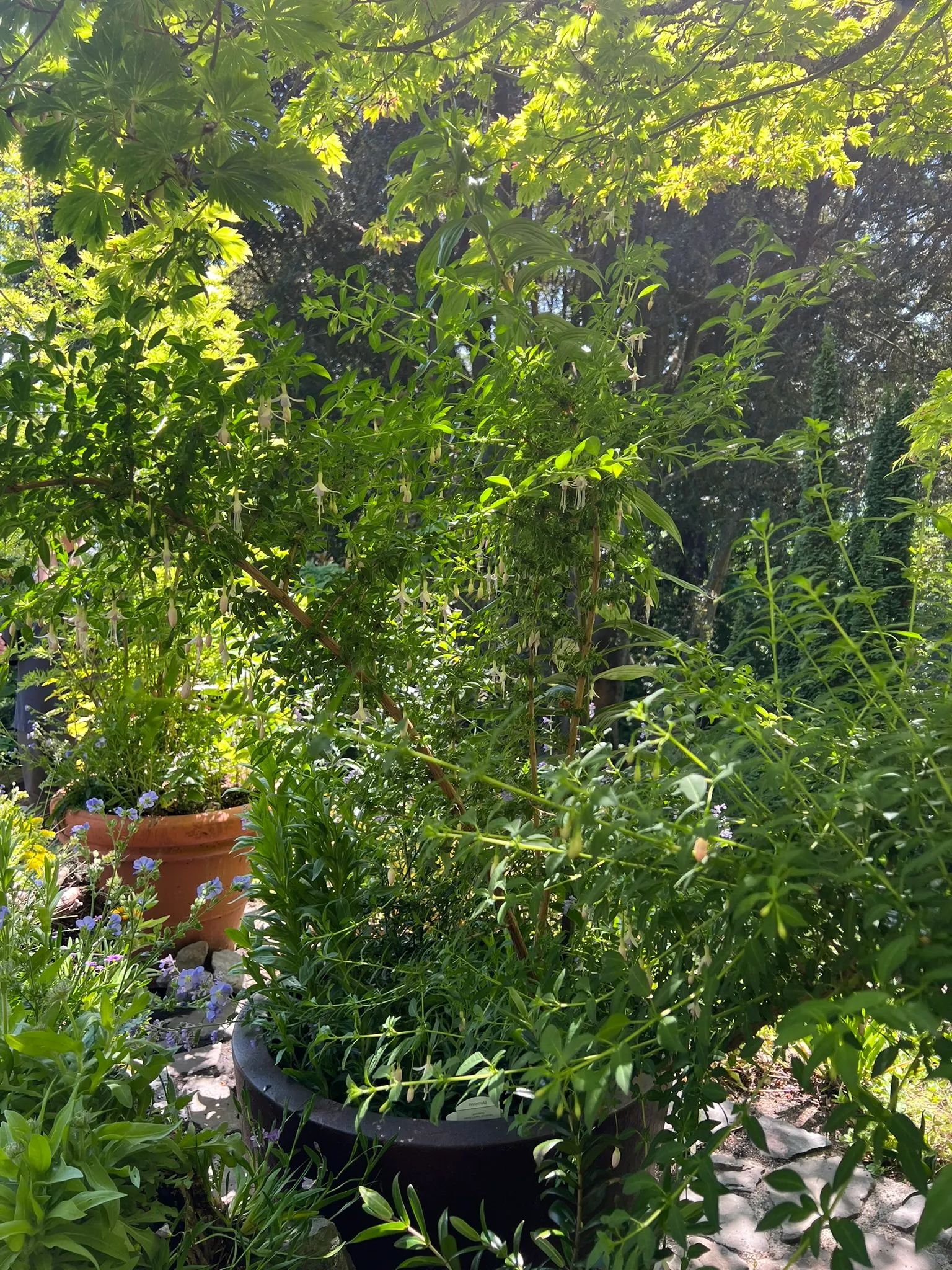
Used in shade borders, woodland edges, cottage gardens, and as an informal hedge in mild maritime climates of USDA zones 8–9 at 3–5 foot (0.9–1.5 m) spacing. Container culture is possible in pots of at least 5 gallons (19 L) with consistent moisture. The June through November bloom period and the pendant flowers draw hummingbirds across the full growing season in regions with resident hummingbird populations. Hot dry inland positions and sites subject to sustained temperatures above 85°F (29°C) are unsuitable.How to Identify
Appearance
Size & Dimensions
Height3' - 8'
Width/Spread3' - 5'
Bloom Information
Pendant tubular flowers 1–1.5 inches (2.5–4 cm) long with four scarlet reflexed sepals and four violet-purple petals open continuously from June through November on current-season wood, a span of about 22 weeks. In the native Chilean range, hummingbirds are the primary pollinators, and hummingbirds also visit plants in western North American gardens. Small dark purple edible berries 0.5 inch (1.3 cm) across develop from the spent flowers through the same period.
Detailed Descriptions
Flower Description
pendant tubular flowers 1-1.5 inches (2.5-4 cm) long with four scarlet to red reflexed sepals and four violet-purple petals; stamens and pistil protrude below the petalsFoliage Description
mid-green; ovate, 1-2 inches (2.5-5 cm) long, opposite or in whorls of three, with finely toothed marginsGrowing Conditions
Sun Requirements
Requires 2-5 hours of direct sunlight daily
• Full Sun: 6+ hours of direct sunlight
• Partial Shade: 3-6 hours of direct sunlight
• Full Shade: Less than 3 hours of direct sunlight
Care & Maintenance
Care Guide
Site in part shade to full shade with 2–5 hours of direct sun per day; afternoon shade is required in USDA zones 7–8 because midday summer sun scorches the foliage. Soil should be well-drained and moist, with a pH of 6.0–7.0. The species is not drought-tolerant, consistent soil moisture through the growing season holds foliage quality, and sustained summer heat above 85°F (29°C) reduces bloom and damages the foliage. In USDA zones 6–7, fall mulch 6 inches (15 cm) deep over the crown protects the roots; dead stems should remain on the plant through winter because they insulate the crown and are cut back only after new growth emerges from the base in spring. Hardy in USDA zones 6–9.Pruning
In USDA zones 6–7, dead stems are cut to ground level in early spring (March) after new growth emerges from the roots; cutting in fall exposes the crown to winter damage. In USDA zones 8–9 where the stems survive winter, plants are cut back by one-third to one-half in March to shape the framework and remove dead tips. The species blooms on current-season wood and tolerates hard renewal pruning without loss of the following season's flowering.Pruning Schedule
Prune: March
early spring
Container Growing
Suitable for container growing
Minimum container size: 5 gallons