Fuchsia, Genus, spp., Multiple species,
- Genus
- Multiple species
fuchsias
Central and South America, with a few species in New Zealand and Tahiti
SunPart Shade – Full Shade
WaterMedium
Overview
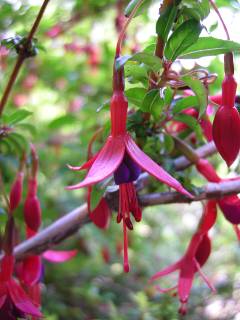
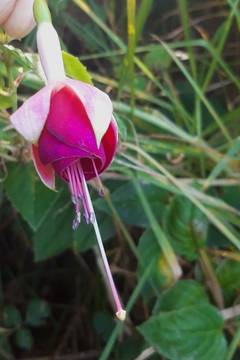
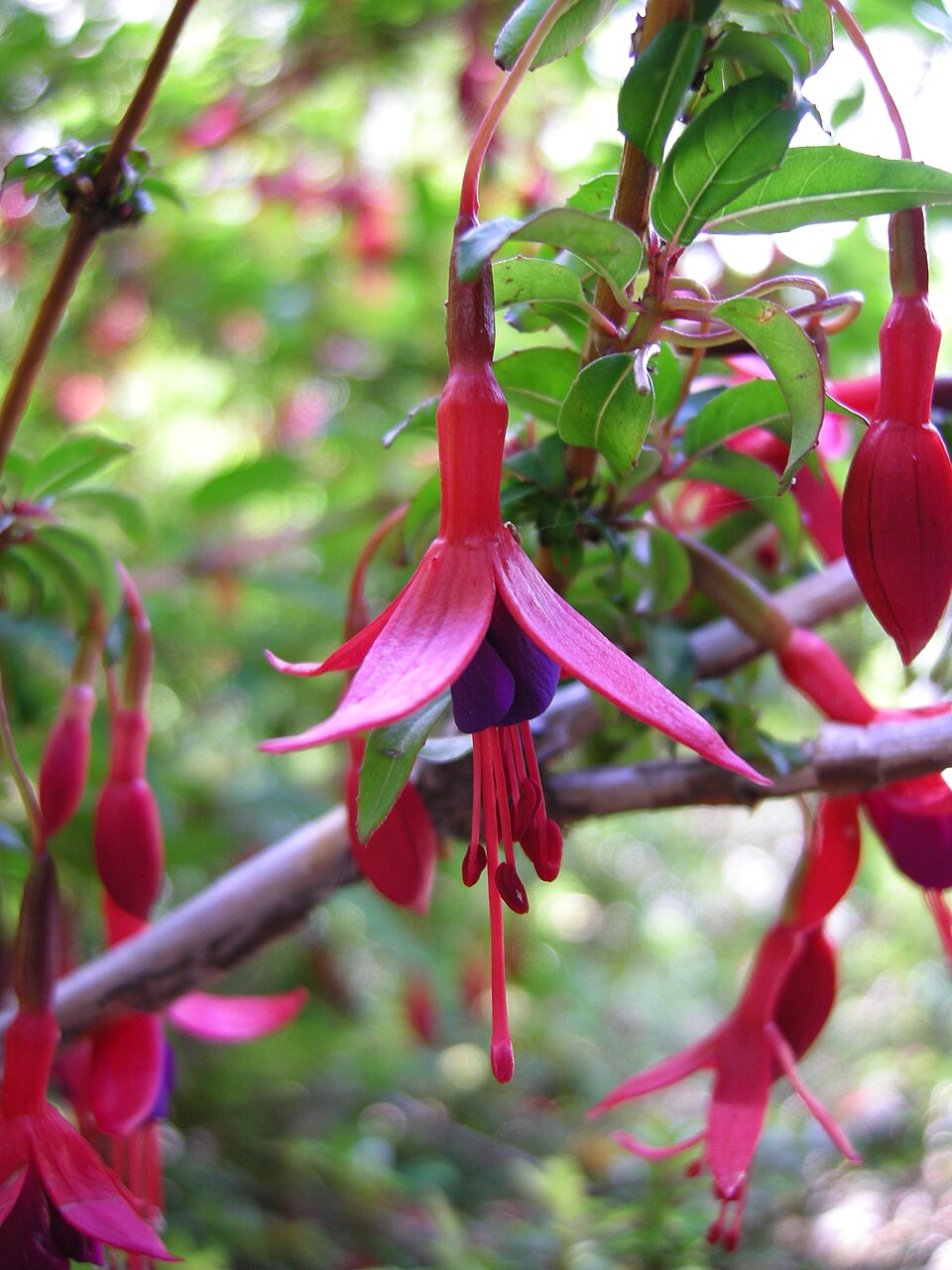
Fuchsia is a genus of about 110 species of shrubs and small trees in the evening-primrose family (Onagraceae), native to Central and South America, with a few species in New Zealand and Tahiti. Plants range from low shrubs about 1 foot (0.3 m) tall to the tree F. excorticata of New Zealand, which reaches 40 feet (12 m). The opposite leaves are green to bronze-green, and the pendant flowers hang from the leaf joints on slender stalks. Each flower has four reflexed sepals above four spreading petals, often in contrasting colors such as red over purple or pink over white, with long stamens that extend below. Flowering runs from early summer until frost, followed by small edible berries. Most garden fuchsias are hybrids grown as upright shrubs or trailing basket plants; F. magellanica is hardy in mild-winter zones, while most cultivars are tender and overwintered under cover. Plants grow in part shade with steady moisture and decline in dry heat and full sun. Fuchsia gall mite, whitefly, and rust are the main pests in cultivation.
Native Range
The genus is centered in the mountains of Central and South America, from Mexico through the Andes, with a separate group of species in New Zealand and Tahiti. Fuchsia grows in cool, humid forest, cloud forest, and stream banks. Many species occur at moderate to high elevation where temperatures stay mild and moisture is steady.Suggested Uses
Fuchsia is grown in shaded borders, hanging baskets, and containers, with trailing forms spilling over rims and upright forms used as standards or low shrubs. The pendant flowers draw hummingbirds and bees through summer. Hardy species such as F. magellanica are grown as informal flowering hedges in mild climates.How to Identify
Appearance
Size & Dimensions
Height1' - 40'
Width/Spread1' - 8'
Bloom Information
Flowering begins in early summer and continues until frost, roughly June through October, with a steady succession of pendant flowers. Plants in cool, moist, shaded sites bloom longest, while heat and dryness cut the display short. Small dark berries follow the flowers.
Detailed Descriptions
Flower Description
red, pink, purple, and whiteFoliage Description
green to bronze-greenGrowing Conditions
Sun Requirements
Requires 2-6 hours of direct sunlight daily
• Full Sun: 6+ hours of direct sunlight
• Partial Shade: 3-6 hours of direct sunlight
• Full Shade: Less than 3 hours of direct sunlight
Care & Maintenance
Care Guide
Plants grow in part shade on fertile, moist, well-drained loam or peat-rich soil at a pH of 6.0–7.0. Steady moisture is needed through the growing season, as the shallow roots dry out quickly in heat and wind. Most species and hybrids are tender and are grown as annuals, lifted, or moved under cover before frost; F. magellanica survives mild winters with a root mulch. Pinching the growing tips through spring produces bushy plants with more flowers. Fuchsia gall mite, whitefly, and rust appear under crowded or stressed conditions.Pruning
Pinching the shoot tips in spring produces branching and more flowering stems. Plants are cut back hard in late winter, once the worst frost has passed, to renew the framework. Frost-killed stems on hardy species are removed when new growth appears at the base.Container Growing
Suitable for container growing