Frullania, Genus, dilatata, Species,
- Genus & species
dilated scalewort
Europe, North Africa, and western Asia
SunPart Shade – Full Shade
WaterHigh
Overview
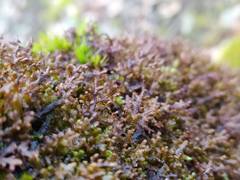
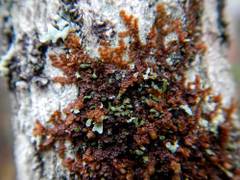
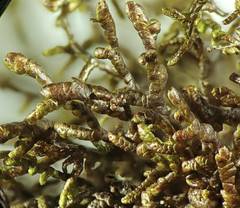
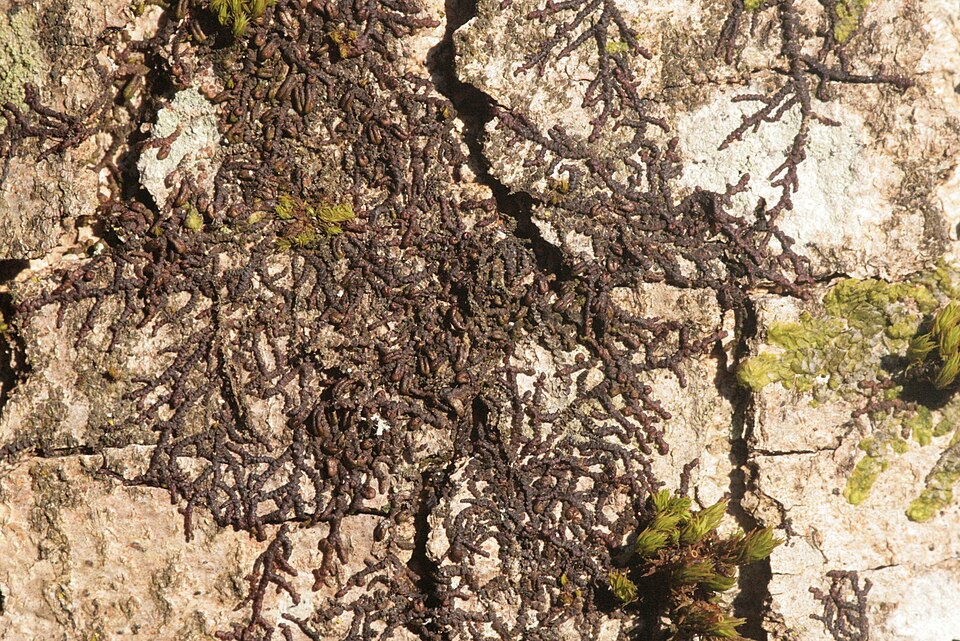
Frullania dilatata is a small leafy liverwort of the family Frullaniaceae that forms flat, closely appressed patches on bark and rock, usually tinged reddish-brown to dark olive. The creeping stems are pinnately branched and bear two rows of overlapping leaves, each folded into an upper rounded lobe and a tiny helmet-shaped lobule beneath that holds water. A third row of smaller underleaves runs along the stem underside. Patches reach 0.4-1.2 inch (1-3 cm) across and lie almost flat against the surface, anchored by colourless rhizoids rather than roots. It reproduces by spores from rounded capsules, and the stems regrow readily from fragments. It grows on the trunks and branches of broadleaved trees and on shaded, sheltered rock in well-lit, humid places, drawing moisture from rain and air. Native across Europe and into North Africa and western Asia, it is a frequent bark liverwort in the British Isles. It is sensitive to drying and to air pollution, thinning where bark stays dry or where air quality is poor.
Native Range
Frullania dilatata is native to Europe and extends into Macaronesia, North Africa, and western Asia. It is a common epiphyte on broadleaved trees throughout the British Isles.Suggested Uses
Forms part of bark epiphyte communities and is recorded in bryophyte surveys as an indicator of air quality. The patches hold surface moisture and shelter micro-invertebrates on trunks and branches.How to Identify
Appearance
Bloom Information
As a liverwort it reproduces by spores rather than flowers. Spore capsules form on short, pale stalks and ripen mainly in spring, releasing spores when the capsule splits into four valves.
Detailed Descriptions
Foliage Description
reddish-brown to dark greenGrowing Conditions
Sun Requirements
• Full Sun: 6+ hours of direct sunlight
• Partial Shade: 3-6 hours of direct sunlight
• Full Shade: Less than 3 hours of direct sunlight
Water & Climate
Water Needs