Frullania, Genus, spp., Multiple species,
- Genus
- Multiple species
scaleworts
Worldwide except Antarctica; most diverse in humid tropical and temperate forests
SunPart Shade – Full Shade
WaterHigh
Overview
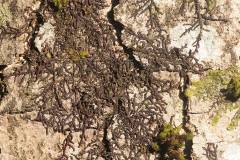
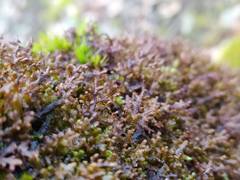
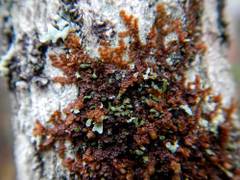
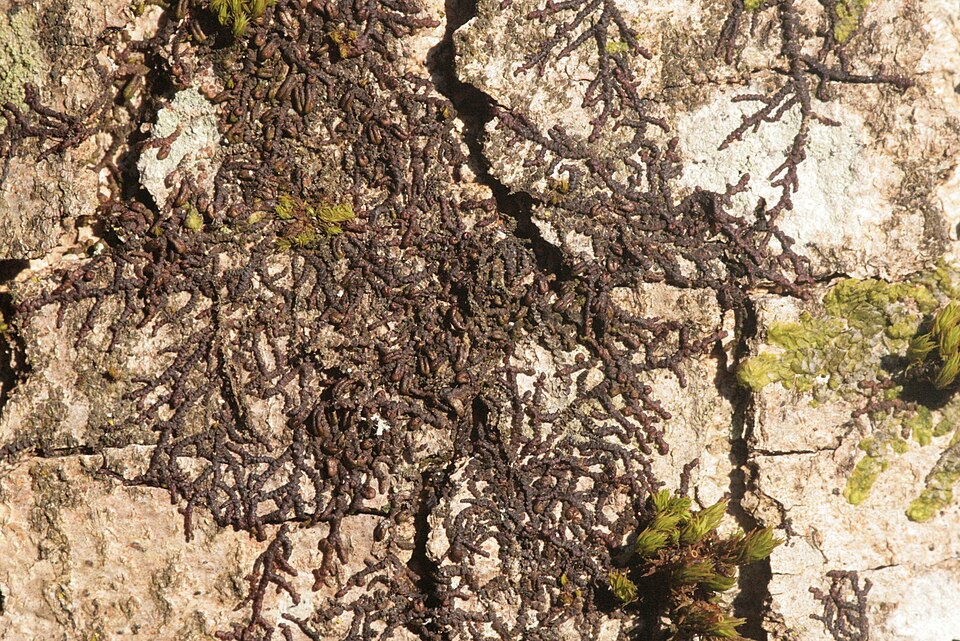
Frullania is a genus of about 300 leafy liverworts in the family Frullaniaceae, found on every continent except Antarctica. These are small, non-flowering plants, with creeping or pendent shoots usually 0.5 to 4 inches (1 to 10 cm) long and less than 0.1 inch (2 to 3 mm) wide. The shoots are flattened, closely branched, and range from olive and reddish-brown to near-black, often forming thin mats or hanging tufts on tree bark, rock, and occasionally living leaves. Each leaf is divided into a larger upper lobe and a small, helmet- or sac-shaped lower lobe, called the lobule, that holds water, a feature used to identify the genus under a hand lens. As liverworts, Frullania species have no roots, flowers, or seeds; they anchor by thread-like rhizoids and reproduce by spores released from small capsules and by detached shoot fragments. Most species are epiphytes of humid forests, growing in light shade on trunks and branches, though some occupy exposed rock. The genus is sensitive to air pollution and serves as an indicator of air quality in some regions. Contact with several species can cause an allergic skin rash known as Frullania dermatitis, reported among forestry and timber workers. Frullania is not cultivated and is encountered as a wild component of bark and rock communities.
Native Range
Frullania is cosmopolitan, occurring on all continents except Antarctica, with the greatest diversity in humid tropical and temperate forests. Species grow on tree bark, rock, and leaf surfaces from lowland to montane elevations. The genus is native across this range rather than introduced.Suggested Uses
Frullania is not grown ornamentally. Its presence is used by ecologists as an indicator of clean air and undisturbed forest, and the genus contributes to bark and rock micro-habitats that hold moisture for other organisms.How to Identify
Appearance
Size & Dimensions
Height1" - 4"
Width/Spread2" - 1'
Bloom Information
As a liverwort, Frullania produces no flowers. Reproduction is by spores released from small, dark capsules raised on short translucent stalks, mainly in moist seasons, and by detached shoot fragments. Capsule production varies with species and local moisture.
Detailed Descriptions
Foliage Description
olive-green to reddish-brown or near-blackGrowing Conditions
Sun Requirements
Tolerates up to 4 hours of direct sunlight daily
• Full Sun: 6+ hours of direct sunlight
• Partial Shade: 3-6 hours of direct sunlight
• Full Shade: Less than 3 hours of direct sunlight
Soil Requirements
Drainagemoist
Water & Climate
Water Needs