Bulbs
Freesia, Genus, refracta, Species,
- Genus & species
Freesia
Western Cape and Eastern Cape, South Africa
Overview
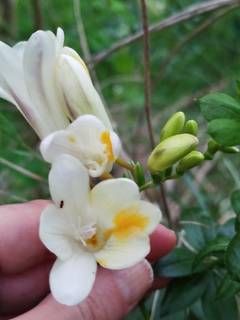
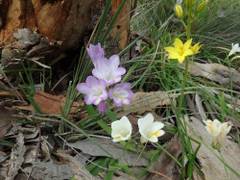
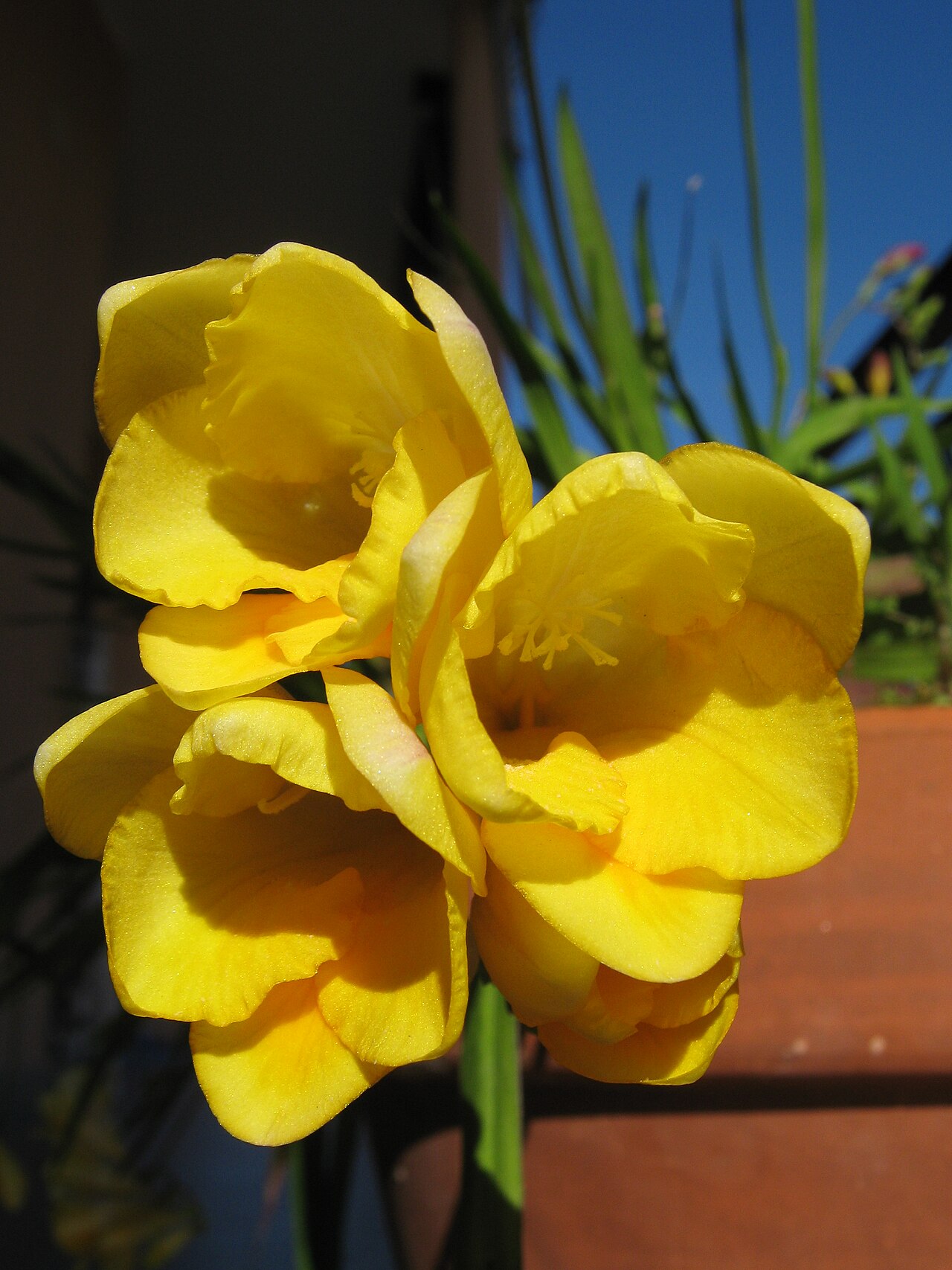
Freesia refracta is a cormous perennial in the iris family (Iridaceae), growing 12–18 inches (30–45 cm) tall and 4–8 inches (10–20 cm) wide from a corm about 1 inch (2.5 cm) across. Leaves are narrow and sword-shaped, 6–12 inches (15–30 cm) long and 0.25–0.5 inch (6–12 mm) wide, arranged in a basal fan of 4–6. The flower stem is slender and wiry, bends horizontally near the top, and carries a one-sided spike of 5–10 flowers. Each flower is funnel-shaped, 1.5–2 inches (4–5 cm) long, creamy yellow to white with orange-yellow markings in the throat, and scented. Fruits are small, rounded capsules with several red-brown seeds. The plant is dormant in summer, when leaves die back and the corm rests for 3–4 months. Corms are frost-tender and are damaged where winter soil temperatures fall below 20°F (−7°C), so they are lifted in colder zones. Stems flop without support in wind or rain, and leaves yellow in waterlogged soil. Many modern freesia cultivars with larger flowers in red, pink, purple, and orange descend from hybrids of this species and are listed under Freesia × hybrida.
Native Range
Freesia refracta is native to the Western Cape and Eastern Cape provinces of South Africa. It grows in fynbos, on sandy and rocky slopes, and in winter-rainfall grassland at low to moderate elevations. It has naturalized in parts of Australia and the Mediterranean.Suggested Uses
Planted in borders, containers, and cutting beds in zones 9–10, spaced 2–3 inches (5–7.5 cm) apart. Grown as a cut flower, with stems lasting 7–10 days in water. Also forced in pots indoors in cool rooms at 55–60°F (13–16°C).How to Identify
Appearance
Size & Dimensions
Height1' - 1'6"
Width/Spread4" - 8"
Bloom Information
Flowers open in late winter to spring, with blooming in February–April in southern Hemisphere climates and in March–May under glass or in mild northern climates. Each spike opens over 2–3 weeks, with the lowest flowers opening first. Individual flowers last 3–5 days.
Detailed Descriptions
Flower Description
Cream to yellow with orange throat markingsFoliage Description
Medium greenGrowing Conditions
Sun Requirements
Requires 6-8 hours of direct sunlight daily
• Full Sun: 6+ hours of direct sunlight
• Partial Shade: 3-6 hours of direct sunlight
• Full Shade: Less than 3 hours of direct sunlight
Care & Maintenance
Care Guide
Corms are planted 2 inches (5 cm) deep and 2–3 inches (5–7.5 cm) apart in autumn, in full sun to light shade with 6–8 hours of direct sun, on sandy, well-drained soil at pH 6.0–7.0. Water is applied weekly at about 1 inch (2.5 cm) from planting until flowering, and is reduced as leaves yellow. Hardiness is USDA zones 9–10; in colder zones corms are lifted after foliage dies and stored at 60–70°F (16–21°C) until replanting. Mild nights of 50–55°F (10–13°C) favor flower bud development. Aphids and spider mites feed on leaves, and corm rot develops in saturated soil.Pruning
Spent flower stems are cut at the base after the last flower fades. Leaves are left in place until they yellow, about 6–8 weeks after flowering, so the corm can store energy. Dead foliage is removed once it has collapsed.Pruning Schedule
Prune: April–June
late springsummer
Container Growing
Suitable for container growing
Minimum container size: 1 gallons