Freesia, Genus, ×, Hybrid, kewensis, Species,
- Genus & species
- Hybrid
Garden hybrid; parent species native to South Africa
Overview
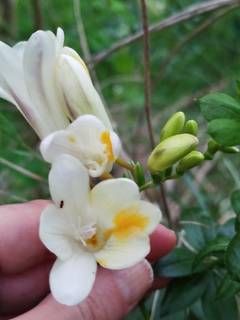
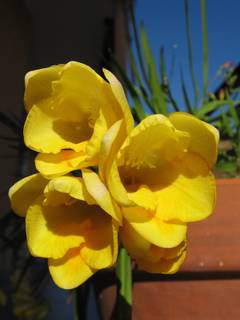
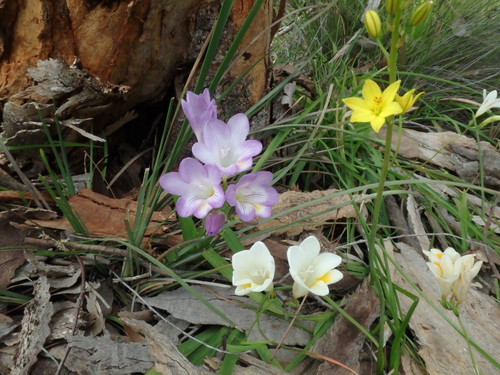
Freesia × kewensis is a garden hybrid freesia grown from a corm, derived from South African species including F. refracta. It produces a fan of narrow, sword-shaped leaves 6-12 inches (15-30 cm) long from a clump that reaches 12-18 inches (30-45 cm) tall in flower. Wiry stems bend near the top to hold a one-sided, horizontal spike of 6-12 funnel-shaped flowers, each 1.5-2 inches (4-5 cm) long. Across named seedlings the flowers range through white, yellow, pink, red, orange, and purple, and many are strongly scented. Flowering lasts about 2-3 weeks in spring, with the lowest buds opening first. Plants grow from a corm that multiplies into offsets and small cormels over the season. Foliage yellows and dies back after flowering as the corm enters summer dormancy. The flower stems are slender and often need support to stay upright. Growth is poor where summers are wet or winters fall below about 25°F (-4°C).
Native Range
A hybrid of garden origin, not found in the wild. Its parent species belong to the genus Freesia, native to the winter-rainfall regions of South Africa, especially the Cape, where they grow on sandy flats and rocky slopes. The hybrid is grown in gardens and greenhouses worldwide and as a cut flower.Suggested Uses
Grown in spring borders, in pots, and in cool greenhouses, spaced 2-3 inches (5-8 cm) apart in groups. Widely grown as a cut flower for its scent and long vase life. In cold climates it is treated as a container plant or a lifted, stored corm rather than a permanent garden plant.How to Identify
Appearance
Size & Dimensions
Height1' - 1'6"
Width/Spread4" - 6"
Bloom Information
Blooms in spring, generally March to May in the open garden and earlier under glass, with corms forced for winter flowering by florists. Each spike opens over 2-3 weeks from the base upward. Cool nights around 50-55°F (10-13°C) during bud development give the strongest scent and the most even flowering.
Detailed Descriptions
Foliage Description
greenGrowing Conditions
Sun Requirements
Requires 5-8 hours of direct sunlight daily
• Full Sun: 6+ hours of direct sunlight
• Partial Shade: 3-6 hours of direct sunlight
• Full Shade: Less than 3 hours of direct sunlight
Care & Maintenance
Care Guide
Plant corms 2 inches (5 cm) deep in autumn in mild climates or early spring where winters are cold, in well-drained soil in full sun to light shade. Keep the soil evenly moist during growth and flowering, then withhold water as the leaves yellow to let the corm rest through summer. Cool growing temperatures of 40-55°F (4-13°C) suit the plant, and flowering fails in heat. In zones 9-10 corms stay in the ground, while in colder areas they are lifted and stored dry and frost-free. Thrips and aphids feed on buds and foliage, and corm rot follows wet, warm soil. Plants grown close together or staked hold their slender stems upright.Pruning
Remove each flower spike at the base once the last buds fade to stop seed forming and direct energy to the corm. Leave the leaves until they yellow and wither, as they rebuild the corm for the next season. Cut away only fully dead foliage.Pruning Schedule
spring
Container Growing
Suitable for container growing
Minimum container size: 1 gallons