Fothergilla, Genus, spp., Multiple species,
- Genus
- Multiple species
Witch-alders
Overview
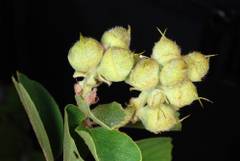
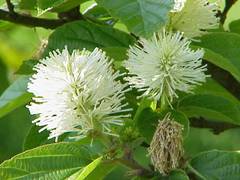
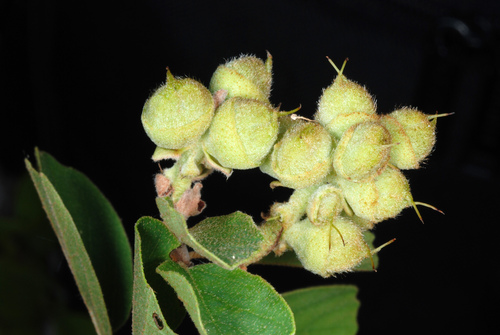
Fothergilla is a genus of deciduous shrubs in the witch-hazel family, comprising two to three species native to the southeastern United States. Plants range from 2-10 ft (0.6-3 m) tall and 2-9 ft (0.6-2.7 m) wide, forming rounded to upright multi-stemmed clumps. F. gardenii stays compact at 2-3 ft (0.6-0.9 m), while F. major reaches 6-10 ft (1.8-3 m), and the hybrid F. × intermedia spans the intermediate range. Leaves are alternate, obovate, 1-4 in (2.5-10 cm) long, with coarsely toothed margins and a leathery texture, dark green to blue-green above and paler below. In spring, before or as the leaves emerge, the genus produces dense terminal spikes 1-2 in (2.5-5 cm) long composed of petalless flowers whose white stamens create a bottlebrush form, and the flowers carry a honey scent. Autumn foliage turns shades of yellow, orange, and red, often on the same plant. The genus spreads slowly by root suckers, forming colonies over time. Fothergilla requires acidic, moist, well-drained soil and declines in alkaline or compacted ground. Growth is slow, and plants take several years to reach mature size.
Native Range
Native to the southeastern United States, where the genus occurs in moist woodlands, pine flatwoods, and coastal plain habitats from Virginia and the Carolinas south to Georgia, Alabama, and the Florida panhandle.Suggested Uses
Used in shrub borders, woodland gardens, and foundation plantings, and as a low informal hedge with dwarf forms spaced 3-4 ft (0.9-1.2 m) apart. Combines with acid-loving plants such as rhododendrons and blueberries in naturalistic settings.How to Identify
Appearance
Size & Dimensions
Height2' - 10'
Width/Spread2' - 9'
Bloom Information
Flowering occurs in early to mid spring, typically April to May depending on latitude, before or just as the leaves expand. Each terminal spike persists about two to three weeks. The fragrant white stamens are the visible floral feature, since the flowers lack petals.
Detailed Descriptions
Foliage Description
Dark green to blue-green, turning yellow, orange, and red in fallGrowing Conditions
Sun Requirements
Requires 4-8 hours of direct sunlight daily
• Full Sun: 6+ hours of direct sunlight
• Partial Shade: 3-6 hours of direct sunlight
• Full Shade: Less than 3 hours of direct sunlight
Care & Maintenance
Care Guide
Grow in full sun to part shade in acidic, consistently moist, well-drained soil rich in organic matter. Flowering and fall colour are strongest in full sun, while plants in shade grow more openly. Soil pH above 7.0 causes chlorosis and slow decline. Water regularly during the first few years and during drought, as the genus has shallow roots. Mulch conserves moisture and keeps roots cool. Most species are hardy in USDA zones 5-8, though F. gardenii is less cold-tolerant than F. major.Pruning
Prune immediately after flowering, since flower buds form on the previous season wood. Remove dead or crossing stems and thin root suckers to control colony spread. Heavy renewal pruning is tolerated but reduces the following spring bloom.Pruning Schedule
Prune: May–June
late spring
Container Growing
Suitable for container growing
Minimum container size: 5 gallons