Forsythia, Genus, spp., Multiple species,
- Genus
- Multiple species
forsythias
Eastern Asia and southeastern Europe
Overview
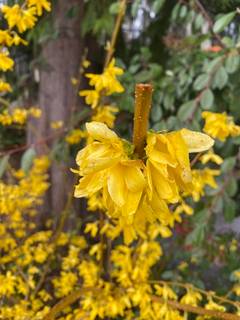
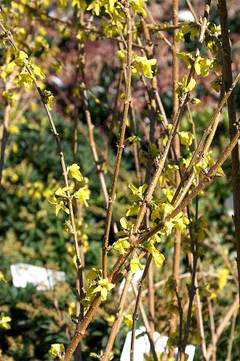
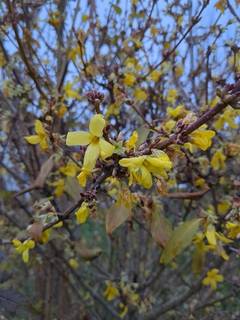
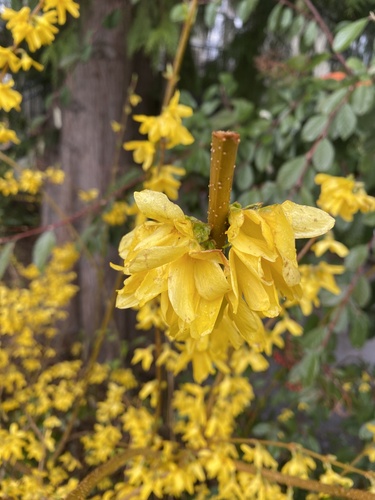
Forsythia is a genus of about 11 species of deciduous shrubs in the family Oleaceae, native mostly to eastern Asia, with a single species, F. europaea, in southeastern Europe. Plants form upright to arching, multi-stemmed clumps 18 inches to 10 feet (45 cm to 3 m) tall and as wide, with hollow or chambered pith in the twigs. Before the leaves expand, the bare stems are lined with four-lobed bright yellow flowers borne singly or in small clusters along the previous year's growth. The opposite leaves that follow are simple, toothed, and 1 to 4 inches (3 to 10 cm) long, sometimes turning yellow to purple in autumn. Flower colour ranges from pale to deep yellow across the species and their hybrids. F. × intermedia, a hybrid of F. suspensa and F. viridissima, accounts for most garden plantings and includes many cultivars. The arching stems of F. suspensa root where they touch the ground, forming colonies. The plants flower on old wood, so the display depends on growth made the previous summer.
Native Range
Native mainly to eastern Asia, in China, Korea, and Japan, with one species, F. europaea, in the Balkans of southeastern Europe. The center of diversity lies in China.Suggested Uses
Planted as a spring-flowering specimen, in shrub borders, as an informal hedge or screen, and on banks where the arching stems hold soil. Cut stems are brought indoors to force into early bloom. F. suspensa is trained against walls and over banks for its trailing habit.How to Identify
Appearance
Size & Dimensions
Height1'6" - 10'
Width/Spread3' - 10'
Bloom Information
Flowering occurs in early spring, generally March to April, before the leaves expand. The yellow flowers open over two to three weeks on bare stems. Buds form the previous summer, so a hard winter or late frost can reduce the display.
Detailed Descriptions
Foliage Description
green, sometimes yellow to purple in autumnGrowing Conditions
Sun Requirements
Requires 6-12 hours of direct sunlight daily
• Full Sun: 6+ hours of direct sunlight
• Partial Shade: 3-6 hours of direct sunlight
• Full Shade: Less than 3 hours of direct sunlight
Care & Maintenance
Care Guide
Forsythia species grow in full sun to light shade on most moderately fertile, well-drained soils, and flower most freely in full sun. They tolerate a pH range from 6.0 to 8.0 and withstand cold, urban pollution, and a degree of drought once established. Plants grow quickly and sucker or layer to form wide clumps. F. × intermedia cultivars are hardy to around USDA zone 5, though flower buds of some are damaged in colder winters even where the stems survive. Little feeding is needed, as rich soil promotes leafy growth at the expense of flowers.Pruning
Pruning is done immediately after flowering, since the plant blooms on the previous year's wood. Removal of one in three of the oldest stems at the base each year renews the clump and maintains flowering. Cutting the whole plant back hard sacrifices the following spring flowers but rejuvenates an overgrown shrub.Pruning Schedule
Prune: April–May
late spring
Container Growing
Suitable for container growing
Minimum container size: 5 gallons