Foeniculum, Genus, spp., Multiple species,
- Genus
- Multiple species
fennel
Overview
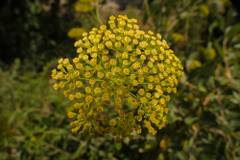
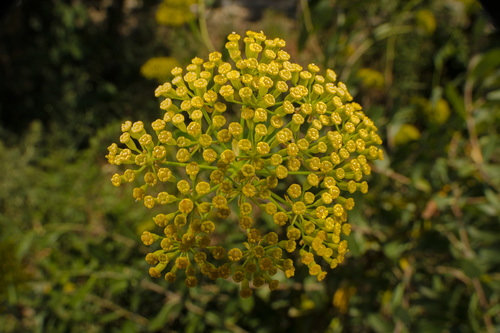
Foeniculum is a small genus in the carrot family (Apiaceae) centered on the single species Foeniculum vulgare, fennel, with several cultivated varieties including sweet fennel, bronze fennel, and the swollen-stemmed Florence fennel (finocchio). It is an aromatic, short-lived perennial or biennial native to the Mediterranean region and now naturalized across much of the temperate and subtropical world. Plants form upright, hollow, branched stems 3-8 feet (0.9-2.4 m) tall above a thick taproot, clothed in finely divided, thread-like leaves that smell strongly of anise when crushed. Flat-topped compound umbels of tiny yellow flowers open in summer, followed by ridged, aromatic seeds widely used as a spice. All parts carry the anise scent, and the foliage, stems, seeds, and swollen leaf bases of some varieties are eaten. Fennel self-sows freely and has become an aggressive weed in California, Australia, and other warm regions, where it crowds out native vegetation. Bronze-leaved forms are grown for foliage color, though they cross readily with green fennel when seed is saved.
Native Range
Foeniculum is native to the Mediterranean Basin and has naturalized widely in temperate and subtropical regions of the Americas, Australia, and Asia. In parts of California and Australia it is classified as an invasive weed of roadsides, grasslands, and disturbed ground.Suggested Uses
Foeniculum is grown in herb and vegetable gardens for its edible leaves, stems, seeds, and bulbs, and bronze fennel is used as a foliage plant in ornamental borders. The tall, airy form and nectar-rich umbels suit pollinator and cottage-style plantings. Because it self-sows and can spread, it is kept out of gardens in regions where it is invasive.How to Identify
Appearance
Size & Dimensions
Height3' - 8'
Width/Spread1'6" - 3'
Colors
Bloom Information
Flowering occurs in summer, roughly July to September, with flat yellow umbels held above the foliage. The flowers are rich in nectar and draw bees, wasps, hoverflies, and many beneficial insects. Seeds ripen in late summer and autumn and scatter freely around the parent plant.
Detailed Descriptions
Foliage Description
blue-green to bronzeGrowing Conditions
Sun Requirements
Requires 6-12 hours of direct sunlight daily
• Full Sun: 6+ hours of direct sunlight
• Partial Shade: 3-6 hours of direct sunlight
• Full Shade: Less than 3 hours of direct sunlight
Care & Maintenance
Care Guide
Foeniculum grows in full sun and free-draining soil of low to moderate fertility, tolerating drought, heat, and poor ground once established. It is raised from seed sown directly in spring, as the long taproot transplants poorly. Plants need little care and may self-sow heavily, so removing seed heads before they ripen limits unwanted spread. Florence fennel is grown as a cool-season annual and watered steadily to swell the leaf bases, which bolt in heat or drought. Fennel can suppress the growth of nearby plants and is often kept apart from beans, tomatoes, and dill in the vegetable garden.Pruning
Flower stalks are cut back before seed ripens to limit self-sowing and to keep leaf production going on herb plants. Whole stems are cut to the ground in late autumn after they die back. Cutting bronze and sweet fennel back hard in early summer produces a flush of fresh foliage.Container Growing
Suitable for container growing
Minimum container size: 5 gallons