Euthamia, Genus, graminifolia, Species,
- Genus & species
flat-topped goldenrod
Overview
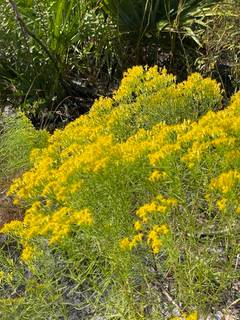
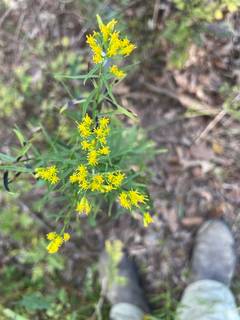
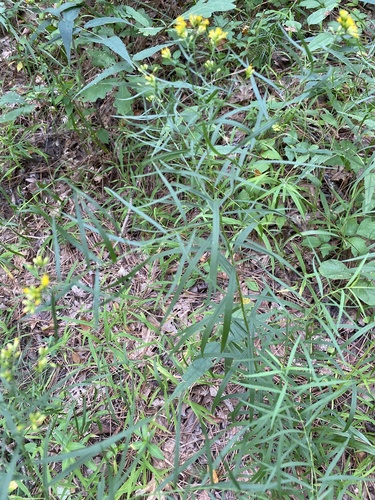
Euthamia graminifolia is an upright herbaceous perennial in the daisy family, growing 24–48 inches (60–120 cm) tall from creeping rhizomes that form spreading colonies. The stems are slender and branched near the top, clothed in narrow, grass-like leaves 2–4 inches (5–10 cm) long with three to five parallel veins and gland-dotted surfaces. From August to October it produces flat-topped clusters of many small yellow flower heads, each head about 0.2 inch (5 mm) across with short ray florets. Unlike the plume-shaped clusters of true goldenrods, the bloom is held in a level-topped array. The plant spreads steadily by rhizome and can form broad stands in moist open ground. It grows in damp meadows, ditches, shorelines, and disturbed sites across a wide range of soils. It dies back to the rhizomes in winter. The running habit makes it spread well beyond its original planting in fertile, moist soil.
Native Range
Native to much of North America, from Canada south through the central and eastern United States. It grows in moist meadows, prairie swales, ditches, lake and stream margins, and open disturbed ground.Suggested Uses
Used in rain gardens, pond and stream margins, meadows, and prairie restorations. Suited to moist, open sites where its spread is wanted as ground-covering color. Grown as a late-season nectar and pollen source for bees, wasps, and butterflies.How to Identify
Appearance
Size & Dimensions
Height2' - 4'
Width/Spread2' - 3'
Bloom Information
Blooms from August to October, late in the season alongside asters. The flat clusters open over several weeks and draw heavy late-season insect traffic. Fluffy wind-borne seed follows in autumn.
Detailed Descriptions
Foliage Description
mid greenGrowing Conditions
Sun Requirements
Requires 6-10 hours of direct sunlight daily
• Full Sun: 6+ hours of direct sunlight
• Partial Shade: 3-6 hours of direct sunlight
• Full Shade: Less than 3 hours of direct sunlight
Care & Maintenance
Care Guide
Grows in full sun on moist to wet soils across a pH range of 5.5–7.5, including clay and sandy ground. It tolerates seasonal flooding and poor drainage but also grows in average garden soil. The rhizomes spread widely in rich, moist conditions, so a contained bed or drier site limits its run. No feeding is needed. Hardy in USDA zones 3 to 8. Plants are cut back in late autumn or left standing to hold seed for birds.Pruning
Stems are cut to the ground in late autumn or early spring before new growth. Dividing the clump every few years controls the rhizome spread and renews growth. Cutting plants back by half in early summer produces shorter, denser stems.Pruning Schedule
Prune: March & November
fallearly spring