Euthamia, Genus, caroliniana, Species,
- Genus & species
slender goldentop
Overview
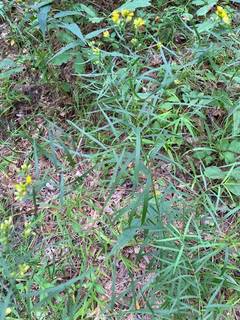
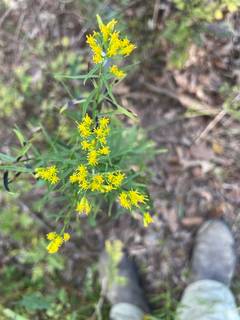
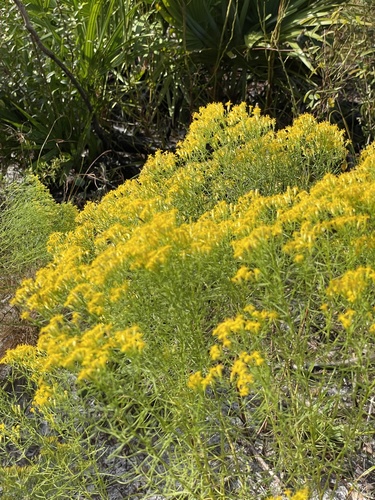
Euthamia caroliniana is an upright herbaceous perennial reaching 24-48 inches (60-120 cm) tall and 18-36 inches (45-90 cm) wide, spreading by rhizomes into open clumps and colonies. The stems are slender and branch near the top, carrying narrow, linear, one-veined leaves 1-3 inches (2.5-7.5 cm) long that are dotted with resin glands and nearly stalkless. In late summer and fall the branched stem tips form flat-topped clusters of many small yellow flower heads, each only about 0.2 inch (5 mm) across. The seeds are tiny achenes carried on white bristles. It grows in damp to dry sandy soils, pine savannas, old fields, pond margins, and roadsides across eastern North America, mainly on the coastal plain. The species tolerates a wide moisture range but needs full sun and acidic, sandy ground. It spreads readily by rhizomes and can colonize beyond where it is planted, which limits its use in small gardens.
Native Range
Euthamia caroliniana is native to eastern North America, from Nova Scotia and the Great Lakes south to Florida and west to Texas, mostly on the Atlantic and Gulf coastal plains. It grows in damp to dry sandy soils, pine savannas, old fields, pond margins, and roadsides.Suggested Uses
Used in meadow and prairie plantings, native and pollinator gardens, and naturalized damp or sandy sites. It suits open ground where its rhizomes can spread, alongside asters and grasses. Spaced 18-24 inches (45-60 cm) apart in groups.How to Identify
Appearance
Size & Dimensions
Height2' - 4'
Width/Spread1'6" - 3'
Bloom Information
Detailed Descriptions
Foliage Description
greenGrowing Conditions
Sun Requirements
Requires 6-8 hours of direct sunlight daily
• Full Sun: 6+ hours of direct sunlight
• Partial Shade: 3-6 hours of direct sunlight
• Full Shade: Less than 3 hours of direct sunlight
Care & Maintenance
Care Guide
Grow in full sun in moist to dry, sandy, acidic soil. This species tolerates a wide range of moisture, from pond margins to dry sand, but flowers most freely in open sun. Heavy shade reduces flowering and weakens the stems. No fertilizer is needed in lean sandy soils. It is hardy in USDA zones 5-10 and dies back to the rhizomes over winter. The rhizomes spread steadily and may need containment in cultivated beds.Pruning
Cut the dead stems to the ground in late winter or early spring before new shoots emerge. Cutting plants back by half in early summer reduces height and flopping. Lift and remove spreading rhizomes to keep the clump in bounds.Pruning Schedule
Prune: March
early spring