Eurybia, Genus, macrophylla, Species,
- Genus & species
large-leaved aster
Overview
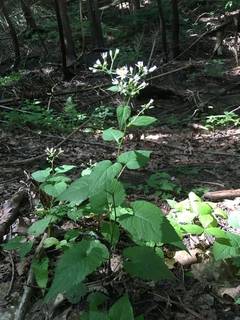
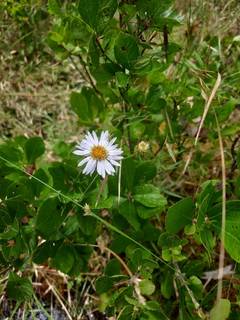
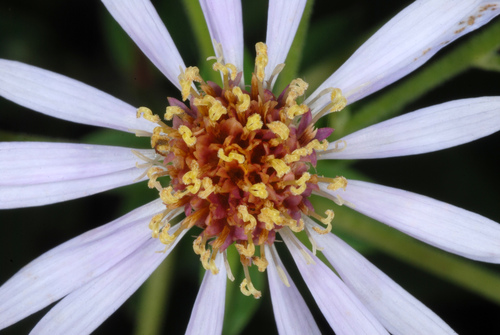
Eurybia macrophylla is a rhizomatous perennial that forms broad colonies of large basal leaves, sending up flowering stems 1-3 feet (30-90 cm) tall in late summer. The basal leaves are heart-shaped, 4-8 inches (10-20 cm) long, with coarsely toothed margins, rough upper surfaces, and long petioles; the stem leaves are smaller and short-stalked. Flat-topped clusters of flower heads top each stem, with 9-20 pale violet to white ray florets surrounding a center of yellow disk florets that age to reddish-purple. Many plants in a colony produce only the large leaves, with relatively few stems flowering in a given year. It grows in dry to moist deciduous and mixed woodland, forming a dominant ground layer in northern hardwood forests across eastern North America. The thick rhizomes spread to make dense, weed-suppressing mats. In deep shade flowering is sparse, and the spreading habit can overtake smaller plants in a border.
Native Range
Eurybia macrophylla is native to eastern North America, from Quebec and Ontario south through the Appalachians to Georgia and west to Minnesota. It grows in dry to moist deciduous and mixed woodlands.Suggested Uses
Used as a ground cover for dry shade, in woodland gardens, and beneath trees, spaced 18-24 inches (45-60 cm) apart. Its late flowers are a nectar source for bees and butterflies in native plantings. The spreading mats suit naturalized rather than formal settings.How to Identify
Appearance
Size & Dimensions
Height1' - 3'
Width/Spread1' - 2'
Bloom Information
Detailed Descriptions
Flower Description
pale violet to white with yellow centersFoliage Description
dark greenGrowing Conditions
Sun Requirements
Tolerates up to 6 hours of direct sunlight daily
• Full Sun: 6+ hours of direct sunlight
• Partial Shade: 3-6 hours of direct sunlight
• Full Shade: Less than 3 hours of direct sunlight