Eurybia, Genus, spp., Multiple species,
- Genus
- Multiple species
wood asters
North America, concentrated in the eastern United States and adjacent Canada, with a few species in eastern Asia
Overview
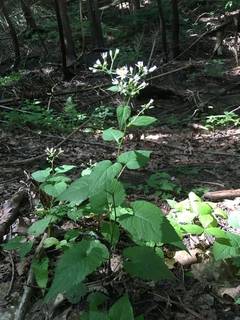
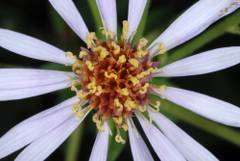
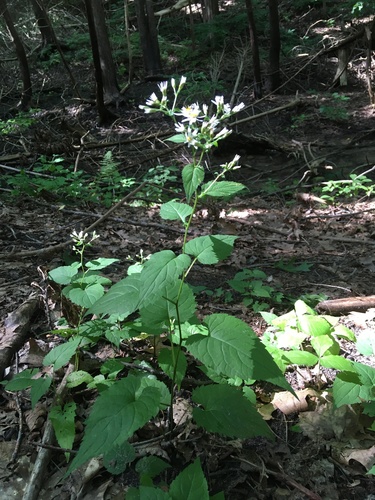
Eurybia is a genus of roughly 23 herbaceous perennials in the aster family (Asteraceae), segregated from the broad genus Aster during taxonomic revisions in the 1990s. Most species grow 1-4 ft (30-120 cm) tall and spread by rhizomes into colonies 1-3 ft (30-90 cm) across. Stems are upright to slightly zigzag and carry alternate, simple leaves that range from heart-shaped at the base in E. divaricata to broadly oval in E. macrophylla, 2-8 in (5-20 cm) long. The flower heads are daisy-like, 0.5-1 in (1.3-2.5 cm) across, with 5-15 ray florets in white, pale violet, or lavender around a center disc of yellow florets that age to reddish-purple. Flowering runs from late summer into autumn. Several species, including E. divaricata and E. macrophylla, grow in the understory of deciduous forests and tolerate dry shade once established, while E. spectabilis occupies open sandy sites in fuller sun. The genus spreads by rhizomes and self-seeding, which can crowd smaller plants in a bed. Foliage is deciduous, dying back to the ground each winter and resprouting in spring.
Native Range
Eurybia is native to North America, with the greatest concentration of species in the eastern United States and adjacent Canada and a small number extending into eastern Asia. Species occupy deciduous woodlands, forest edges, clearings, and sandy openings from Quebec south to Georgia and west toward the Great Plains.Suggested Uses
Eurybia grows in woodland and shade gardens, native plant borders, and naturalized plantings where its rhizomes have room to spread. Lower, mounding species such as E. divaricata are planted as a groundcover under trees and shrubs, spaced 18-24 in (45-60 cm) apart. The late flowers are combined with goldenrods and other autumn perennials in pollinator plantings.How to Identify
Appearance
Size & Dimensions
Height1' - 4'
Width/Spread1' - 3'
Bloom Information
Most Eurybia species flower from late summer through autumn, roughly August to October depending on latitude and species. The heads open over several weeks, and the yellow disc florets darken to reddish-purple as they mature. The late timing supplies nectar to bees and other pollinators ahead of frost.
Detailed Descriptions
Flower Description
white to lavender rays with yellow center discFoliage Description
greenGrowing Conditions
Sun Requirements
Requires 2-8 hours of direct sunlight daily
• Full Sun: 6+ hours of direct sunlight
• Partial Shade: 3-6 hours of direct sunlight
• Full Shade: Less than 3 hours of direct sunlight
Care & Maintenance
Care Guide
Eurybia grows in average, well-drained soil across a pH range of about 5.5 to 7.5. Woodland species such as E. divaricata and E. macrophylla grow in part to full shade and withstand dry conditions under trees once established, while E. spectabilis needs more sun and sharper drainage. Plants spread by rhizomes and form colonies over time, so division in spring every 3-4 years controls their spread and renews growth. Water is needed during establishment and in extended drought, though mature stands tolerate dry spells. The genus is hardy in USDA zones 3-8, with the exact range varying by species. Serious pests are uncommon, though powdery mildew can appear on foliage in humid, crowded conditions.Pruning
Cut Eurybia stems to the ground in late autumn or early spring after the foliage dies down. Shortening the stems by half in early summer reduces height and limits flopping in richer soils. Spent flower stems can be removed after bloom to reduce self-seeding, or left standing to hold seed for birds.Pruning Schedule
Prune: March & November
fallearly spring