Image 1 of 16
1 / 16
Plant Reference
Eurybia, Genus, divaricata, Species,
- Genus & species
white wood aster
Eastern United States and Canada (Ontario and Quebec south to Georgia and Alabama); deciduous woodlands
Overview
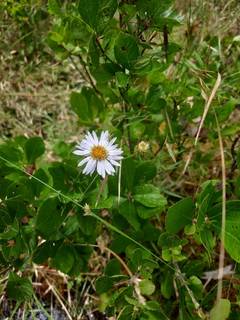
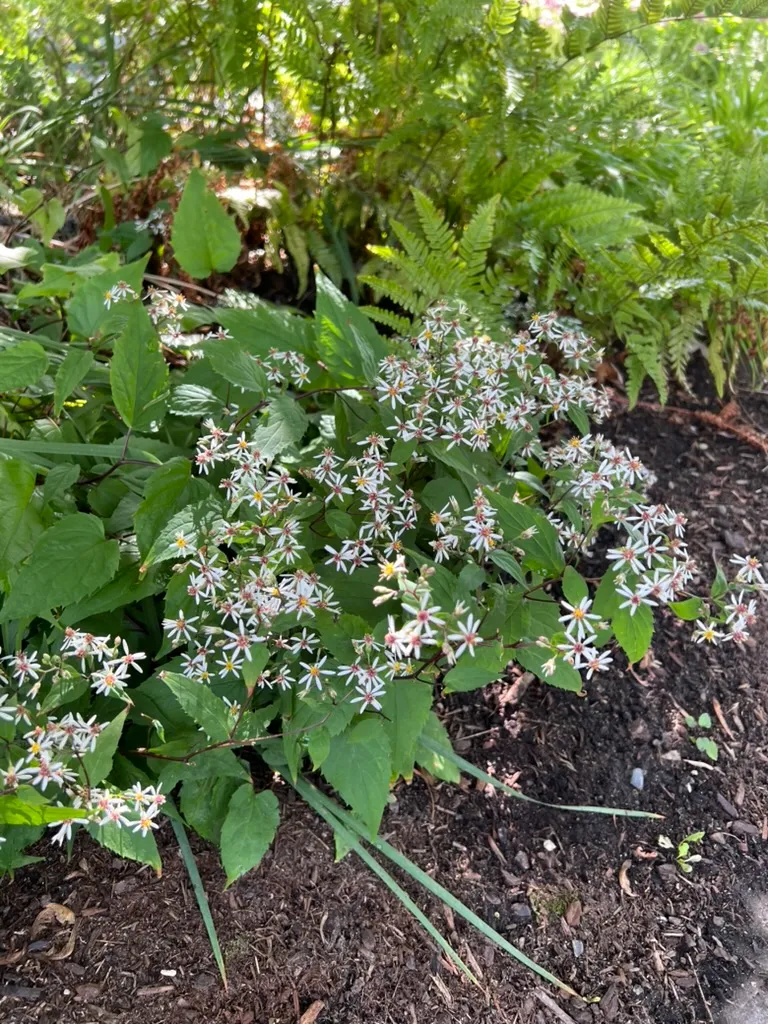
Eurybia divaricata (formerly Aster divaricatus) is a rhizomatous spreading perennial native to the deciduous woodlands of eastern North America. Plants form mounded, slightly arching colonies 12-24 inches (30-60 cm) tall and 18-36 inches (45-90 cm) wide on wiry, zigzagging, dark purplish-brown stems bearing heart-shaped toothed leaves 1.5-3 inches (4-8 cm) long with a rough upper surface and dark green color. From late summer through fall, stem tips branch into open airy clusters of small daisy-like flower heads 0.5-0.75 inch (1.3-2 cm) across, each with 6-12 white ray florets surrounding a small yellow disc that ages to red-purple. The overall September-October effect is of white flower clouds floating over dark foliage. Shade tolerance is high; plants persist and flower in dry shade under tree canopies where many perennials decline. Hardy to USDA zone 3. Growth rate is moderate; rhizomes spread laterally 4-8 inches (10-20 cm) per year in favorable soil and can colonize a 3 foot (90 cm) area within 4-5 years, which makes control by division necessary in formal plantings. All parts are mildly toxic if ingested.
Native Range
Eurybia divaricata is native to the eastern United States and Canada, from Ontario and Quebec south to Georgia and Alabama, in deciduous woodlands, woodland edges, clearings, and disturbed forest sites, typically in dry to moist humus-rich acidic soils under partial to full shade.Suggested Uses
Used as a ground cover and border plant in shade and partial shade at 18-24 inch (45-60 cm) spacing. The dry-shade tolerance paired with September-October bloom fills a window that most shade perennials cannot cover. Naturalizes in woodland gardens and combines with ferns, hostas, and sedges. Specialist native bees and late-season generalist pollinators use the flowers. Spreading rhizomes make the species unsuitable for tight formal plantings without root barriers.How to Identify
Appearance
Size & Dimensions
Height1' - 2'
Width/Spread1'6" - 3'
Bloom Information
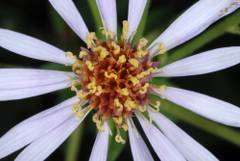
Small white daisy-like flower heads 0.5-0.75 inch (1.3-2 cm) across with yellow central discs aging to red-purple, borne in loose airy terminal clusters from September through October in zones 3-7 and extending into November in zones 8-9. Individual flower heads last 1-2 weeks; the colony display spans 4-6 weeks. Disc color shift from yellow to red-purple adds a warm accent to the white ray florets as bloom progresses.
Detailed Descriptions
Flower Description
White ray florets with yellow central disc aging to red-purple; daisy-like heads 0.5-0.75 inch (1.3-2 cm); loose airy clusters; September-OctoberFoliage Description
Dark green on rough upper surface; heart-shaped and toothed 1.5-3 inches (4-8 cm); dark purplish-brown wiry zigzagging stems; deciduousGrowing Conditions
Sun Requirements
Requires 2-6 hours of direct sunlight daily
• Full Sun: 6+ hours of direct sunlight
• Partial Shade: 3-6 hours of direct sunlight
• Full Shade: Less than 3 hours of direct sunlight
Care & Maintenance
Care Guide
Grows in partial to full shade in moist to dry humus-rich acidic to neutral soil at pH 4.5-7.0. Hardy to USDA zone 3. Dry-shade tolerance is high once plants are established, making this a useful option under tree canopies where root competition depletes soil moisture. A Chelsea chop (cutting stems back by half in late May to early June) produces a more compact self-supporting plant with more flowering stems. Division in early spring every 3-4 years manages the spreading rhizomes and restores vigor; old woody center portions are discarded and fresh outer divisions replanted at 18-inch (45 cm) spacing.Pruning
A mid-spring cutback in late May to early June to one-half of height increases branching and reduces the need for staking. All stems are cut to ground level in late fall or early spring. Division in early spring every 3-4 years manages rhizome spread; divisions are replanted at 18-inch (45 cm) spacing with the old center portion discarded.Pruning Schedule
Prune: May–June & October
late springfall