Eucryphia, Genus, glutinosa, Species,
- Genus & species
brush bush
South-central Chile (Biobío to Los Lagos; Valdivian temperate forests, 1,000-3,000 ft)
Overview
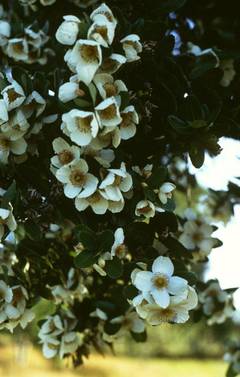
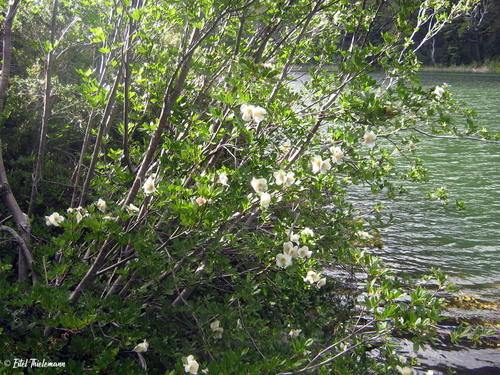
Eucryphia glutinosa is an upright columnar to narrowly pyramidal deciduous-to-semi-evergreen tree or large shrub reaching 15–25 feet (4.5–7.5 m) tall with a spread of 8–15 feet (2.4–4.5 m). The Chilean species carries large cup-shaped pure white flowers 2–2.5 inches (5–6 cm) across with a prominent central boss of numerous stamens with yellow to orange-red anthers, borne singly or in pairs along the branches in July–August. The flower size ranks among the largest produced by any temperate tree blooming in midsummer, when most temperate trees have finished flowering weeks earlier. Leaves are pinnately compound with 3–5 elliptic glossy dark green leaflets 1.5–2.5 inches (4–6 cm) long with serrated margins. The foliage turns orange to orange-red in fall—a combination of large summer flowers and strong fall color rarely matched in a single tree. Growth rate is slow—6–12 inches (15–30 cm) per year. Cool moist root conditions with acidic soil are required—the species comes from Valdivian temperate forest and does not adapt to the hot dry conditions tolerated by most garden trees of similar ultimate size. Hardy to zone 7.
Native Range
Eucryphia glutinosa is native to south-central Chile, growing from the Biobío region south to Los Lagos, in moist cool Valdivian temperate forests and along streams at 1,000–3,000 feet (300–900 m). The Valdivian forest is one of the world's temperate rainforest biomes, with cool wet summers, mild wet winters, and consistently high humidity—the environmental conditions that shape the species' requirement for cool moist roots in cultivation. The specific epithet 'glutinosa' translates as 'sticky' from Latin, referring to a resinous stickiness on young shoots and leaf buds.Suggested Uses
Planted as a specimen tree in woodland gardens and sheltered positions at 8–10 foot (2.4–3 m) spacing. The dual display—large white midsummer flowers followed by orange fall color—is a combination rarely produced by a single tree species in this size class. The narrow columnar form fits sites 8–10 feet (2.4–3 m) wide where broader-spreading trees would overwhelm the space. Functions in cool moist acidic garden conditions similar to those for rhododendrons and camellias, and the same cultural support that succeeds with those shrubs will generally succeed with this tree. Paired with shade-loving underplanting (ferns, Tiarella, Asarum) for a woodland-garden composition, the species combines well in Valdivian-style planting themes that group Chilean and Southern Hemisphere temperate-forest plants together. Hot dry climates, alkaline soils, exposed windy sites, and sites that dry out in summer are poor fits for the species.How to Identify
Appearance
Size & Dimensions
Height15' - 25'
Width/Spread8' - 15'
Bloom Information
Large cup-shaped pure white flowers 2–2.5 inches (5–6 cm) across with numerous yellow to orange-red stamens open singly or in pairs in July–August. Bloom duration is 3–4 weeks. Flower size places the species in the upper range of midsummer-blooming temperate trees, when most such trees have finished flowering.
Detailed Descriptions
Flower Description
Pure white, large cup-shaped with yellow to orange-red stamen bossFoliage Description
Glossy dark green, pinnately compound 3-5 leaflets; orange to orange-red fall colorGrowing Conditions
Sun Requirements
Requires 3-6 hours of direct sunlight daily
• Full Sun: 6+ hours of direct sunlight
• Partial Shade: 3-6 hours of direct sunlight
• Full Shade: Less than 3 hours of direct sunlight
Care & Maintenance
Care Guide
Plant in partial shade, or in full sun where summers remain cool, in moist well-drained acidic soil (pH 5.0–6.5). Cool consistently moist root conditions are required—heavy mulching (3–4 inches / 8–10 cm of organic matter) maintains soil moisture and moderates root-zone temperature. Drought, alkaline soil, and hot dry summers are not tolerated—the Valdivian rainforest origin of the species shapes the strict cultural requirements. Hardy to zone 7. Slow growth—6–12 inches (15–30 cm) per year. In warm climates, planting positions that shelter the root zone from hot afternoon sun are the practical solution—siting on the east or north side of buildings or under high deciduous canopy cover reduces root-zone heating to levels the species tolerates. No serious pest or disease problems where cultural conditions are met.Pruning
Minimal pruning is needed—the naturally columnar to narrowly pyramidal form develops without shaping intervention. Crossing or damaged branches are removed in late winter. Hard pruning is not tolerated well; the species does not regenerate vigorously from older wood and responds to heavy cutback with dieback rather than sprouting.Pruning Schedule
Prune: February
winter